CITY FIELD GUIDE · Middle Yangtze

Wuhan武汉

The Yangtze and Han Rivers make Wuhan a city of crossings; East Lake, universities, optics and an unusually public breakfast culture widen the picture.

Wuhan is three historic towns joined into one metropolis. The confluence explains its bridges and river beaches, but the city also turns toward East Lake, campus districts and Optics Valley before returning each morning to guozao.

  • Riverfront nights
  • University city
  • Optics + mobility
A broad Yangtze River, bridge, skyline and people at the water's edge extend across Wuhan in warm late-afternoon light.
The Yangtze establishes Wuhan at metropolitan and human scale · Garreth / Wikimedia Commons

MULTIPLE SCALES · ONE CITY

Read Wuhan at the scale of rivers, lakes, crossings and breakfast counters.

The sequence begins with the Yangtze rather than a night market, then moves through the river edge, East Lake, Optics Valley, lived heritage and a genuinely varied morning table.

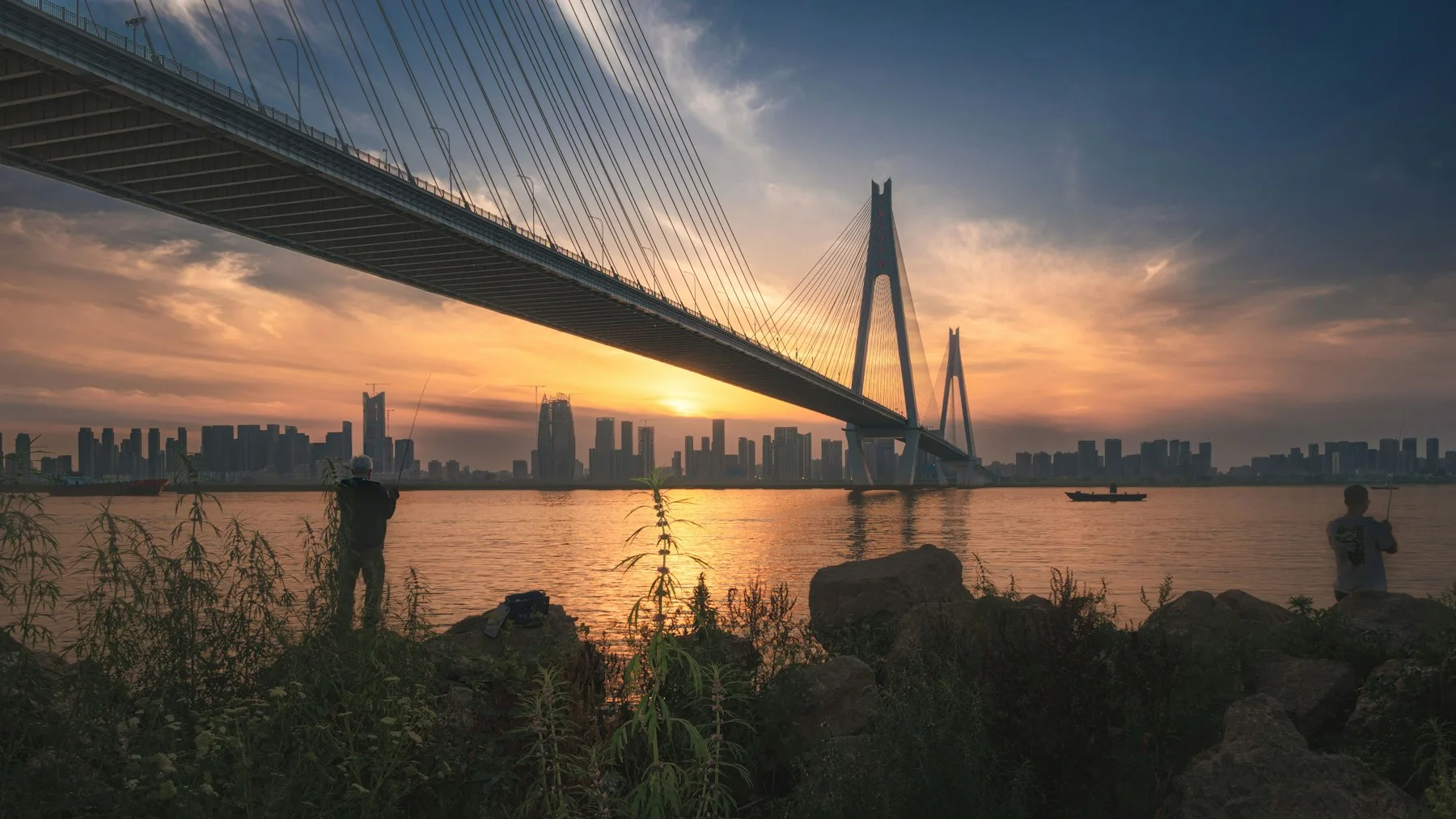
A Yangtze bridge, broad water, city skyline and people near the shoreline appear together in warm light.
The Yangtze at city scale · Garreth / Wikimedia Commons

BIG RIVER CITY

The Yangtze is infrastructure, horizon and public life at once.

Water, bridge, towers and people on the near bank share one frame. That relationship—not a bridge isolated as an engineering trophy—is the first clue to Wuhan's scale.

Read the full route
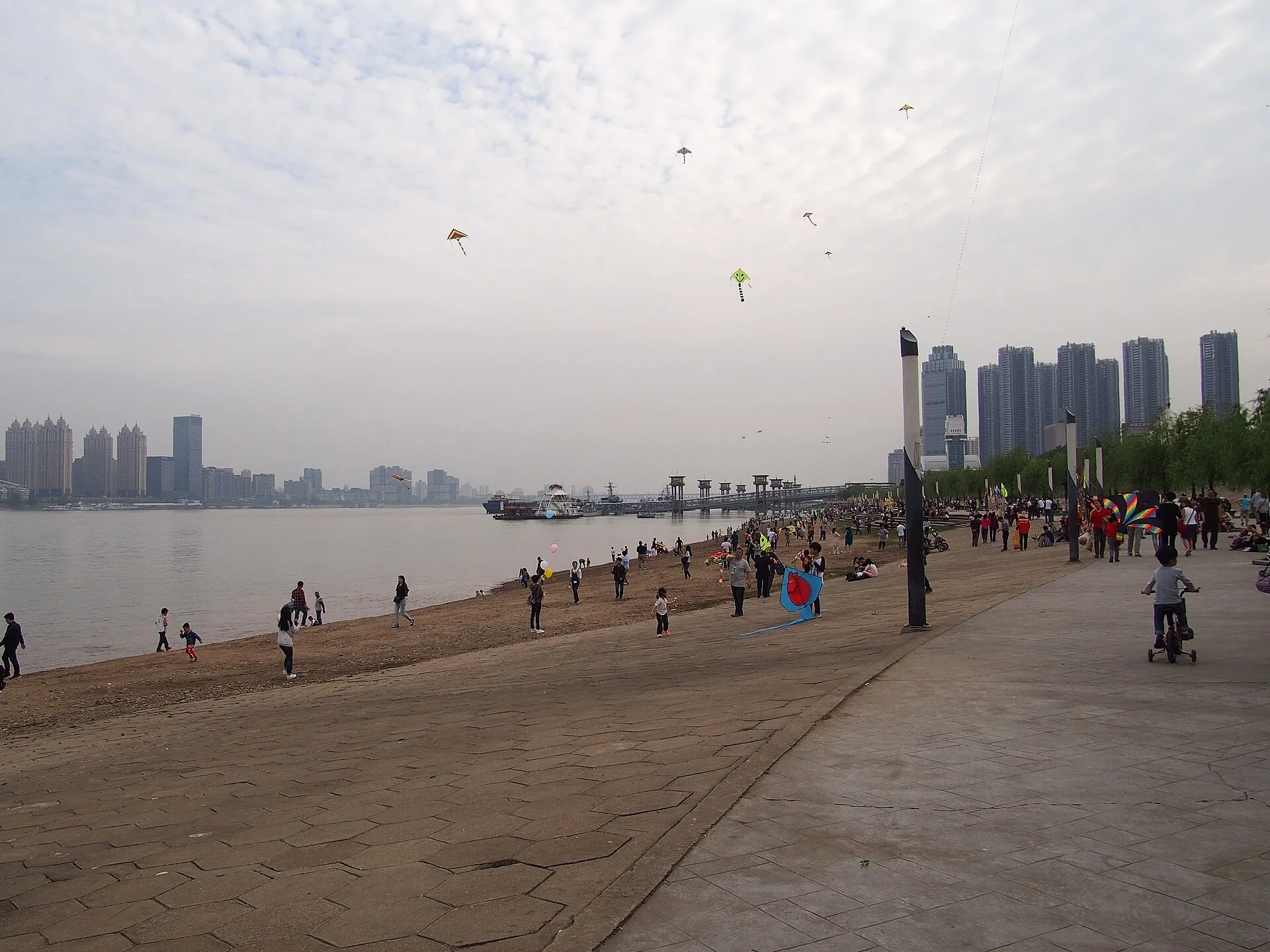
People use the broad Hankou riverfront beside the Yangtze, with the opposite bank and city skyline visible across the water.
Hankou riverfront and its broad public edge · Windmemories / Wikimedia Commons

RIVER BEACH

The river edge is a room the city can enter.

At Hankou, embankment, beach, path and skyline form a public section rather than a decorative waterfront. Seasonal water levels matter, so one photograph cannot describe access at every time of year.

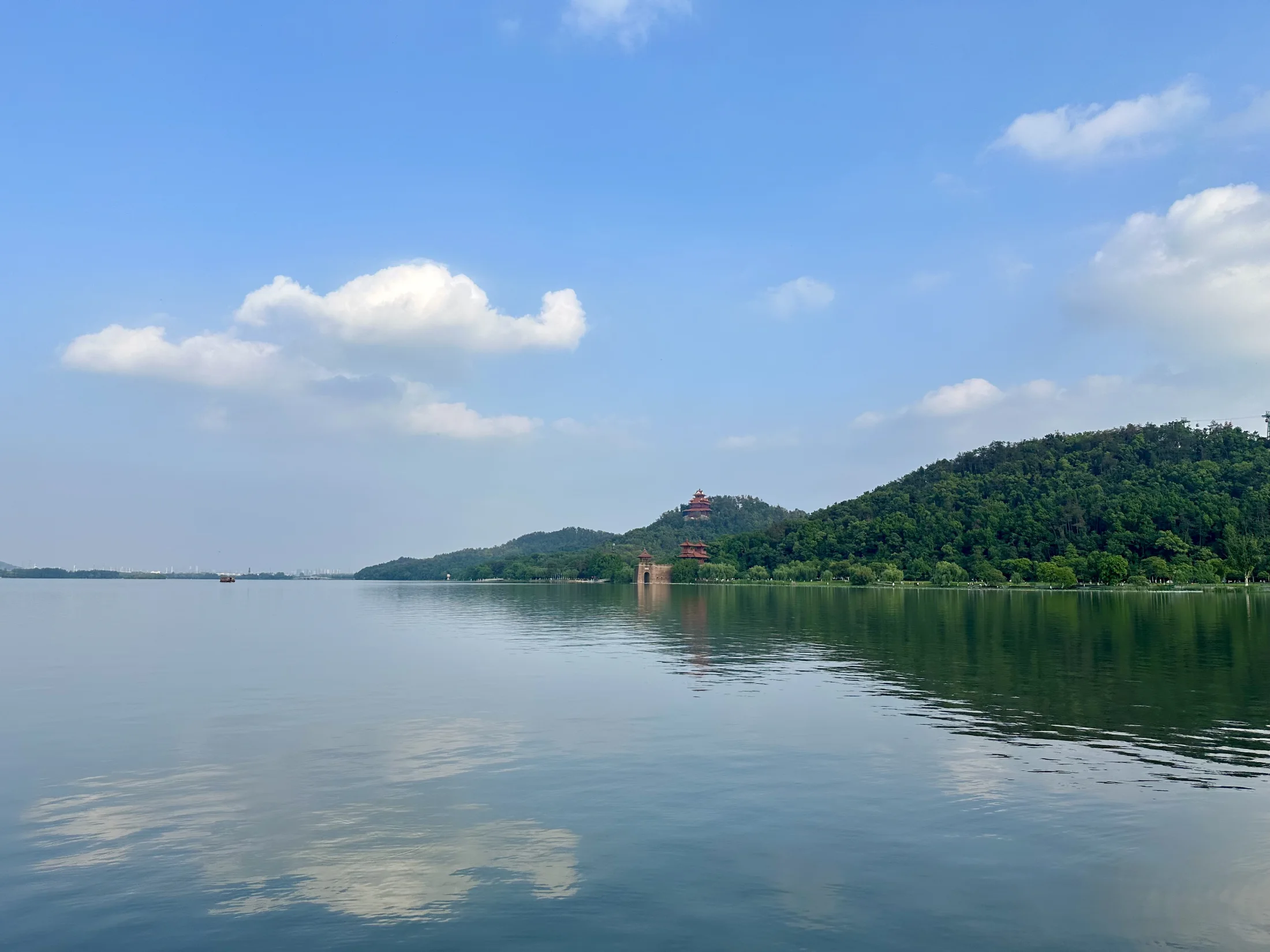
East Lake stretches toward the wooded slopes of Mount Mo beneath blue sky and white clouds.
Mount Mo and East Lake, 5 May 2024 · Zheng Zhou / Wikimedia Commons

EAST LAKE

Wuhan also opens toward a vast blue-green landscape.

East Lake and its greenway change the city's visual register from crossing to shoreline, wooded hill and long recreational route. Leaving it out produces a falsely hard, all-concrete portrait.

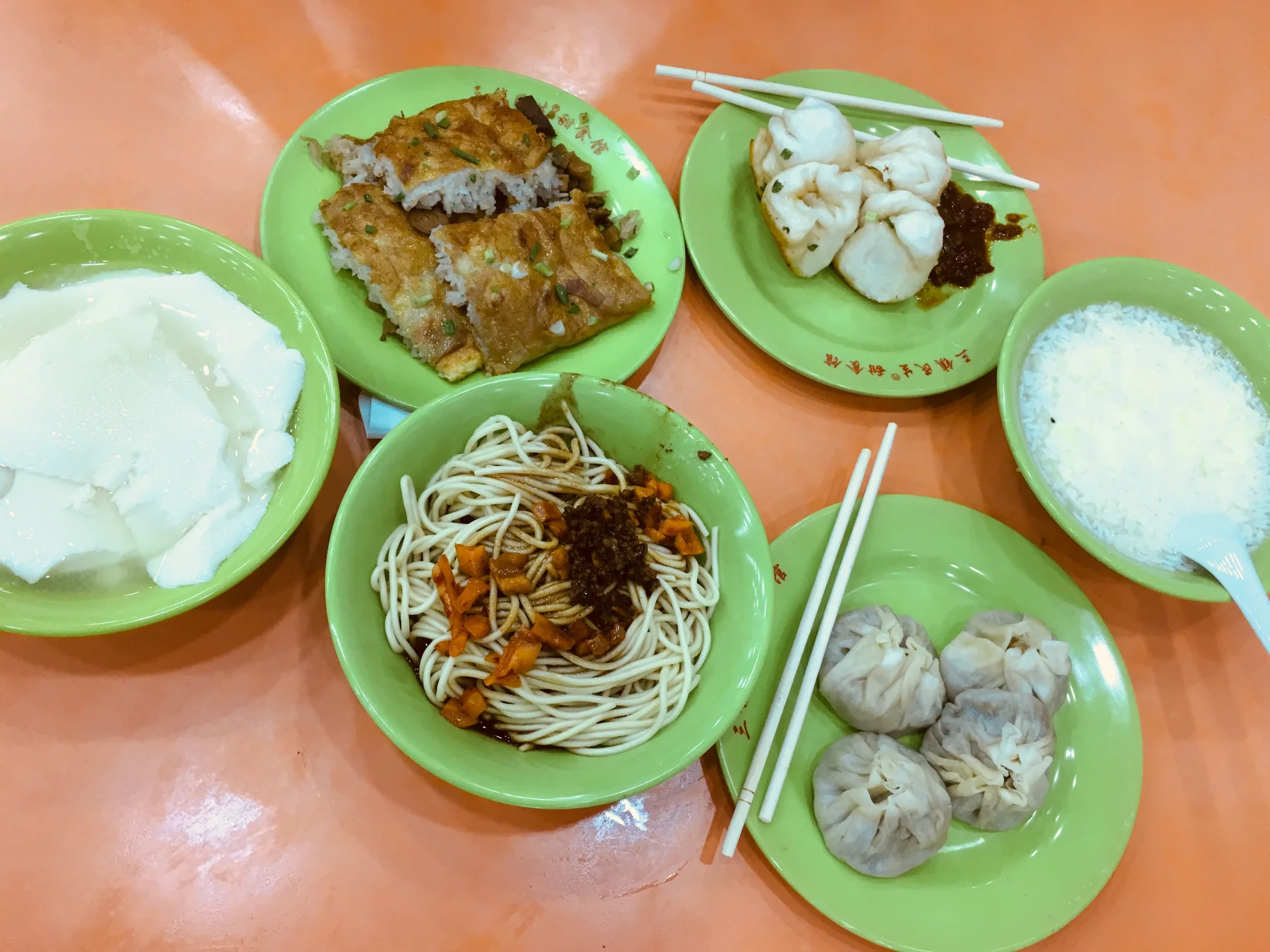
A Wuhan breakfast table holds hot dry noodles, doupi, buns, tofu pudding and rice wine.
A Wuhan breakfast table · Windmemories / Wikimedia Commons

MORNING RHYTHM

Breakfast is a citywide verb.

Hot dry noodles are the best-known item, but a Wuhan morning is a wider network of quick counters, portable dishes and neighborhood routines. The value is in the pattern of eating, not a single must-try plate.

Read the full route
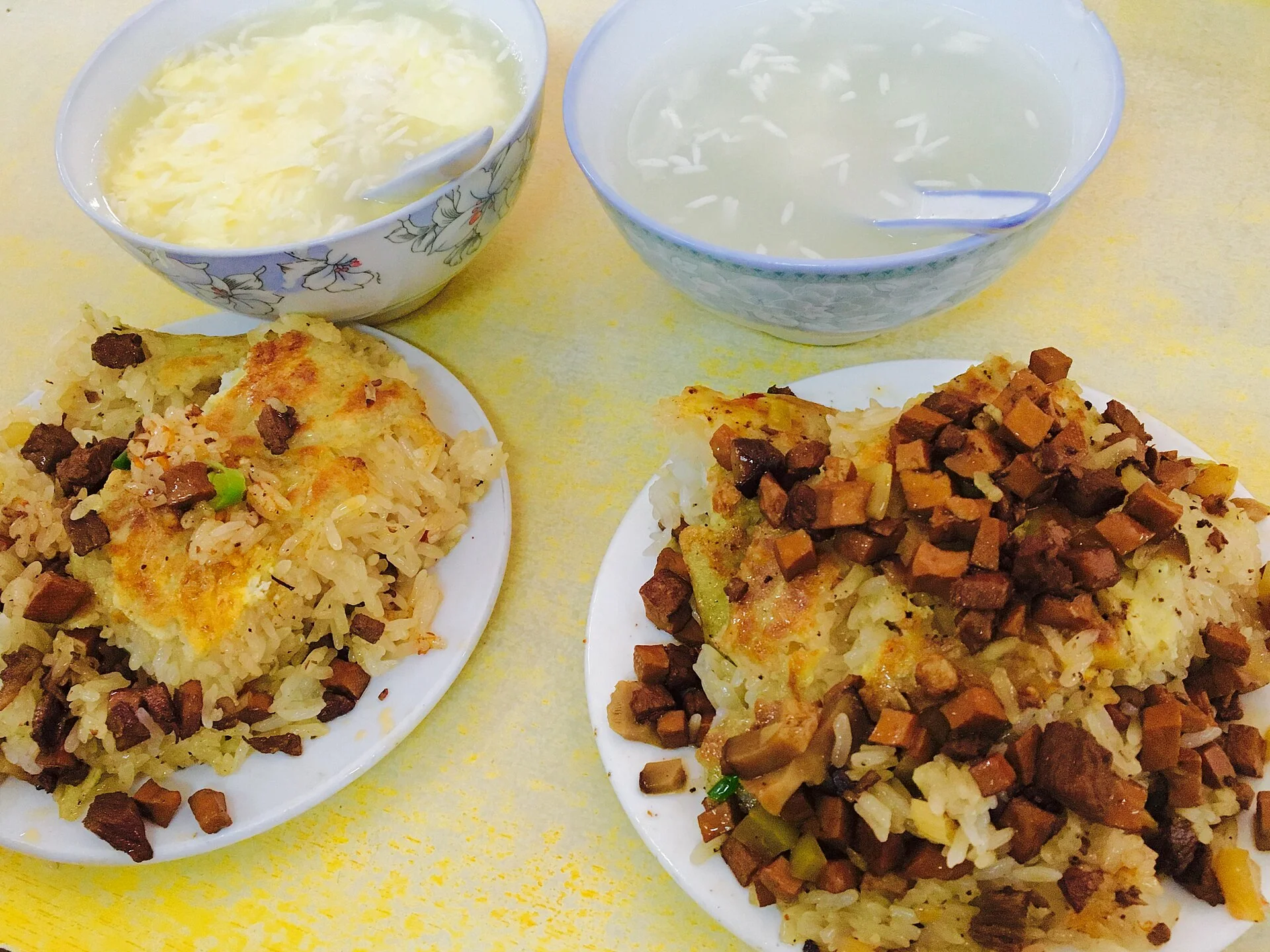
Freshly cooked Wuhan doupi is cut into crisp golden squares, exposing a glutinous-rice filling.
Doupi adds a second form and texture to the Wuhan breakfast table · Windmemories / Wikimedia Commons

BREAKFAST · DETAIL

Guozao is plural: noodles, doupi, buns and more share the morning.

Hot dry noodles may be the headline, but doupi makes a different combination of crisp skin, glutinous rice and savoury filling. Showing more than one dish prevents a living breakfast culture from becoming a single-food mascot.

Read the full route
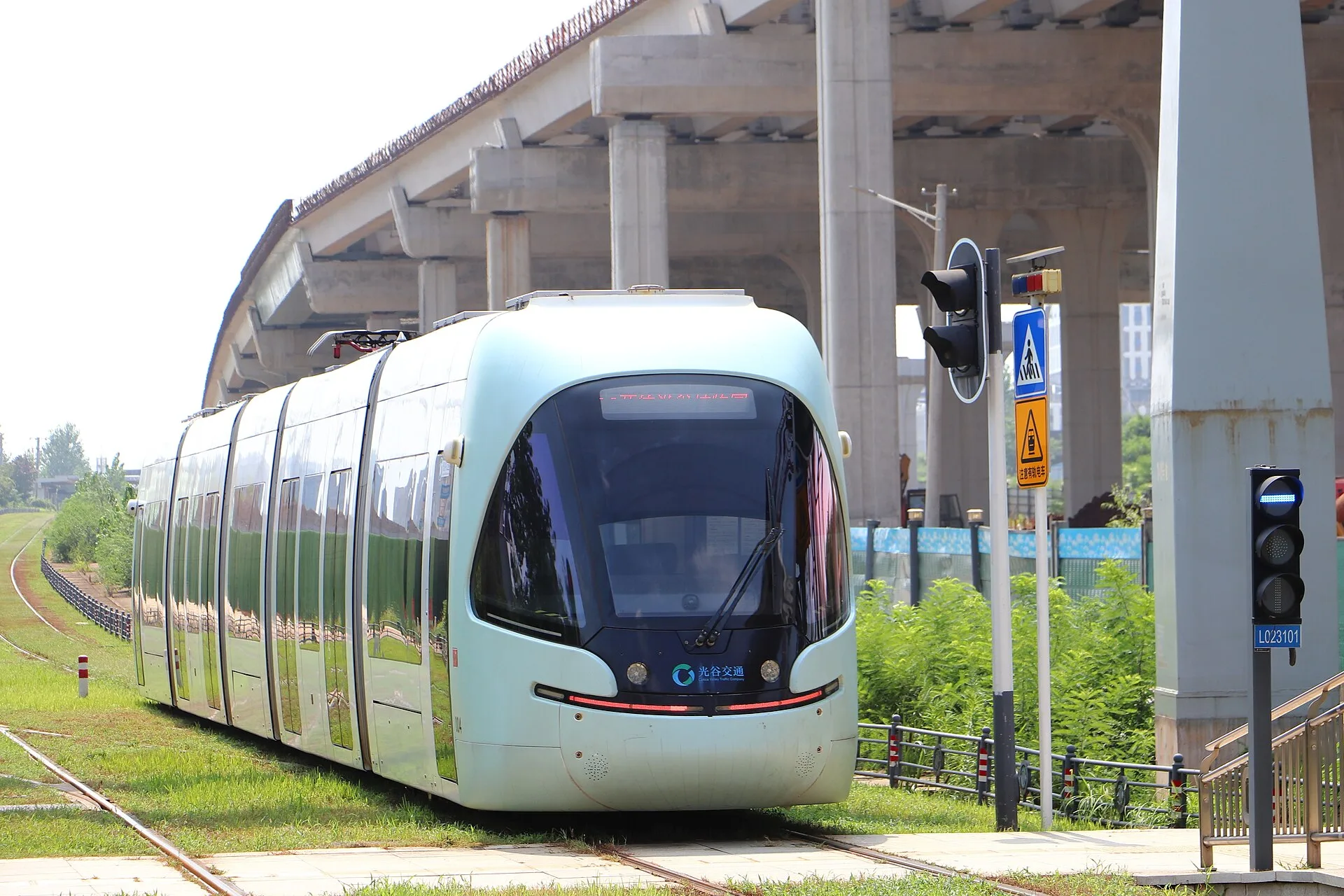
A pale green Optics Valley tram turns through a sunlit Wuhan junction beneath elevated infrastructure.
Optics Valley tram, 18 July 2025 · 初. / Wikimedia Commons

OPTICS VALLEY

A technology district must still move people through an ordinary day.

The tram is visible evidence of Optics Valley as an operating district, not proof of innovation by itself. Research institutes, companies, housing and transport make the fuller system.

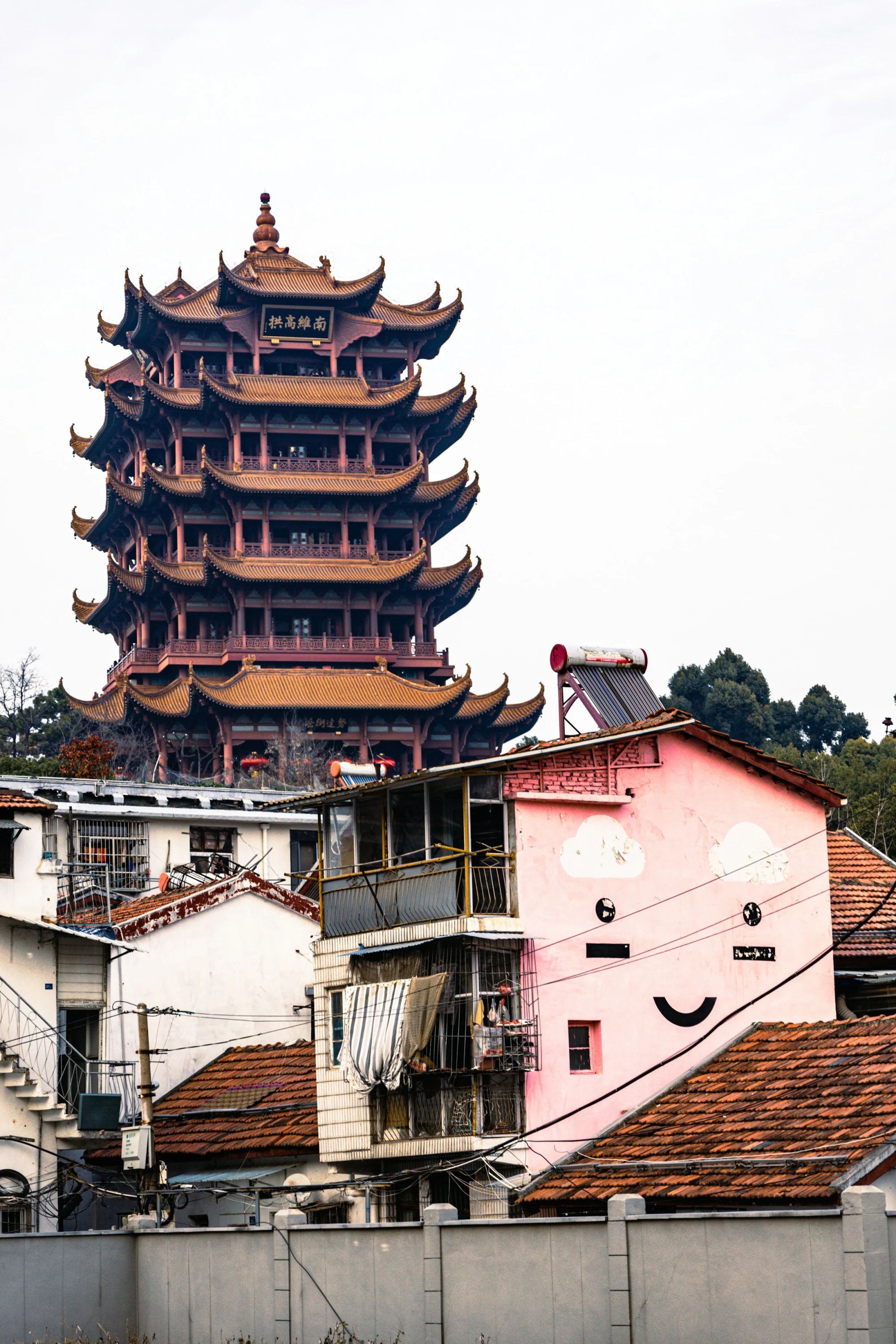
Yellow Crane Tower rises behind closely packed Wuhan homes, tiled roofs, utility wires and a pink wall painted with a smiling face.
Yellow Crane Tower within an inhabited Wuchang neighborhood, June 2026 · William / Unsplash

PAST + PRESENT

A landmark is never outside ordinary life.

Yellow Crane Tower rises behind tiled roofs, utility wires, laundry and a playful painted house. The frame resists two easy mistakes at once: treating heritage as a sealed attraction, or treating contemporary Wuhan as a skyline with no accumulated city beneath it.

Read the full route
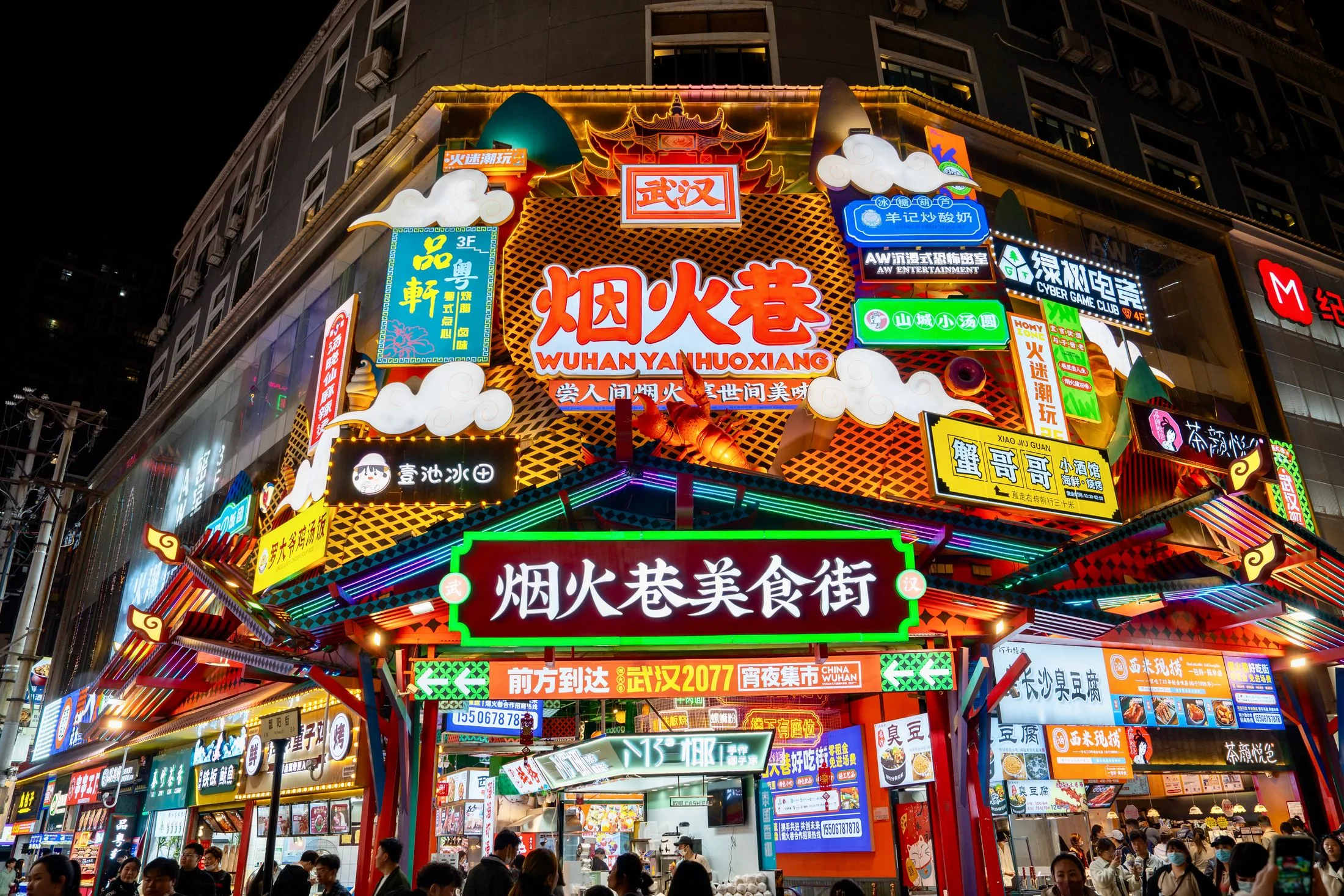
A crowd gathers below dense illuminated food signs at Wuhan's Yanhuoxiang night market.
Yanhuoxiang after dark · Siyuan Zhao / Pexels

ONE NIGHT SCENE

Night food belongs to the portrait, but does not lead it.

Yanhuoxiang shows concentrated signs, queues and small-scale commerce after dark. It now appears as one chapter after rivers, lake, technology and breakfast—not as a substitute for Wuhan's whole identity.

PUBLISHED FOR WUHAN

Follow the city across the whole guide.

places · visual-story

Chinese Cities at Street Level: Six Different Urban Systems

Six visual readings show how movement, work, water, heritage and public life make Beijing, Shanghai, Guangzhou, Shenyang, Wuhan and Hong Kong different.

places · story

Wuhan Is Three Towns Joined Across Two Rivers

Hankou, Wuchang and Hanyang still give Wuhan different urban rhythms; bridges and riverfronts connect them without making their histories identical.

culture · visual-story

After Dinner, Six Chinese Cities Become Public Venues

Riverbanks, parks, reused industrial sites and commercial streets show how music, performance and social life enter public space across six different cities.

culture · visual-story

In Wuhan, Breakfast Is Important Enough to Be a Verb

Guozao reveals Wuhan through hot dry noodles, doupi, quick counters and a morning meal that belongs to the street as much as the home.

explained · explainer

In Six Chinese Cities, Near Is a Transfer, Not a Distance

Rivers, ring roads, slopes and rail interchanges explain why a short-looking urban trip can feel easy in one Chinese city and difficult in another.

explained · visual-story

No Single Kind of Downtown: Six Chinese City Forms

Beijing, Shanghai, Guangzhou, Shenyang, Wuhan and Hong Kong organise central life differently. A sourced comparison replaces the generic skyline idea.

go · guide

Pay, Ride, Recover: A Six-City Arrival Backup

Build a transport plan that survives a rejected foreign card, dead phone, missed last train or wrong pickup zone across six China gateway cities.

go · guide

Airport to City: Six China Gateway Arrivals That Do Not Fail Quietly

A checked arrival method for Beijing, Shanghai, Guangzhou, Shenyang, Wuhan and Hong Kong, with exact transfer logic and visible late-night fallbacks.

go · guide

Your First 48 Hours in Wuhan: Pick a Bank Before a Landmark

A source-checked Wuhan arrival sequence that uses river geography, airport transport, connectivity and breakfast rhythm to prevent avoidable cross-city mistakes.

HOW THIS CITY PORTRAIT IS BUILT

Wuhan, read in layers.

The sources at right establish local geography, institutions and current systems. Photographs then have a separate job: show the specific place, action or relationship described in each chapter.

Sources and images are checked separately. A beautiful photograph is not treated as factual proof on its own.