
The airport train is rarely the whole journey. The quiet failures happen before and after it: choosing the wrong Beijing airport, assuming a Guangzhou terminal still uses the same station, treating Shanghai’s maglev as a direct downtown train, or reaching a central rail node with no plan for the final street.
This guide fixes the sequence. It does not replace a live timetable. Check the linked operator or airport source on the day of travel, especially for the last service.
Before you leave the arrivals hall
Do these five things while airport Wi-Fi, information counters and staff are still available:
- Confirm the airport code and terminal shown on your boarding pass or baggage receipt.
- Save the destination name and full address in Chinese and English.
- Identify the first transfer station, not only the final station.
- Screenshot the rail route and one staffed fallback.
- Decide what event ends the rail plan: last train, excessive luggage, inaccessible transfer, phone failure or a child who cannot manage the route.
Do not follow a driver who approaches you inside arrivals. Use the signed rail, bus, taxi or ride-hailing path published by the airport.
The six arrival paths
| Gateway | First decision | Primary public-transport logic | Visible fallback |
|---|---|---|---|
| Beijing | PEK or PKX? | Capital Airport Express or Daxing Airport Express, followed by a city transfer | Official airport bus, signed taxi rank or designated ride-hailing area |
| Shanghai | PVG or SHA, and which terminal? | PVG: Metro Line 2, maglev plus transfer, or Airport Link; SHA: metro from the correct terminal | Signed taxi rank; airport bus where current service fits |
| Guangzhou | T1, T2 or T3? | T1/T2 and T3 do not share one identical rail path; follow current terminal signs | City bus, signed taxi rank or terminal-specific ride-hailing area |
| Shenyang | Does Metro Line 2 still run after arrival? | Direct airport station on Line 2 toward central Shenyang | Airport bus or signed taxi after checking current on-site information |
| Wuhan | Is Metro Line 2 still operating? | Line 2 connects Tianhe Airport with Hankou and the wider metro | Airport bus or signed taxi; verify current service at the terminal |
| Hong Kong | Rail speed or bus coverage? | Airport Express to Tsing Yi, Kowloon or Hong Kong; airport buses may reduce the final transfer | Official taxi rank; overnight airport bus where applicable |
The table states route structure, not current departure time or universal best choice.
Beijing: the airport code comes first
Beijing has two major international gateways: Capital Airport (PEK) and Daxing Airport (PKX). They sit in different parts of the metropolitan region and use different airport express lines.
For PEK, Beijing’s official visitor guide points to the Capital Airport Express and its city transfer stations, plus airport buses, signed ride-hailing areas and taxi service. For PKX, the Daxing Airport Express reaches Caoqiao, where the journey continues on the city network.
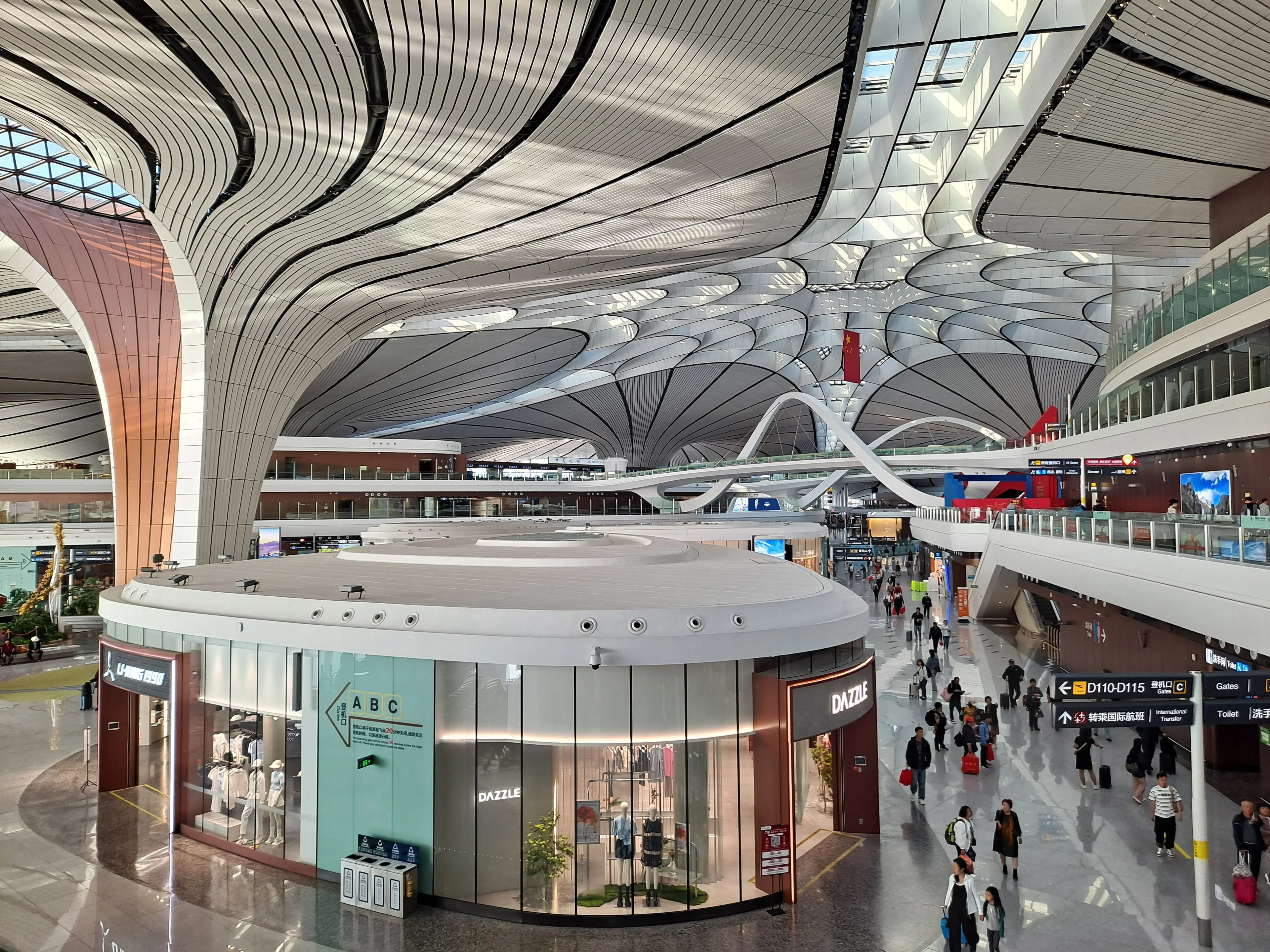
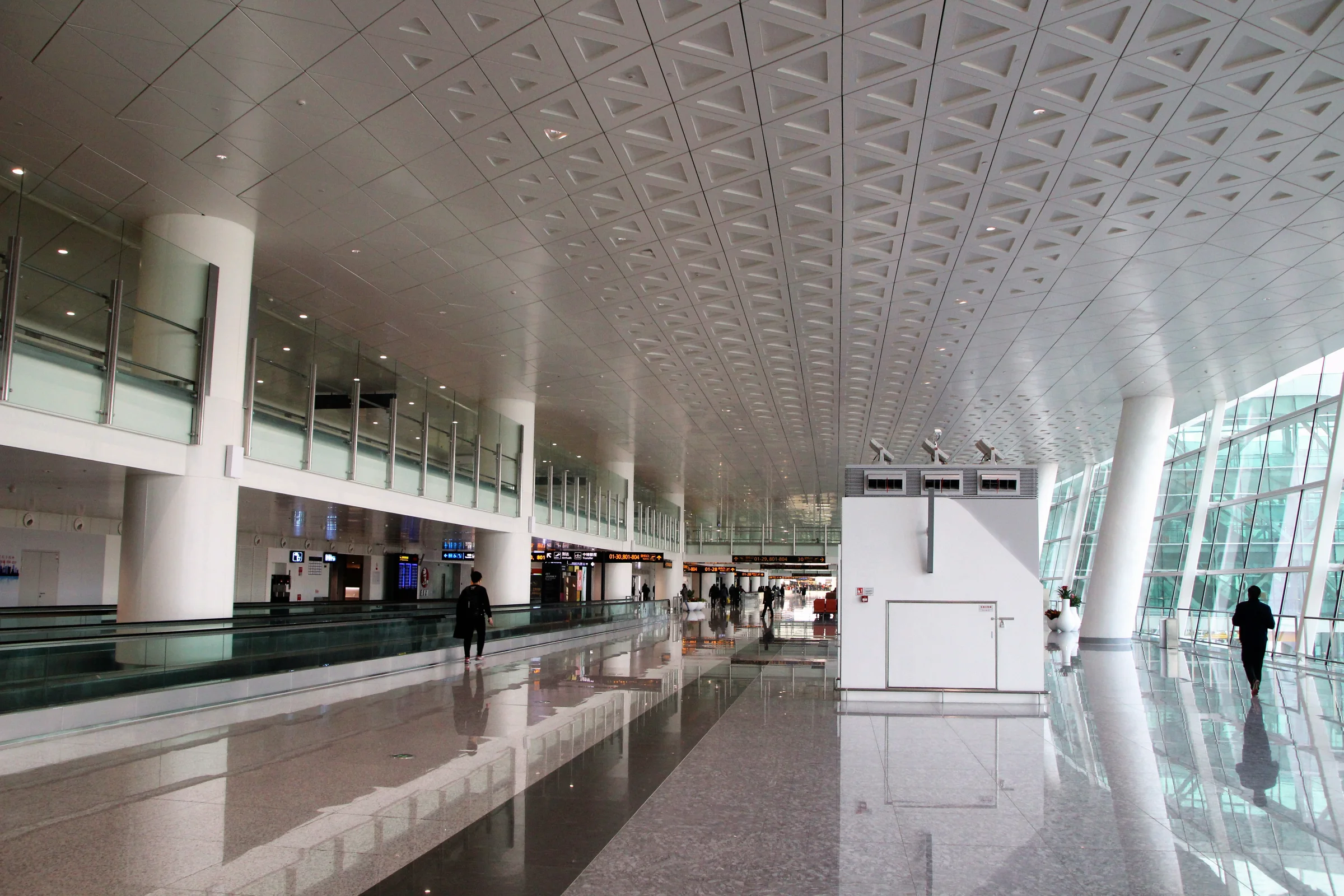
The central hall at Daxing is visually spectacular and physically large. Treat wayfinding inside the building as part of the trip. Follow the rail symbol to the correct level before opening a general map app and walking toward an arbitrary pin.
Failure trigger: if the flight lands near the last published service, do not build a plan that depends on clearing immigration, collecting luggage and buying a ticket at the final minute. Move immediately to the official staffed transport information or taxi path.
Shanghai: the maglev still requires an onward plan
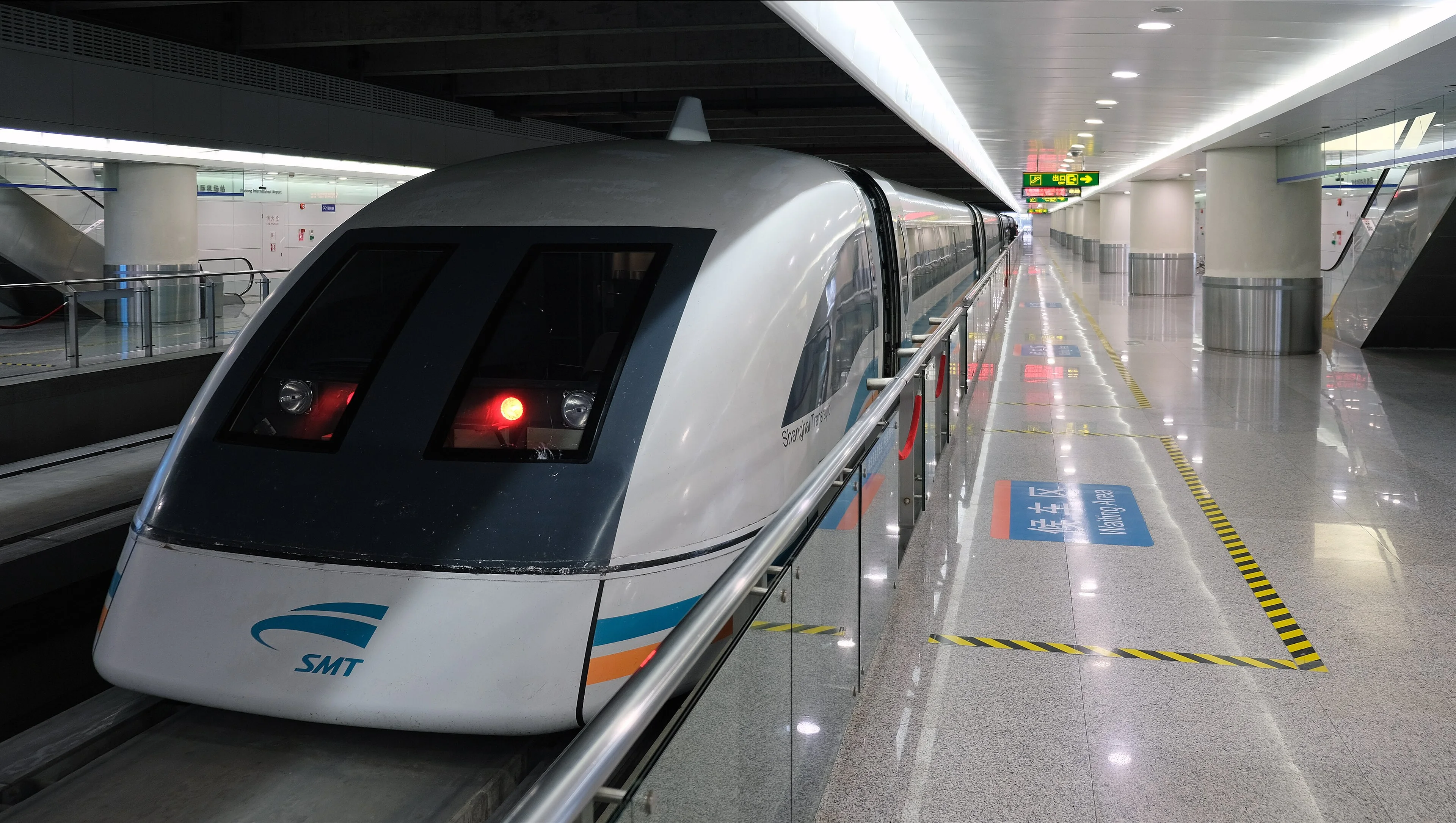
Pudong Airport (PVG) offers several rail choices. Metro Line 2 continues into the city. The maglev reaches Longyang Road, where most visitors transfer again. The Airport Link Line connects the airport with Hongqiao and other stations. These systems solve different journeys.
Hongqiao Airport (SHA) is closer to western central Shanghai and connected to metro services by terminal. Do not search only “Shanghai airport metro”; confirm Pudong or Hongqiao and the terminal first.
The official 2026 Shanghai guide lists current modes, representative travel times and taxi points, but it also warns that service times may change. Use its airport pages again on arrival.
Failure trigger: if the desired destination is not near Longyang Road, do not choose the maglev only because it has the most famous headline speed. Compare the complete transfer and luggage path.
Guangzhou: Terminal 3 changed the old mental map
Guangzhou Baiyun Airport’s Terminal 3 introduced new intercity-rail and ground-transport arrangements. Current official guidance describes intercity trains from the T3 transport centre, a shuttle to Gaozeng Metro Station, city buses, taxi points and a designated ride-hailing garage.
That means advice written for Terminal 1 or 2 may send a T3 passenger toward the wrong station or pickup zone. Follow the terminal number printed on current signs, not a saved route from an older trip.
Failure trigger: if a route tells you to walk to an airport metro station without naming the terminal, discard it and ask the staffed information desk.
Shenyang: the direct line is simple, the last train is not timeless
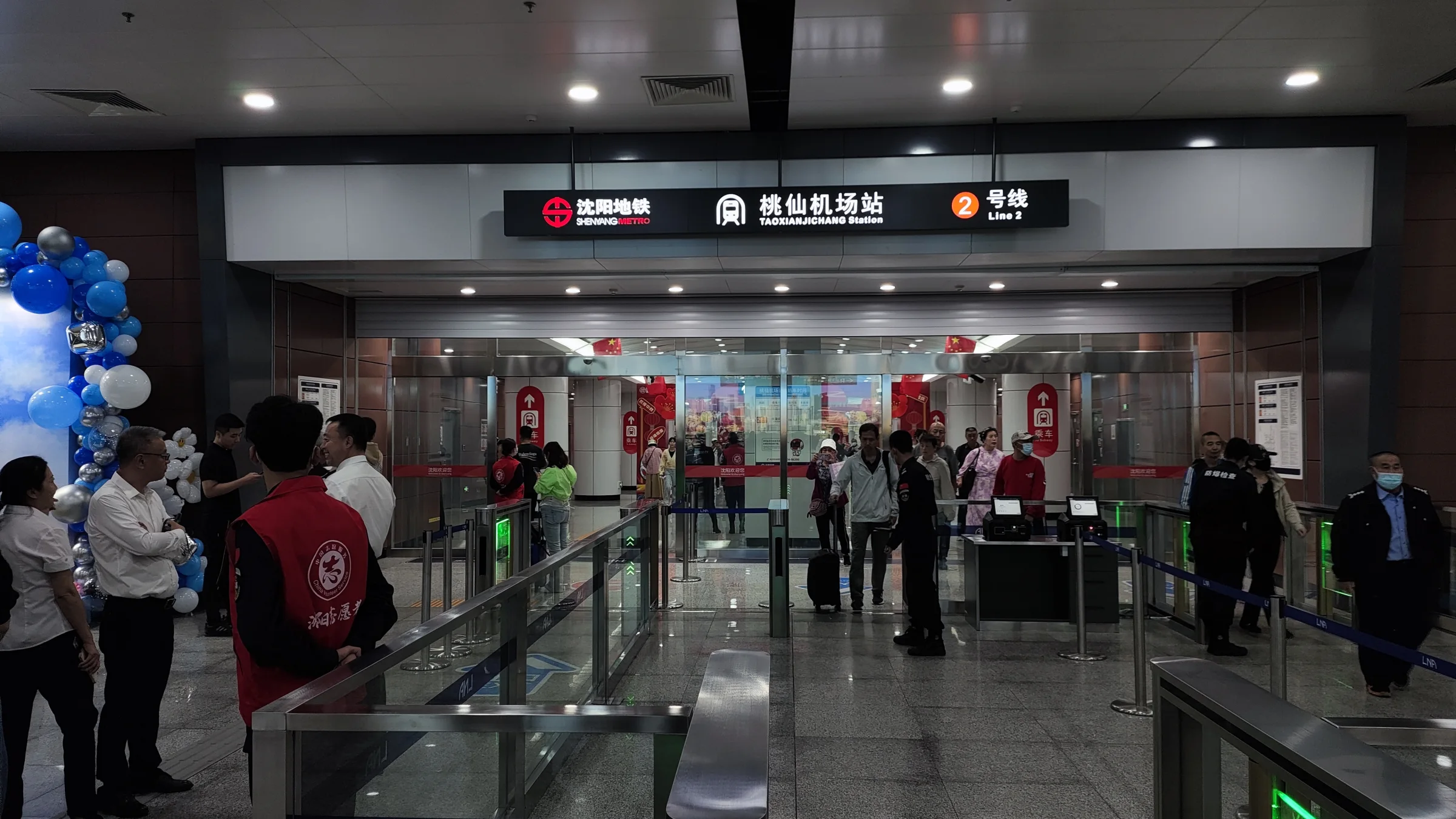
Metro Line 2 reaches Taoxian Airport and continues toward central Shenyang. A 2025 official update changed the airport station’s last-train time by season, which is exactly why this guide does not reproduce one permanent number.
Use the airport station for a direct, legible first arrival when it is operating. The Liaoning visitor-payment guide also lists overseas-card service and staffed support at selected Shenyang metro stations, including the airport.
Failure trigger: if arrival is close to the published last train, check the station display or ask staff before entering a plan that requires an additional transfer.
Wuhan: use the old official page as structure, not a live timetable
Wuhan’s official airport page explains Tianhe Airport as an integrated hub for metro, intercity railway, buses and taxis. It identifies Metro Line 2 as the direct urban rail connection.
The page is useful for network structure, but its operating-hour details are older than the other sources in this guide. Do not use the old time printed there as today’s guarantee. Check the current station display, airport information counter or Wuhan Metro channel on arrival.
Failure trigger: if a search result repeats an old timetable without a recent date, keep the route concept and recheck the departure.
Hong Kong: rail and buses solve different final journeys
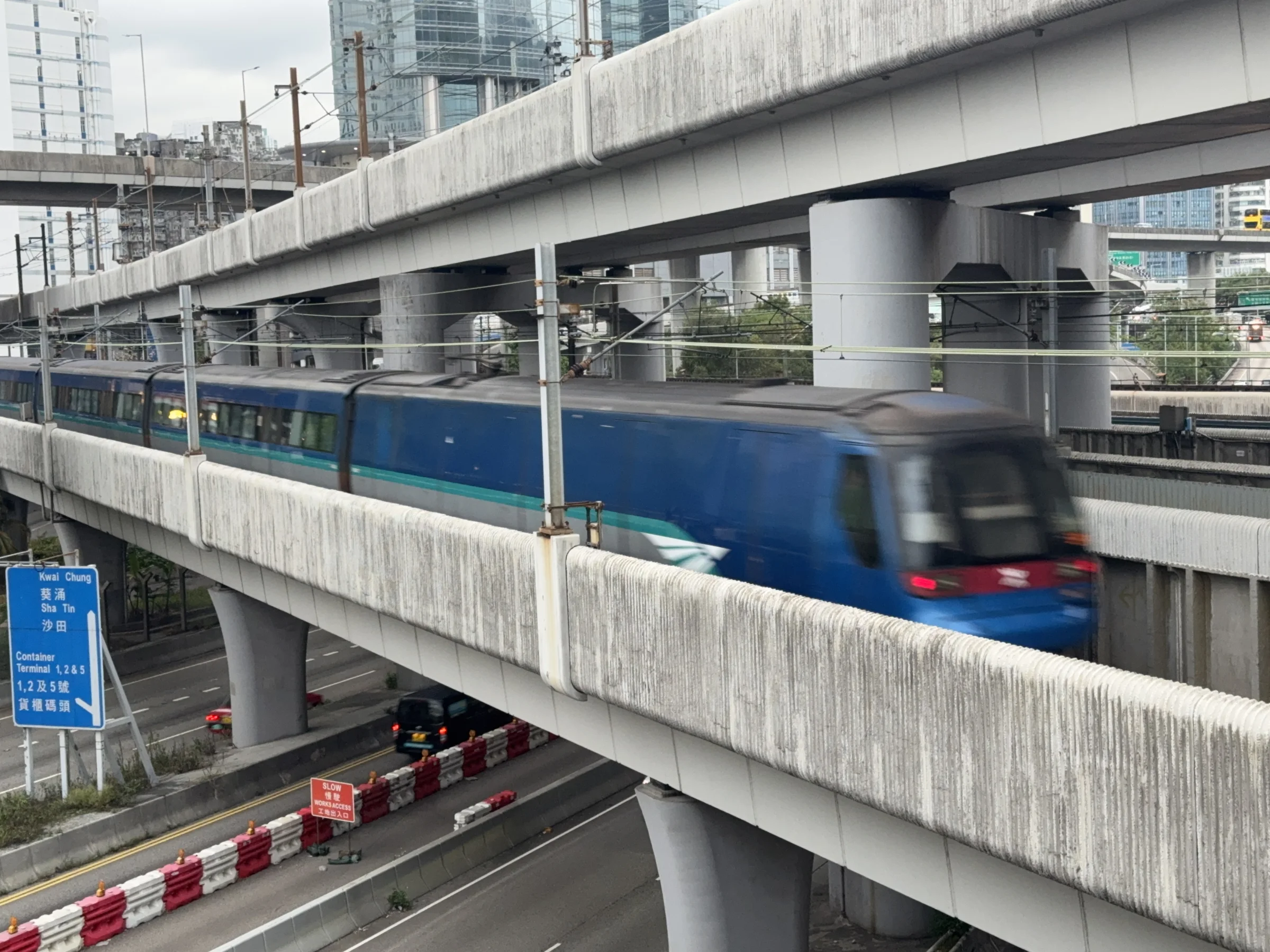
The Airport Express reaches Tsing Yi, Kowloon and Hong Kong stations. MTR’s timetable effective June 2026 states a journey of roughly 24 minutes between the airport and Hong Kong Station, subject to current conditions and schedule checks.
Airport buses can be a better one-seat choice for destinations not close to an Airport Express station. Hong Kong’s Terminal 2 departure arrangements changed in 2026; arrivals and ground transport still require current terminal and operator information.
Hong Kong uses its own currency, transport fare system and taxi rules. Do not carry over a mainland payment assumption without checking.
Failure trigger: if rail creates a difficult final transfer with luggage or steep streets, compare an official airport bus or taxi rather than optimising only the first 24 minutes.
When the preferred route fails
Use this recovery order:
- Stop changing apps. Return to a staffed airport or station information point.
- Show the saved bilingual address, not a translated landmark nickname.
- Ask for the current last public-transport departure and platform.
- If it has gone, follow signs to the official taxi rank or designated ride-hailing pickup area.
- Keep the airport, terminal and vehicle receipt until arrival.
- If payment fails, ask staff for a ticket-counter or cash path before retrying multiple cards.
Never hand your phone unlocked to an unverified helper, and do not let urgency push you into an unmarked vehicle.
Sources and scope
- Visit Beijing: PEK and PKX airport transport guide
- Beijing Municipal Government: PEK airport–city transport
- Shanghai Municipal Government: airport–city transport, updated June 2026
- Guangzhou Tianhe District Government: Baiyun Airport T3 transport
- Shenyang official information: Metro Line 2 airport-hours update
- Wuhan Municipal Government: Tianhe Airport transport — used for network structure; live times require a newer check.
- Hong Kong Government: Terminal 2 transport arrangements
- MTR: Airport Express timetable effective June 2026
Airport terminals, routes, prices and schedules change. This high-risk page is reviewed weekly and still requires a day-of-travel operator check.
One useful next step
Complete the arrival stack checklist, then save only the city section above and its official source for offline use.


.jpg)

.jpg)
