CITY FIELD GUIDE · North China

Beijing北京

Imperial planning, mountain defence, hutong life, research campuses and a new global airport all belong to the same capital.

Beijing cannot be understood through monuments alone, but removing the Forbidden City, Temple of Heaven and Great Wall is equally false. Read the city by connecting those inherited structures to lived lanes, Zhongguancun, Daxing and daily movement.

  • Everyday mobility
  • Research + creative work
  • Neighborhood life
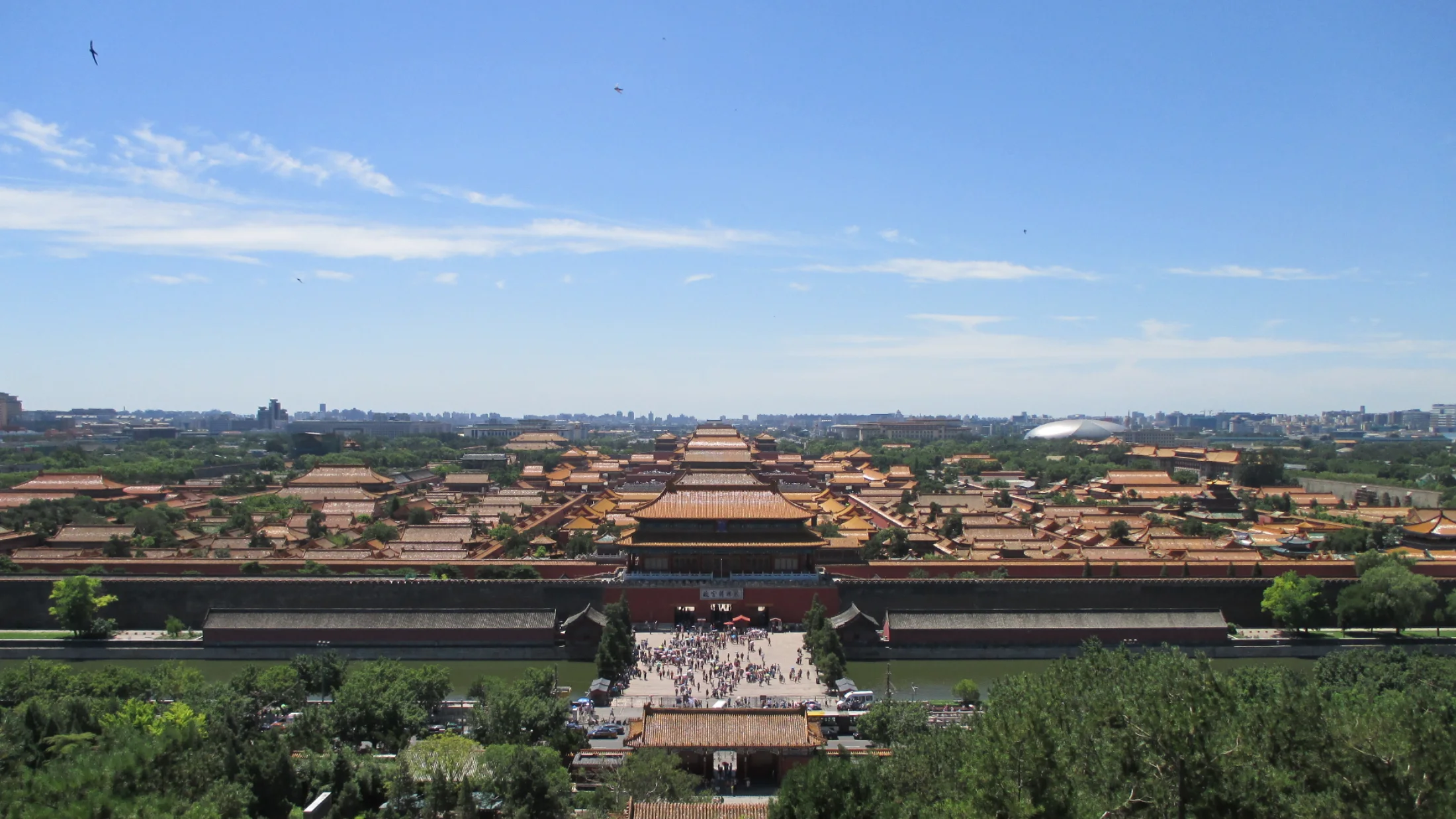
The Forbidden City's red walls and golden roofs extend south from Jingshan under a clear blue sky, with contemporary Beijing visible beyond.
The Forbidden City at city scale, photographed 2 July 2013 · Tojan76 / Wikimedia Commons

MULTIPLE SCALES · ONE CITY

A wider view of Beijing, from palace roof to research campus.

The sequence moves from imperial city and ritual landscape to mountain wall, hutong, science park, airport and a contemporary crossing. No single image is asked to carry Beijing by itself.

The Forbidden City's long sequence of roofs, courtyards and walls is seen from Jingshan with the wider city beyond.
Forbidden City panorama, 2 July 2013 · Tojan76 / Wikimedia Commons

IMPERIAL CITY

The Forbidden City gives Beijing its clearest measure of order and scale.

From Jingshan, gates, courtyards, walls and rooflines become one continuous system. The contemporary skyline at the horizon matters too: the palace is not isolated from the capital around it.
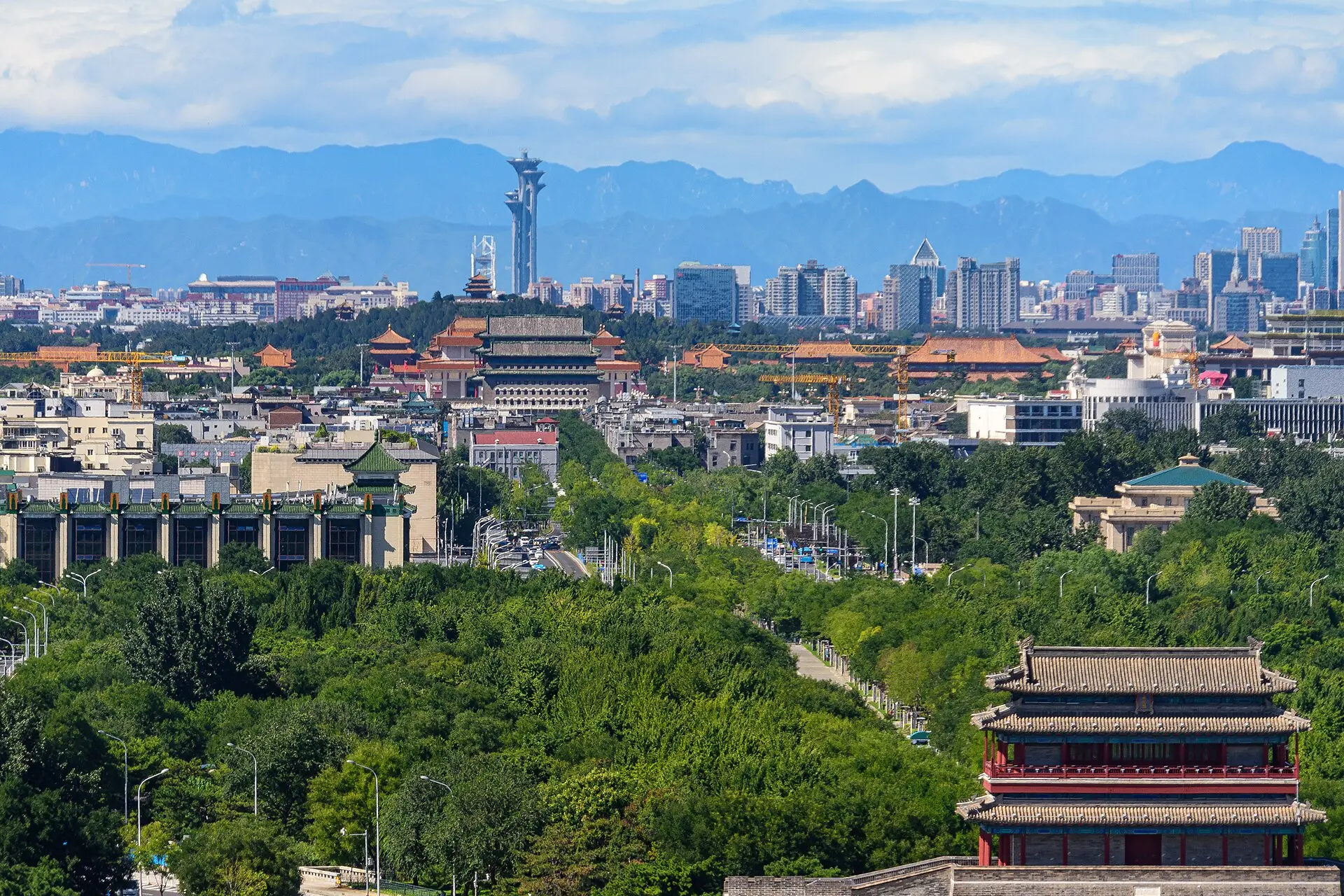
Beijing's historic Central Axis runs through gates, trees and dense contemporary city fabric toward the mountains.
The Central Axis within the wider city · N509FZ / Wikimedia Commons

CITY STRUCTURE

Old planning lines still organise a modern metropolis.

The Central Axis is not a strip of isolated monuments. Gates, parks, roads, neighborhoods and later urban systems meet along it. Reading those relationships explains more than collecting landmark photographs.

Read the full route
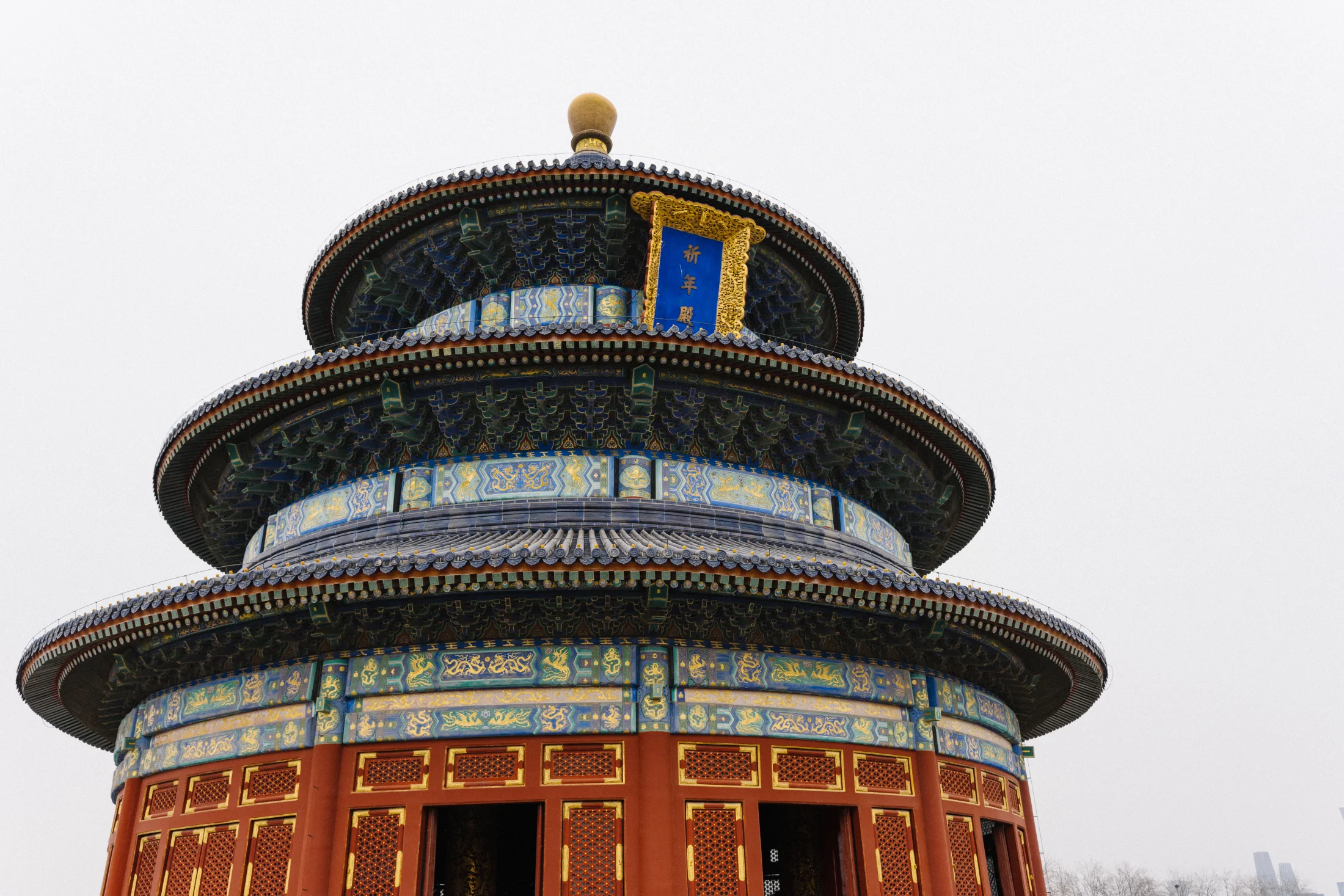
The Hall of Prayer for Good Harvests rises above red balustrades in clear winter daylight.
Temple of Heaven, 20 February 2024 · Lloyd Tudor / Wikimedia Commons

RITUAL LANDSCAPE

The Temple of Heaven is architecture, geometry and a vast public park.

The Hall of Prayer is the recognisable object, but the complete place also depends on a north–south sequence, raised platforms, old trees and the distances between structures. It should not be reduced to a blue circular roof.

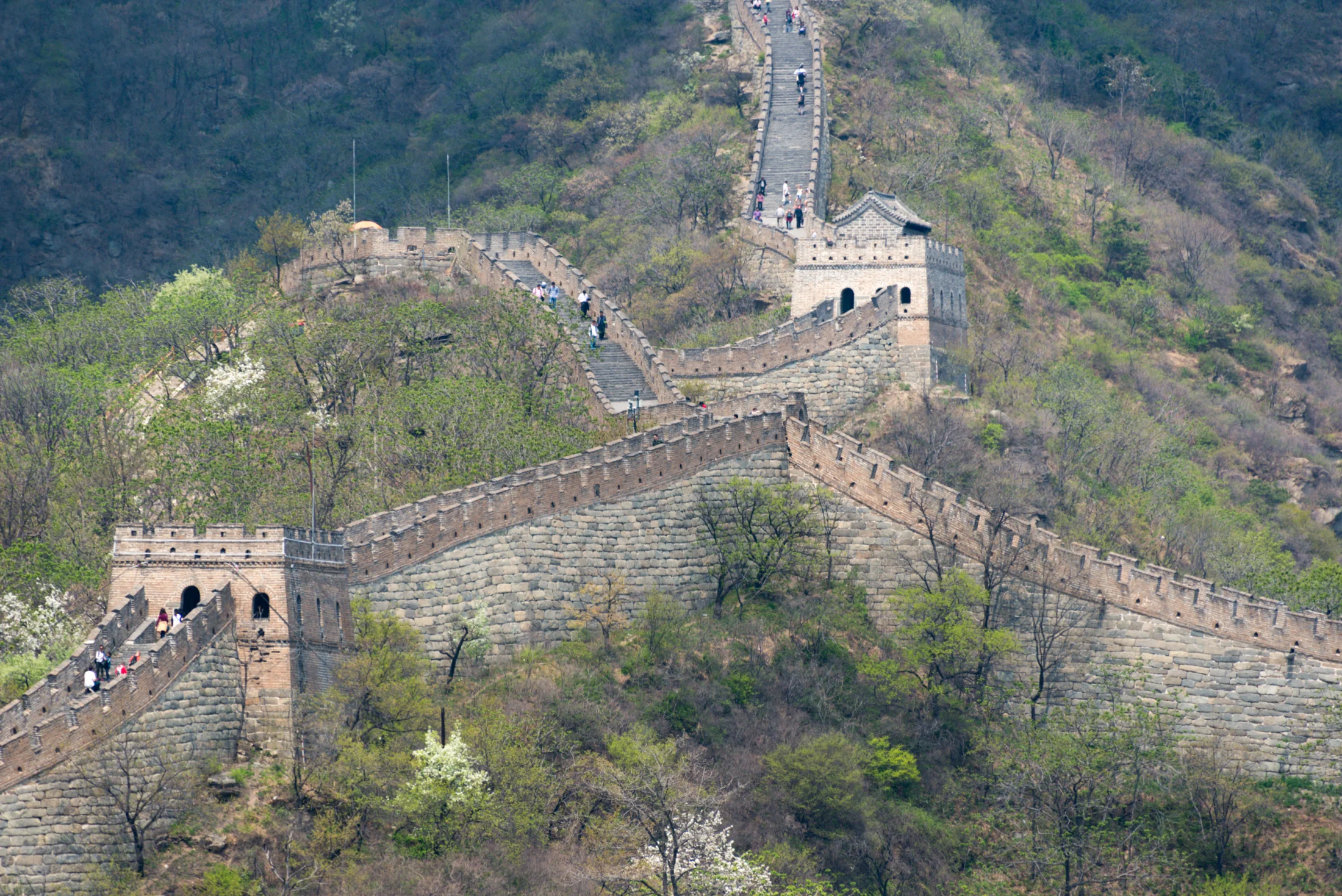
The Great Wall climbs green mountain ridges at Mutianyu with watchtowers and visitors visible along the route.
Mutianyu, 3 May 2013 · xiquinhosilva / Wikimedia Commons

MOUNTAIN LANDSCAPE

The Great Wall leaves the flat city and follows the terrain.

At Mutianyu, repeated towers, steep stairs and ridgelines show the wall as a defended mountain route. The people in the frame establish its physical scale better than an empty drone view.

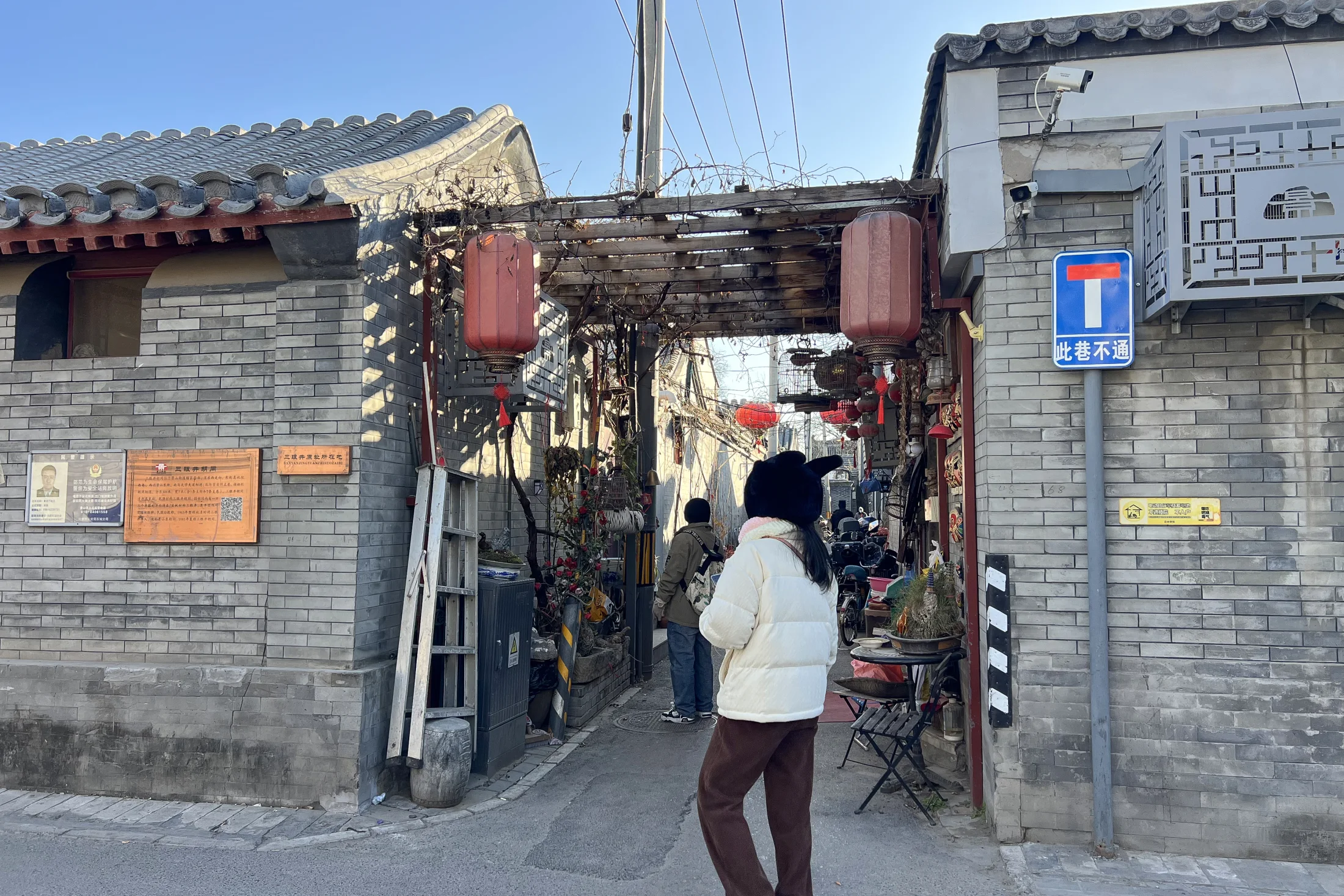
People enter a narrow hutong between grey-brick walls, overhead vines and shop objects on a clear winter afternoon.
A lane south of Sanyanjing Hutong, 14 December 2024 · N509FZ / Wikimedia Commons

LIVED HERITAGE

A hutong is still an address, entrance and working lane.

Grey brick, overhead vines, parked objects, people and a no-through-road sign show adaptation in ordinary use. This is more accurate than either a romantic empty alley or a claim that all hutongs function alike.

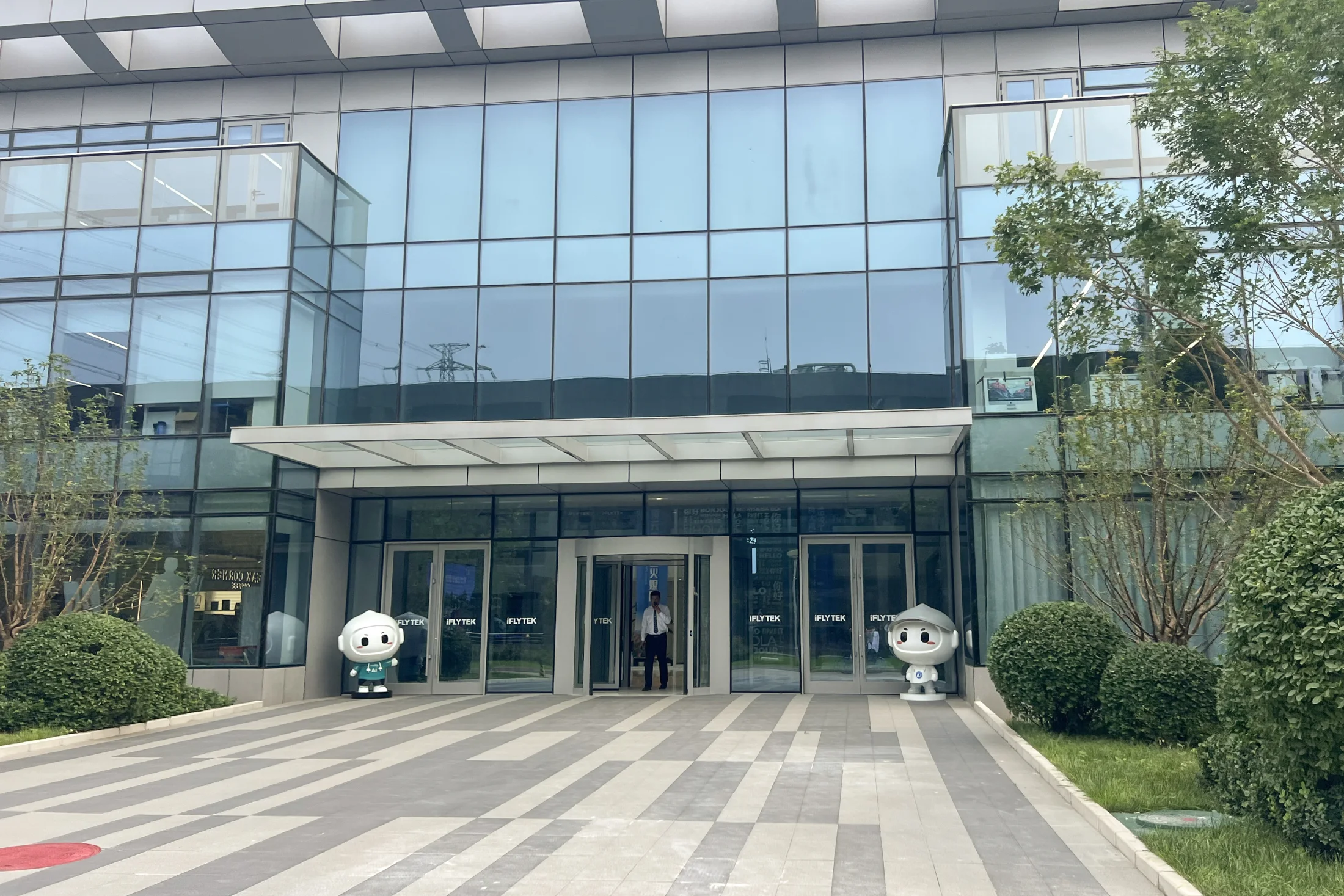
The glass entrance to iFLYTEK's Beijing building sits beside planted space in Zhongguancun Software Park.
Zhongguancun Software Park, 7 August 2024 · N509FZ / Wikimedia Commons

SCIENCE + INDUSTRY

Zhongguancun is a distributed research and company landscape.

Universities, laboratories, public institutions and company campuses extend far beyond the famous electronics street. One current tenant in the software park locates that ecosystem without pretending a building facade proves innovation on its own.

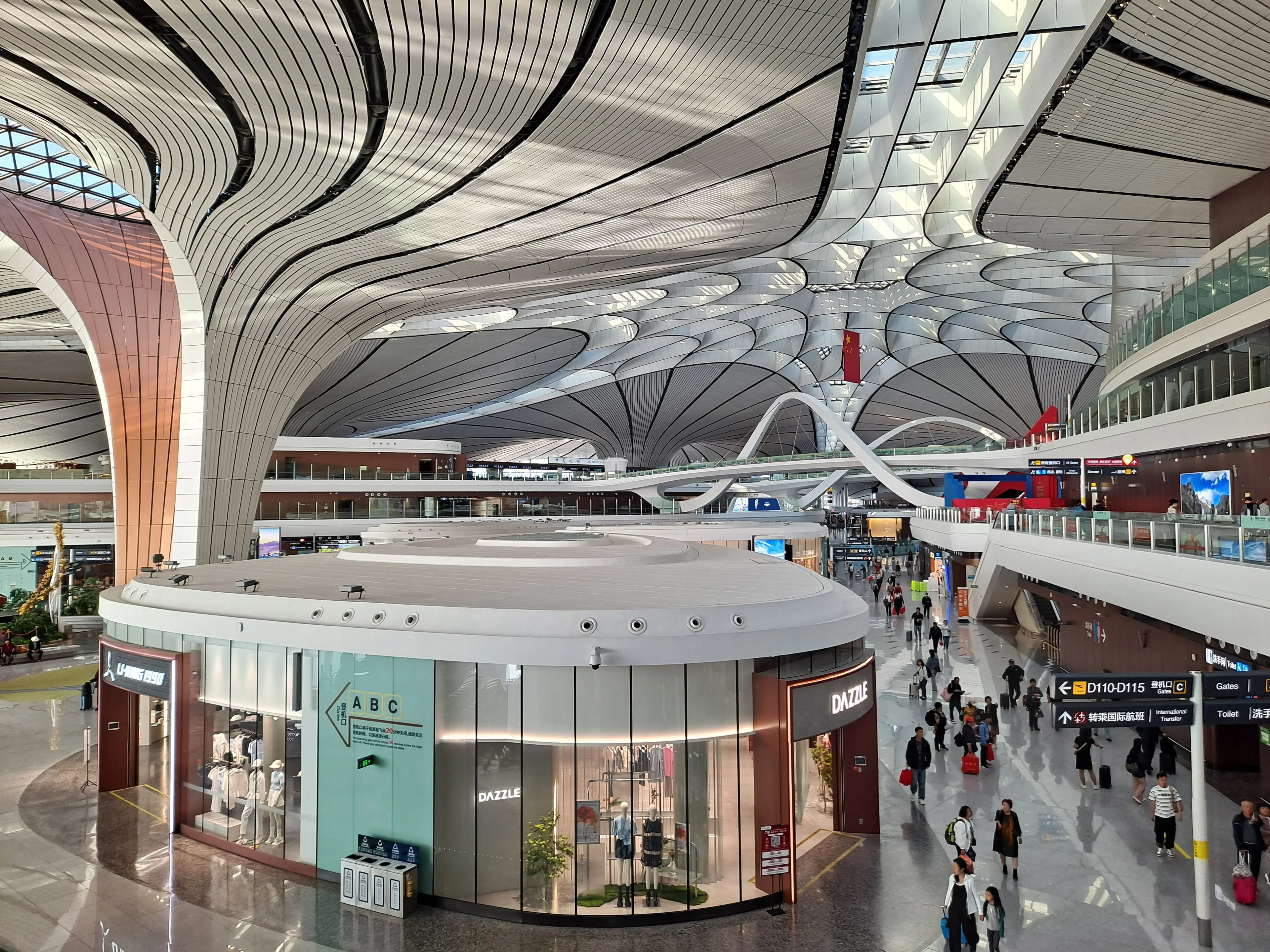
Travellers cross the vast central hall of Beijing Daxing International Airport beneath branching skylights.
Beijing Daxing International Airport, 13 May 2024 · H2v5o68z / Wikimedia Commons

GLOBAL GATEWAY

Daxing extends Beijing's planning ambition into a transport machine.

The terminal's branching roof and central hall are memorable, but the practical achievement is the compressed sequence between aircraft, baggage, rail and road. Architecture and wayfinding have to work together.

Read the full route
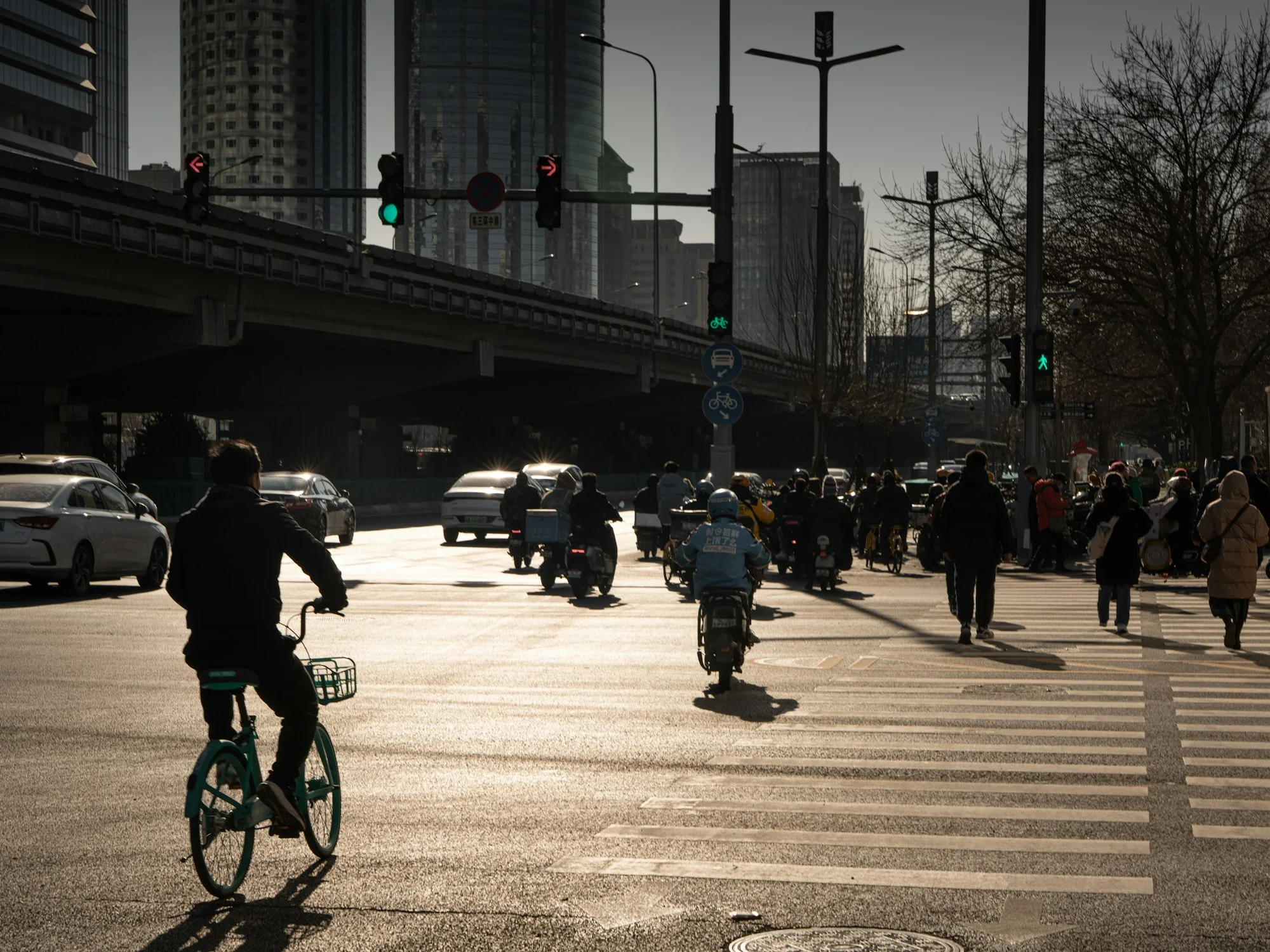
Cyclists, delivery riders, pedestrians and cars cross beneath office towers and elevated roads in Beijing's Guomao district.
Guomao, December 2025 · Steven Lynn / Unsplash

EVERYDAY MOVEMENT

The capital still has to cross the street.

At Guomao, bicycles, scooters, delivery riders, cars and pedestrians share one crossing under elevated roads. The scene brings the city's monumental and technological scales back to an ordinary trip.

PUBLISHED FOR BEIJING

Follow the city across the whole guide.

places · story

How to Read Beijing's Central Axis

A practical reading of Beijing's north-south order: what the axis connects, how its functions changed and why it is more than a sightseeing route.

places · visual-story

Chinese Cities at Street Level: Six Different Urban Systems

Six visual readings show how movement, work, water, heritage and public life make Beijing, Shanghai, Guangzhou, Shenyang, Wuhan and Hong Kong different.

culture · visual-story

After Dinner, Six Chinese Cities Become Public Venues

Riverbanks, parks, reused industrial sites and commercial streets show how music, performance and social life enter public space across six different cities.

culture · explainer

Beijing After Dark Is a Network, Not One Nightlife District

Outdoor music, night cycling and reused venues reveal a contemporary Beijing spread across districts—far beyond one bar street or an illuminated monument.

explained · explainer

In Six Chinese Cities, Near Is a Transfer, Not a Distance

Rivers, ring roads, slopes and rail interchanges explain why a short-looking urban trip can feel easy in one Chinese city and difficult in another.

explained · visual-story

No Single Kind of Downtown: Six Chinese City Forms

Beijing, Shanghai, Guangzhou, Shenyang, Wuhan and Hong Kong organise central life differently. A sourced comparison replaces the generic skyline idea.

go · guide

Your First 48 Hours in Beijing: Start with the Right Airport

A failure-resistant Beijing arrival sequence that separates PEK from PKX, establishes payment and connectivity, and plans the first long city transfer.

go · guide

Pay, Ride, Recover: A Six-City Arrival Backup

Build a transport plan that survives a rejected foreign card, dead phone, missed last train or wrong pickup zone across six China gateway cities.

go · guide

Airport to City: Six China Gateway Arrivals That Do Not Fail Quietly

A checked arrival method for Beijing, Shanghai, Guangzhou, Shenyang, Wuhan and Hong Kong, with exact transfer logic and visible late-night fallbacks.

HOW THIS CITY PORTRAIT IS BUILT

Beijing, read in layers.

The sources at right establish local geography, institutions and current systems. Photographs then have a separate job: show the specific place, action or relationship described in each chapter.

Sources and images are checked separately. A beautiful photograph is not treated as factual proof on its own.