
The phrase “Beijing nightlife” tends to summon one of two outdated pictures: a bar district from a previous decade or monuments lit after sunset. Neither is false. Neither explains how the city now uses the night.
Beijing’s after-dark culture is spread across a metropolitan network. Outdoor music appears in parks and commercial districts. Cyclists use long historic lines as moving public space. Former industrial and Olympic sites host performance, sport and entertainment. Small food windows keep ordinary trips supplied between them.
This is not a claim that all districts are equally active or that every event is spontaneous. It is a better map of the relationships that make a very large capital social after work.
The official map reveals a distance problem
Beijing’s first Outdoor Music Map in 2025 named 20 locations across 11 districts and announced more than 300 sessions. These are official programme figures. They should be read as evidence of planned distribution, not independent evidence that every session happened or succeeded.
The distribution is the important part. In a compact city, one famous district can dominate an evening guide. In Beijing, the time required to cross the metropolis changes the decision. A small concert near a residential area may be more culturally relevant to its audience than a major venue two transfers away.
The map therefore describes infrastructure as much as music: parks that can host a crowd, commercial zones willing to programme a stage, transport that still works after the performance and nearby food or retail that extends the evening.
Movement itself can become the event
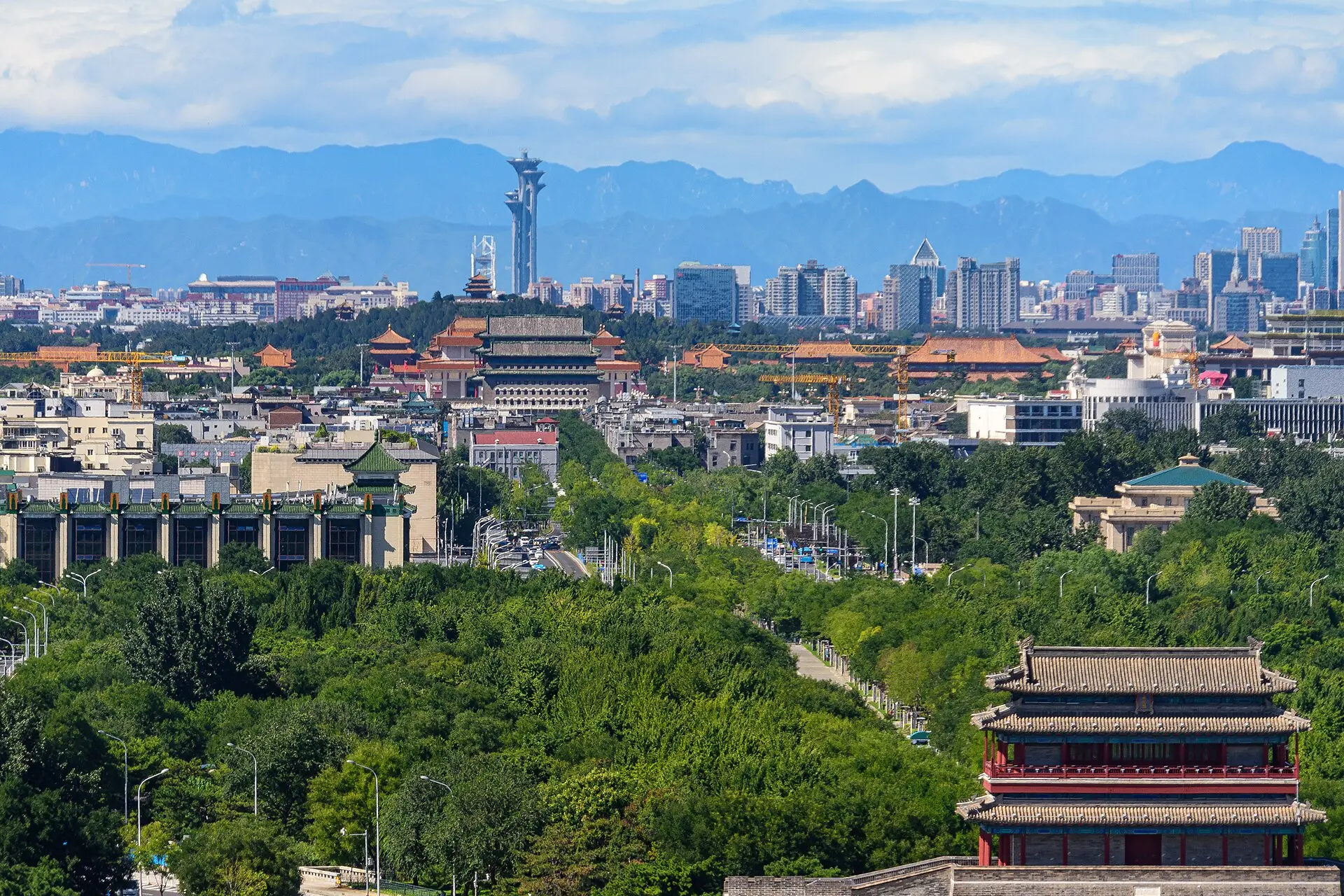
The municipal summer programme for the Central Axis included night routes and cycling. That does not turn every ride into an official cultural activity. It recognises a behavior already well suited to the city: long, legible routes allow people to experience Beijing as sequence rather than collection.
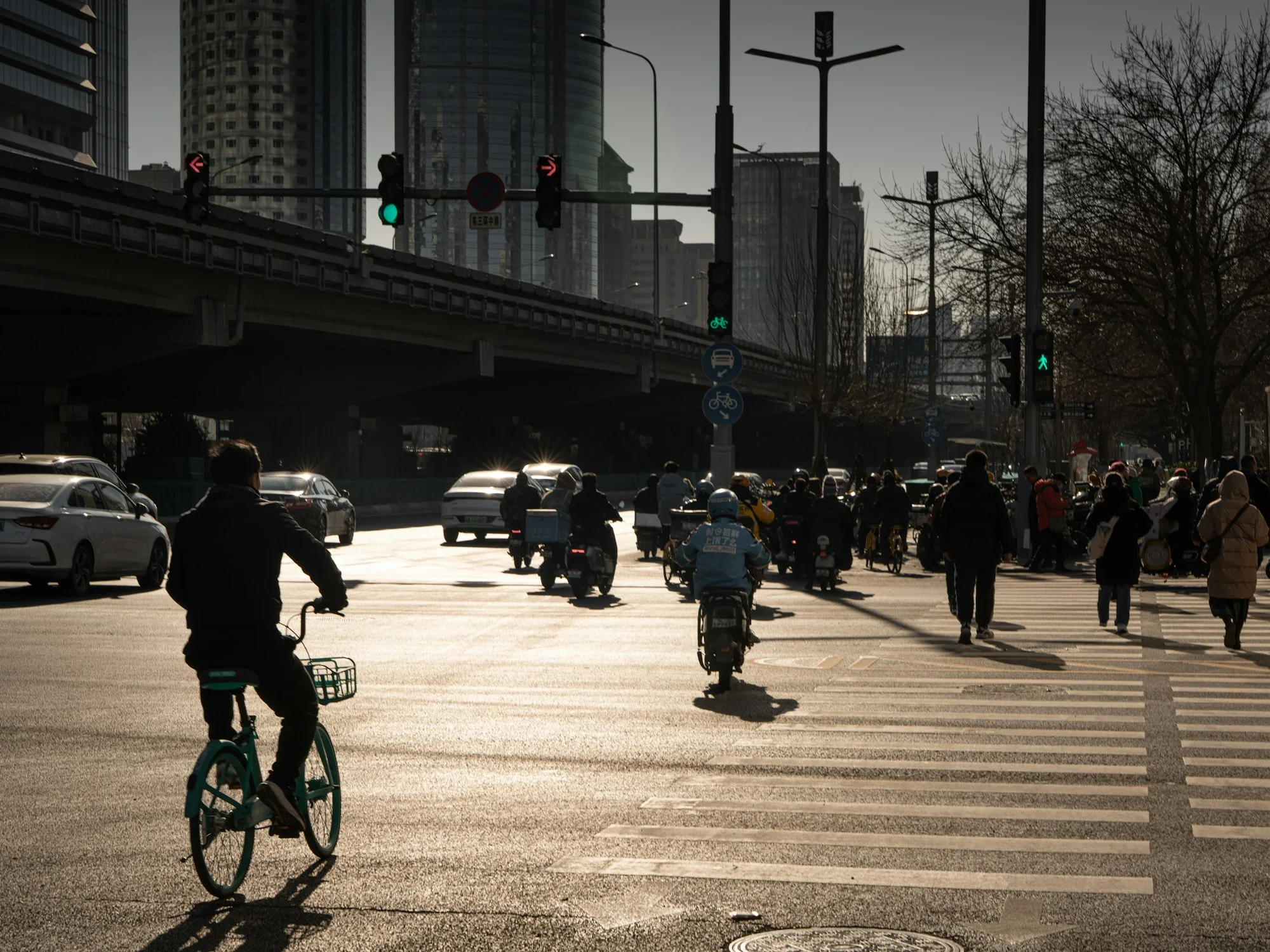
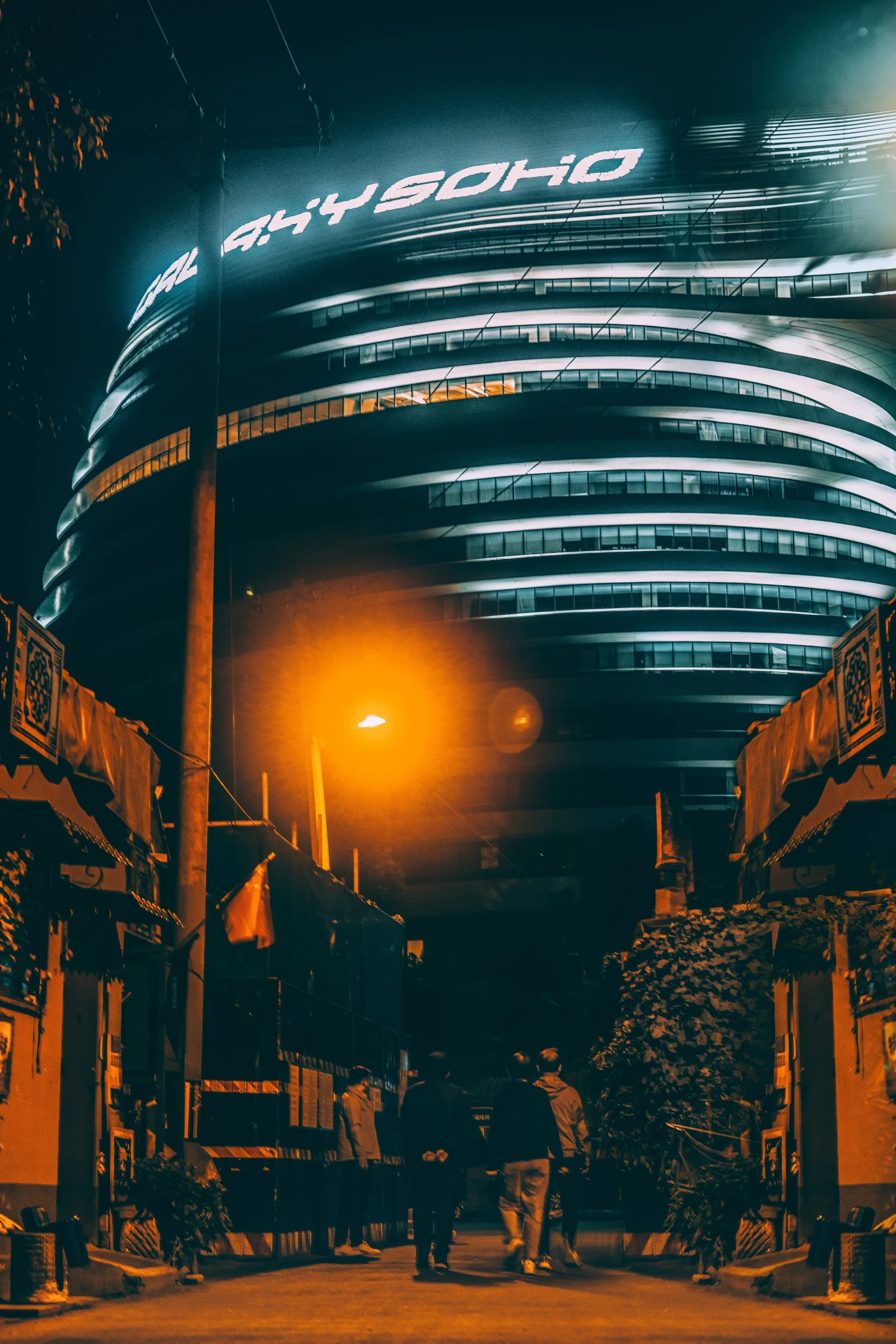
At night, cycling changes the scale of attention. The rider can move from ceremonial space to a neighborhood intersection, then through a business district where delivery scooters, shared bicycles, cars and pedestrians negotiate the same road. The city is monumental and ordinary within minutes.
This is where the photograph of Guomao earns its place. It does not show a party. It shows the mobility layer that makes any night plan possible. Culture begins with the ability to arrive, meet and return.
Reuse keeps several Beijings in one frame
The World Cities Culture Forum’s 2025 report discusses Beijing’s reuse of Shougang, the former steel-production site, as a cultural and sporting setting. The value is more than visual contrast between furnaces and new architecture.
Adaptive reuse keeps industrial memory, large infrastructure and contemporary cultural demand in negotiation. A venue can host a performance or event without pretending the earlier work never happened. The strongest experience comes from reading both layers: why the structures were built and what kinds of public use now fit inside or around them.
The same logic appears in former Olympic venues. Buildings designed for exceptional moments require new everyday purposes if they are to remain part of city life. Sport, concerts, retail and public programming are not decorative add-ons; they are ways of making expensive, highly specific structures work across time.
Small nights matter more than a list of “hot spots”
A credible Beijing night guide should distinguish at least four situations:
| Kind of evening | What creates it | What can go wrong |
|---|---|---|
| Outdoor performance | A programmed park or commercial public space | Weather, changed schedules, crowd controls |
| Venue night | A concert, game or exhibition in a reused or purpose-built site | Long return journey, ticket and identity rules |
| Moving night | Cycling or walking along a long urban route | Distance, road comfort, last train, poor air or weather |
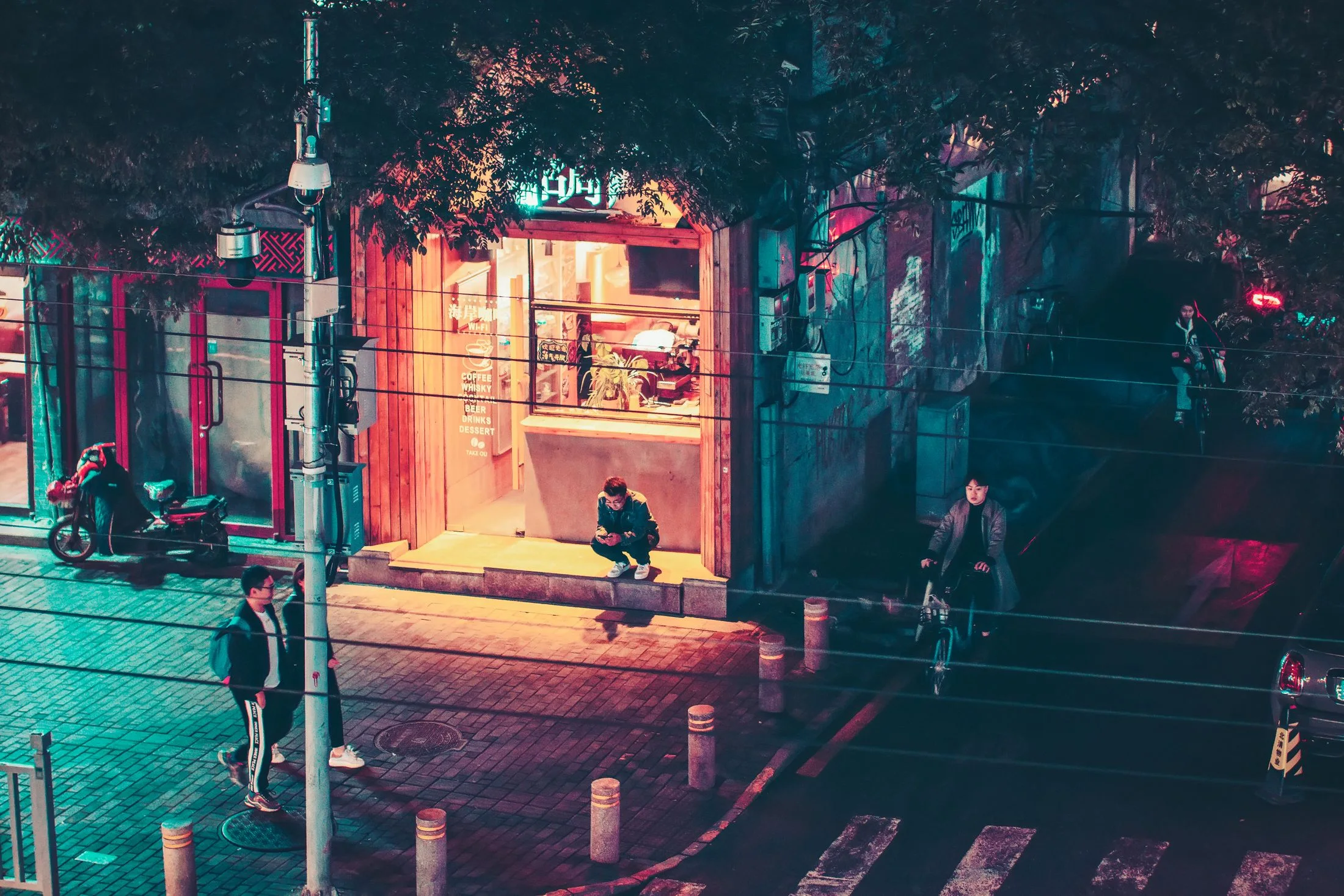
| Neighborhood night | Food, small retail and informal gathering near home | Uneven opening hours and little English information |
The table avoids one fashionable district becoming shorthand for an entire city. It also prevents “nightlife” from meaning alcohol by default. Music, sport, eating, walking, gaming, shopping and simply occupying public space all belong to the picture.
How to read the city without manufacturing a scene
Choose one event or venue from a current official listing, then build the evening around the district rather than crossing the city for several viral locations. Check the event’s own channel on the day. Save the return route before leaving. Keep a staffed transport or payment fallback available.
When you arrive, look at the edges: where riders park, where food appears, how the crowd reaches the entrance, and whether people remain in the area afterward. Those details show whether culture is connected to the neighborhood or contained inside a destination.
Do not assume a photograph with many people represents usual attendance. Do not assume a municipal programme describes an independent youth scene. And do not call a place “underground” simply because its English-language information is limited.
Sources and scope
- Beijing Municipal Government: first Outdoor Music Map — official locations and planned sessions in 2025.
- Beijing Municipal Government: Central Axis summer night routes — official night-route and cycling programme.
- World Cities Culture Forum: 2025 report — international city-culture context and Shougang reuse case.
Event calendars change quickly. This page explains the urban pattern and does not promise that a named programme is currently operating. Verify a specific event with its venue before travelling.
One useful next step
Read the Beijing city guide and choose a place, an evening activity and a practical return route that occupy the same part of the city. The result will feel more like Beijing and less like a cross-town scavenger hunt.
.jpg)