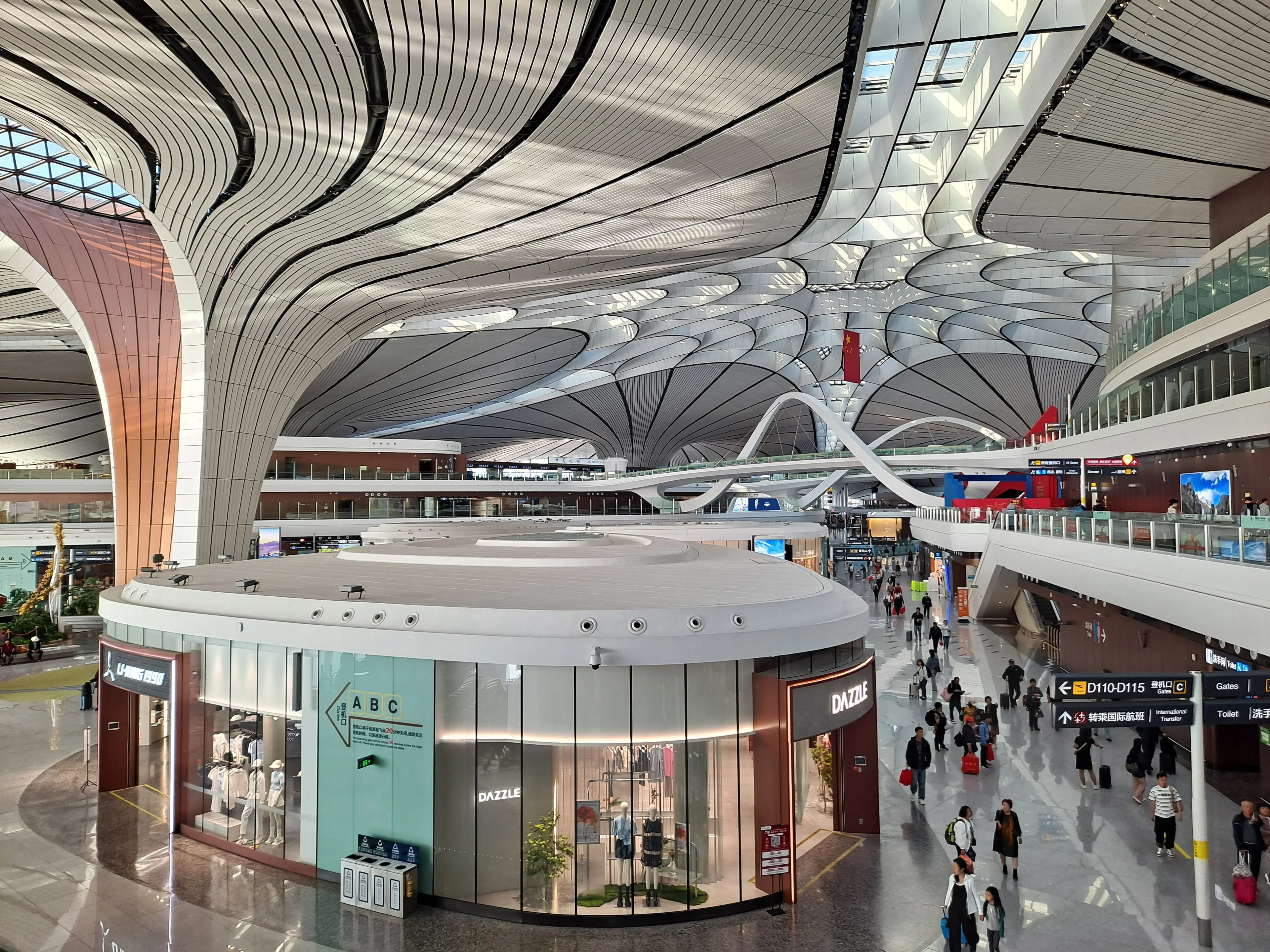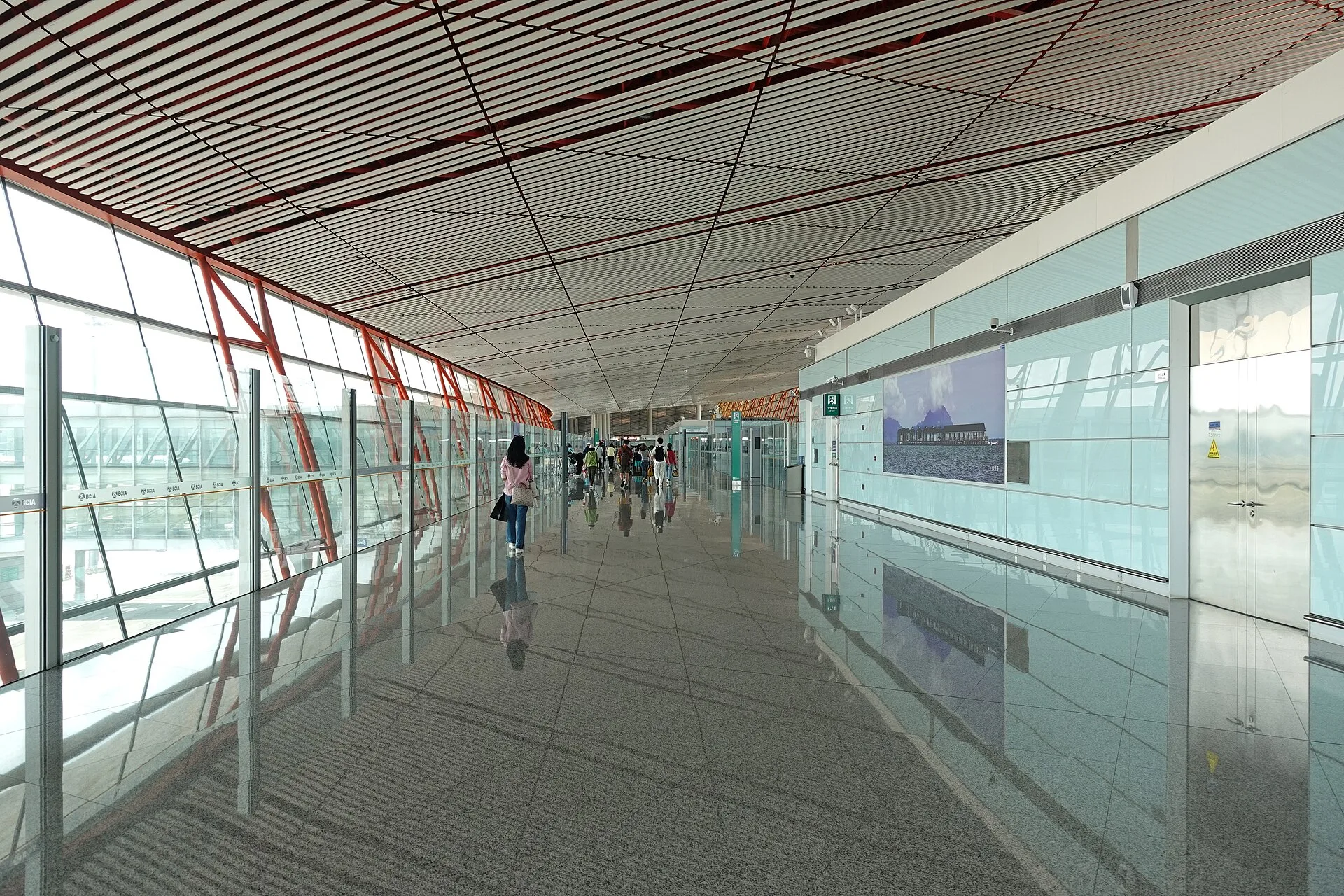
Beijing’s first arrival mistake can happen before the aircraft lands: treating “Beijing airport” as one place. Capital International Airport (PEK) and Daxing International Airport (PKX) sit in different parts of the metropolitan region and connect to different rail and road systems.
Build the first day around the airport code, the district of the hotel and a working fallback—not around a list of landmarks.
Before landing: write PEK or PKX beside the hotel
Save the flight’s airport code and terminal. Then keep the hotel’s Chinese name, full Chinese address, phone number and nearest useful station offline and on paper. A place name alone is not enough in a city with long distances and repeated names.
Beijing’s official visitor transport guide separates the two airports and their airport express services. Use it to identify the system, then confirm the live route at the terminal after arrival. Do not copy a timetable from an undated blog into a fixed plan.
Success signal: you can show a staff member the exact airport, hotel and district without mobile data.
At arrivals: establish three independent routes
Before leaving the terminal, establish:
- mobile data that continues away from airport Wi-Fi;
- one tested payment method plus a separate card or RMB cash fallback;
- a confirmed transport route from this terminal to the hotel.
National official guidance states that overseas visitors can use mobile payment, bank cards and RMB cash, while availability and issuer approval vary. That is a reason to keep alternatives, not a promise that every merchant accepts every method.
If the phone setup fails: use a staffed counter, retain the Chinese address and choose a transport method that does not require a new local account.
Airport to hotel: optimise for the final transfer
An airport train can be fast and still leave a difficult final segment. Ask where the airport service ends, how many changes follow and which station exit is useful for the hotel. A taxi may be simpler for late arrival, heavy luggage or a destination far from the rail path; use the official queue and show the saved address.
Do not let a map pin hide the scale of Beijing. The last few kilometres can involve a large interchange, an elevated road or a long block.
Success signal: the route includes the final station exit or official pickup point, not merely the name of an airport express.
First evening: verify the operating basics
Check in with the passport and exact booking name. Confirm checkout date, deposit method, working room Wi-Fi and the hotel’s Chinese address card. Then complete one short loop near the hotel: make one ordinary purchase, identify a cash/card fallback and return using the saved address.
Do not begin with a cross-city landmark circuit. The objective is to prove that the phone, payment method and return route still work outside the airport and lobby.
Day two: choose one coherent Beijing line
Pick one geographic line rather than several famous names. The Forbidden City and Central Axis need their own time and security plan. The Great Wall is a separate excursion beyond the central city. Zhongguancun, Guomao and Daxing belong to different everyday and metropolitan systems.
Test the journey in minutes and transfers. If the day includes a timed booking, keep the original identity document and confirmation details together, and verify the current entry procedure with the official venue.
Sources and scope
- Beijing visitor guide: transportation from the city’s two airports — airport distinction and official transport starting points.
- Guide to Working and Living in China 2025 — national guidance on connectivity, payment alternatives, transport and accommodation.
This page does not reproduce live schedules, fares, visa rules or venue-entry requirements. Confirm them for the exact date, airport, terminal and passport.