


A gaiwan is easy to describe and surprisingly difficult to reduce. It is a bowl, a lid and a saucer. There is no hinge, built-in strainer or handle. Yet those three pieces let one object brew leaves, separate them from the liquor, pour into smaller cups and sometimes serve as the drinking vessel itself.
That is why the gaiwan belongs in MADE as well as CULTURE. The social pace around the object matters, but the pace begins with physical decisions: the lid fits inside the rim, the bowl opens outward and the saucer makes a hot vessel movable.
Start with the complete working set
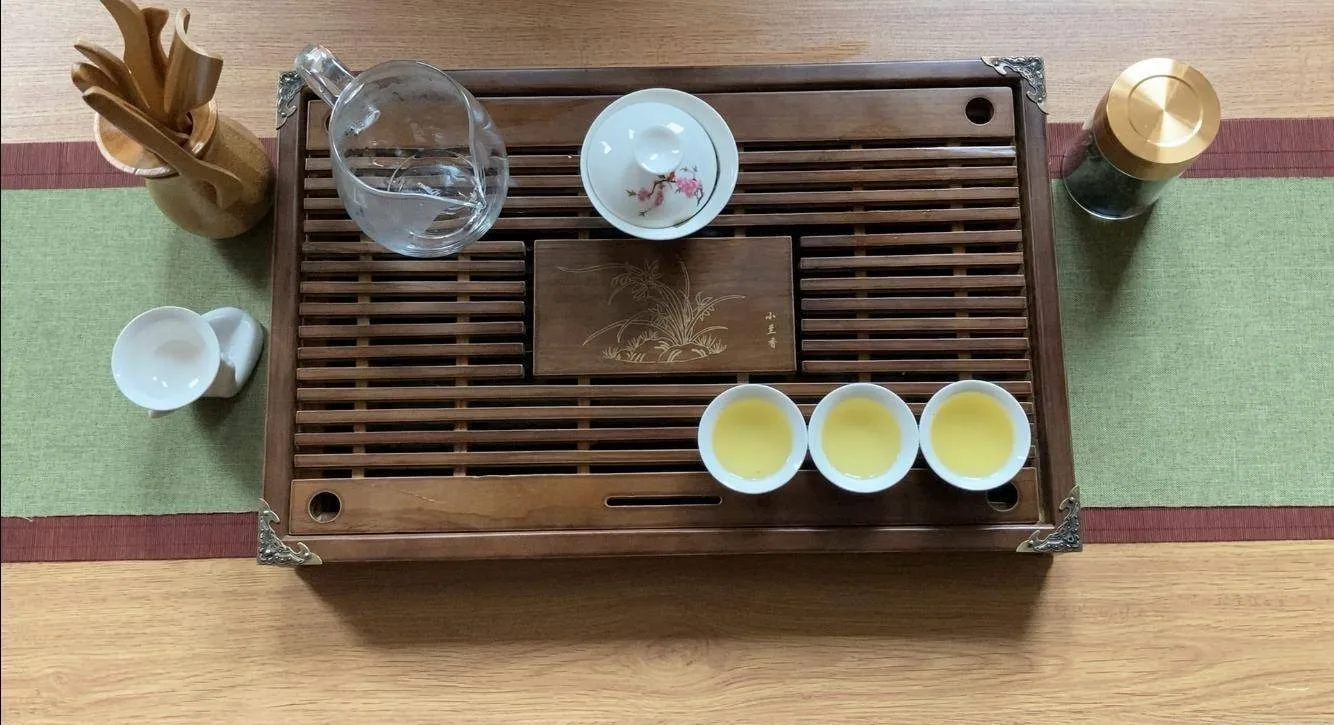
The contemporary setup in the lead image places the gaiwan beside water, three small cups, utensils and a draining tray. The covered bowl is not being presented as a decorative antique. It sits at the centre of a repeatable workflow:
- water enters the open bowl;
- the lid closes or partially closes the opening;
- the user changes the gap between lid and rim;
- liquid leaves while most leaves remain behind;
- the next steep can begin in the same vessel.
The photograph shows one personal arrangement, not a universal ceremony. Tables, vessels and grips vary. What remains stable is the relationship among cover, container and base.
The lid is an adjustable opening
The Palace Museum’s record for a Qing jade covered bowl describes a lid slightly smaller than the bowl and used to move tea leaves aside while drinking. The Hong Kong Museum of Art also records direct drinking and pouring as established uses of the covered form.
Mechanically, the lid is useful because it is not fixed. A narrow gap holds back larger leaves. A wider gap lets liquid leave faster. Removing it exposes the surface for adding water, seeing leaf expansion and releasing heat.
That flexibility also explains why technique matters. Tilt too far and the lid can slip. Close the gap too tightly and the pour slows. Fill too high and the upper rim may become uncomfortable to hold. The design offers control without hiding the consequences of each adjustment.
The bowl is both chamber and interface
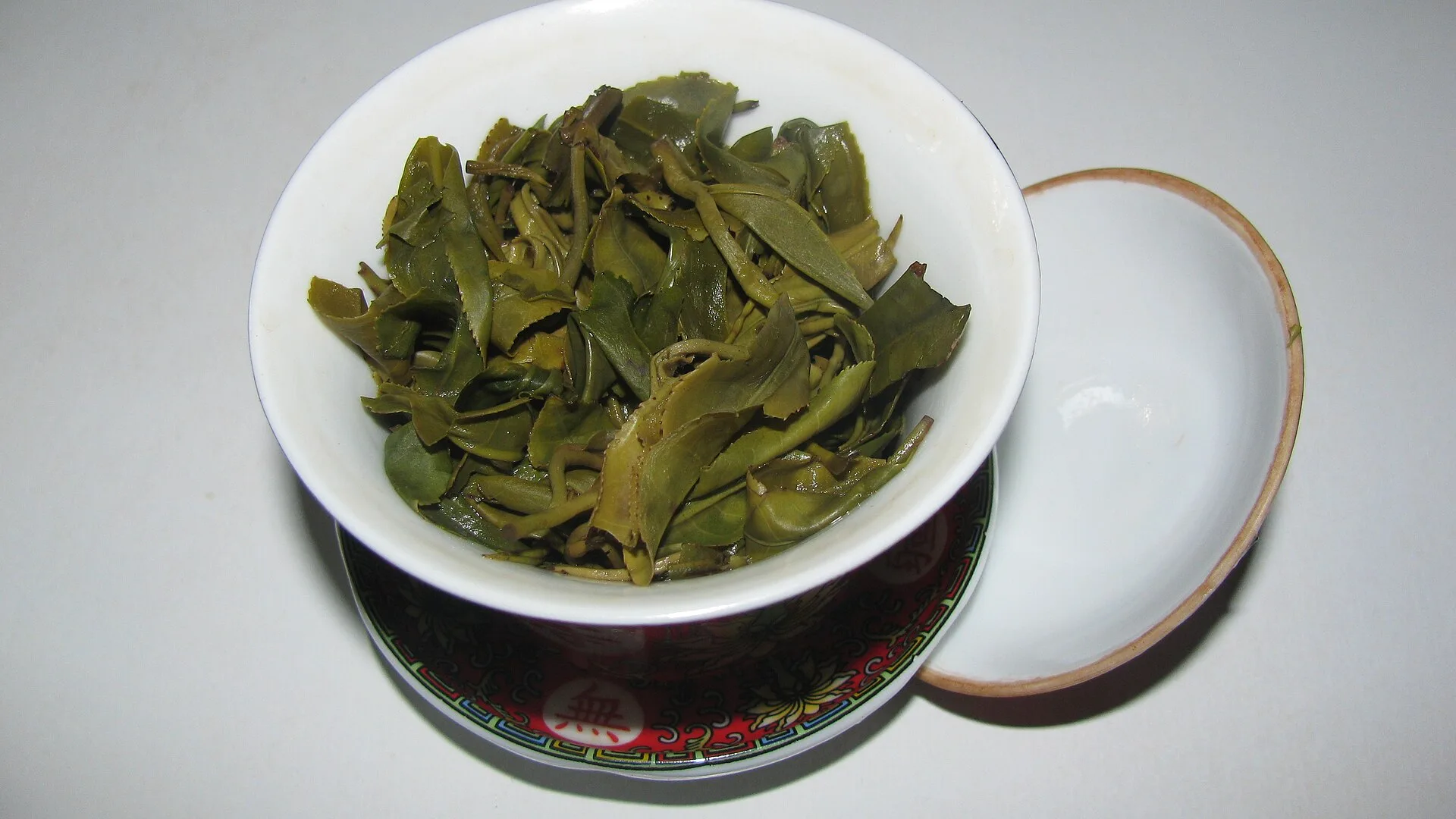
The bowl gives leaves an open volume in which to move. Its widening rim creates a visible edge that the user can approach with fingers without gripping the hottest lower wall. Because the interior remains exposed when the lid lifts, colour, leaf shape and water level can be checked directly.
This is not automatic precision. A gaiwan does not select water temperature or steeping time. It makes those variables inspectable. In product terms, the interface is the vessel itself: there is no display between the user and the brew.
The historic object recorded by the Palace Museum was made from jade, with a thin wall and carefully controlled curve. A contemporary porcelain gaiwan solves the same functional arrangement with a very different material, cost and manufacturing process. “Gaiwan” names a form and working relationship, not one material or decorative style.
The saucer makes heat and movement manageable
The saucer completes the object more than photographs often admit. It gives the bowl a base for lifting and carrying without requiring a handle. It also defines one serving unit on a shared table: when bowl, lid and saucer move together, the leaves and hot liquor can stay contained.
The saucer does not make every hot bowl safe. Temperature, fill level, wall thickness and grip still matter. Its contribution is simpler: it creates another place to hold and another stable surface between the hot vessel and the table.
Why three loose pieces survive
A hinged lid would be easier to keep attached but harder to rotate into a variable filter. A built-in strainer would separate leaves but add another part to clean and might constrain leaf space. A handle would make one grip obvious while making the vessel less compact and changing direct drinking.
The gaiwan accepts a small amount of skill in return for several modes of use. That trade is still legible today. It can serve one drinker directly, act as a small brewing vessel for several cups, or remain on a public teahouse table through repeated refills.
This does not make it the best tool for every tea or every person. A large pot can serve a group more easily. A basket infuser can make leaf removal simpler. Someone with limited grip or heat sensitivity may prefer a handled vessel. Good design reading includes those limits instead of treating continuity as proof of perfection.
One object, two different stories
This page asks how the product works. The related Culture page about the pace of gaiwan tea asks what repeated handling does to a social visit. They are connected but not interchangeable: an object can make an action possible without determining what that action means in every setting.
Questions readers ask next
Is the gaiwan lid mainly decorative?
No. It retains heat, helps control infusion and can hold back leaves while pouring or drinking. Decoration varies; the loose relationship between lid, bowl and saucer does the work.
Are all gaiwan sizes and proportions interchangeable?
No. Capacity, rim, lid fit, material and hand size change handling. The three-part grammar stays recognisable while individual objects behave differently.
Sources and scope
- The Palace Museum: Jade covered bowl — dimensions, material, Qing court use and the lid’s documented role in moving leaves aside.
- Hong Kong Museum of Art: Covered Bowl with Calligraphic Inscriptions — covered-bowl construction and documented direct-drinking and pouring uses.
The functional analysis follows the parts and uses recorded by the two museums. It does not claim that one grip, vessel material, brewing ratio or service style is standard across China.