
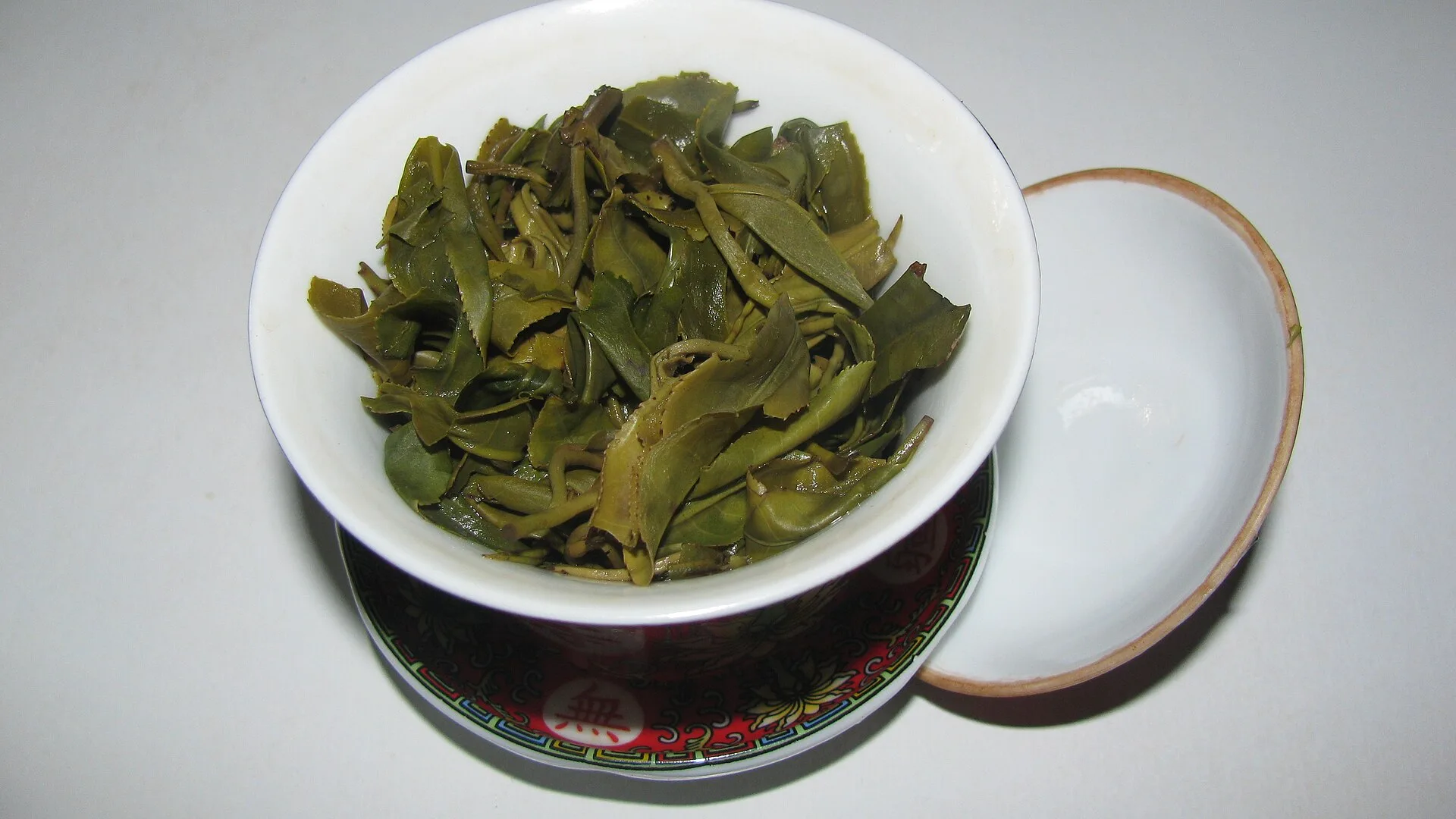

A gaiwan is a covered bowl used to brew tea. Its three familiar parts—a lid, bowl and saucer—solve practical problems in plain sight. The lid can hold leaves back or help direct a pour. The open bowl makes the liquor and leaves visible. The saucer gives the hot vessel a base that can be moved without gripping the bowl itself.
Those functions make a gaiwan more than a symbol of “traditional tea culture.” It is a compact brewing system whose design changes how tea is served, watched and repeated.
Three parts, three controls
The Hong Kong Museum of Art describes covered bowls introduced in the Qing dynasty and explains two uses that remain easy to recognise. A drinker can sip from the bowl while shifting the lid to keep leaves away. The bowl can also be used to brew and pour into smaller cups.
The lid changes the opening. Tilted a little, it becomes a filter. Opened more, it lets liquor and larger leaves move out quickly. Closed, it slows heat loss and keeps the contents covered between steeps.
The bowl gives leaves room to open and lets the user see colour and movement. Its flared edge provides a cooler place to hold than the lower wall, although technique and temperature still matter.
The saucer is not ornamental redundancy. It supports carrying and drinking when the bowl is hot. In a public teahouse, it also marks one complete serving unit: lid, vessel, base.
Direct drinking and decanting are different workflows
When tea is drunk directly from the gaiwan, leaves remain in the same vessel as the liquor. The drinker uses the lid and angle of the bowl to keep them back. Water can be added again as the tea weakens.
When the gaiwan is used as a brewing vessel, the liquor is poured out after a chosen interval. This separates liquid from leaves and makes the steep easier to stop. It can also distribute one brew among several small cups.
Neither method is the single correct meaning of the object. The museum record explicitly notes both direct drinking and pouring. Venue, tea, group size and habit decide which use is practical.
The object keeps time visible
A tea bag in a mug can hide the variables of brewing. A gaiwan places them on the table. The drinker can see water level, leaf expansion and liquor colour; removing the lid releases aroma and heat; pouring ends a steep.
This does not make the process automatically precise. Water temperature, leaf quantity and time can still vary widely. The design simply exposes decisions that a sealed machine or opaque pot may conceal.
In a Chengdu teahouse, that visibility works with refill service. UNESCO’s account of Chengdu’s teahouse archives and contemporary venues repeatedly places gaiwan tea inside a longer social visit. Fresh hot water starts another cycle without replacing the entire service.
Why the lid changes social pace
A lid gives the hand something to do while conversation continues. It can be shifted, lifted, replaced and used to control leaves without leaving the table. Repeated small actions divide a long sitting into intervals.
That observation is a design interpretation, not a claim that every user experiences time in the same way. The evidence establishes how the parts work and where the vessel appears. The connection between those actions and social rhythm is the editorial reading offered here.
There is no single universal hand position
Instructional videos often present one grip as correct. In practice, direct drinking, decanting, bowl size and heat lead to different holds. A museum description can establish the vessel’s functions; it cannot set etiquette for every region or venue.
For a first encounter, the safe sequence is simple:
- Check whether the venue expects direct drinking or provides separate cups.
- Touch the saucer and upper rim before lifting a hot bowl.
- Move the lid only enough to keep leaves back.
- Pour away from the hand and do not overfill.
- Follow the host or server when local service differs.
This is an observation guide, not a ceremonial rulebook.
A modern object with a long history
The gaiwan is often photographed beside antique furniture, but its strongest claim to continuity is use. The same three-part logic still solves everyday problems: brew, filter, hold and refill.
That makes it a good example of tradition in use. Its history matters, yet the object remains intelligible because the design is active. You do not need a story about timeless culture to explain why a lid that doubles as a filter is useful.
Sources and scope
- Hong Kong Museum of Art: Covered Bowl with Calligraphic Inscriptions — construction, history, direct drinking, pouring and heat behaviour.
- UNESCO: Revitalizing Chengdu’s Traditional Teahouse Archives — gaiwan tea in documented Chengdu teahouse settings.
- Chengdu People’s Park — current institutional context for tea culture and Heming Teahouse.
This page describes the vessel’s documented functions and an editorial interpretation of pace. It does not prescribe one national etiquette, claim a field test or advise on burn-safe temperatures.