
DJI has not announced a United States sale date or US dollar price for the Osmo 360 II. Its official video points to a September 3 presentation, and DJI has separately announced a September 4–8 European debut at IFA. Neither statement confirms American inventory, and the current US-region DJI Store route returns no product page.
The camera does have an identifiable FCC equipment record. That answers a radio-authorization question; it does not create a US launch date, a DJI warranty route or stock. The wider legal context is also narrower than the headline “DJI ban”: as of August 28, 2026, DJI is not subject to one blanket rule that makes every product illegal to own or use, while future models, retail supply and certain higher-capability systems face different FCC restrictions or proposals.
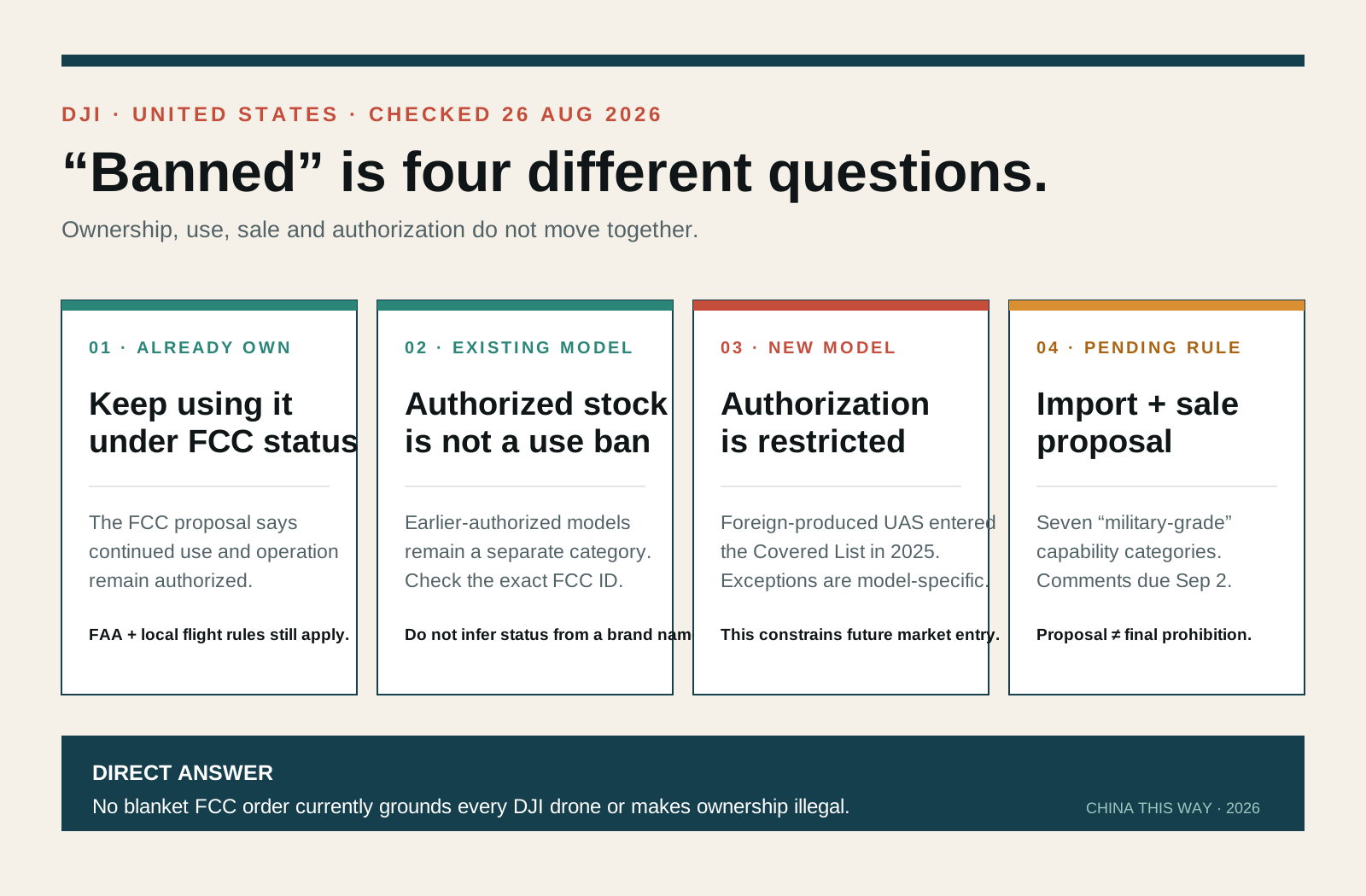
The word “ban” currently collapses at least four questions:
- Can an owner keep and operate a drone already purchased?
- Can a retailer continue selling or importing an already-authorized model?
- Can a new foreign-produced model obtain the FCC authorization needed for the US market?
- Could a pending FCC proposal stop future imports and marketing of some previously authorized higher-capability systems?
Those questions do not have the same answer. This page separates them using FCC and Federal Register records rather than social-media headlines.
DJI US status in one table
| Reader question | Status on August 26, 2026 | What that means |
|---|---|---|
| Can I keep using a DJI drone I already own? | Yes under the cited FCC actions. | The current military-grade proposal expressly says continued use and operation of already-purchased equipment would remain authorized. FAA registration, Remote ID, airspace and local restrictions are separate. |
| Can stores sell an older model that already has FCC authorization? | Not subject to one blanket DJI retail prohibition. | The FCC’s December 2025 fact sheet said previously authorized models could continue to be sold, imported or marketed. The exact FCC ID and later model-specific action still matter. |
| Can a completely new DJI drone model enter the US market normally? | Constrained. | Foreign-produced UAS and critical components were added to the FCC Covered List in December 2025. New equipment authorization is the central barrier, subject to stated exceptions and conditional approvals. |
| Are thermal, LiDAR, docking or swarm-capable systems already banned from sale? | A restriction is proposed, not final. | DA 26-758 asks whether importation and marketing of previously authorized covered systems in seven capability categories should stop. Comments close September 2, 2026. |
| Will existing drones still receive firmware updates? | Permitted at least until January 1, 2027 under the current waiver. | The waiver covers software and firmware updates needed for continued function, security patches and operating-system compatibility. |
DJI Osmo 360 II: the US answer right now
As of August 28, the most accurate short answer is: the Osmo 360 II exists, has official international launch activity and an identifiable FCC equipment record, but DJI has not opened a confirmed US retail route or announced a US price/date.
These facts should not be collapsed into one headline:
| Checked fact | Current evidence | Safe conclusion |
|---|---|---|
| Product and next announcement | DJI’s official 17-second video says “Coming Sept 3” | A DJI presentation is scheduled; it does not promise US retail availability |
| European availability | DJI’s August 27 announcement calls IFA 2026 the Osmo 360 II’s European debut | Europe has a stated public debut; the announcement does not name a US sale date |
| China price and product state | DJI’s China store lists the Standard Combo at ¥3,299 and the Adventure Combo at ¥3,999 | The camera is a real released product in China; yuan prices are not US MSRPs |
| US product route | The checked US-region DJI Store route returned no product page | DJI is not presently offering a verified direct US purchase route through that URL |
| FCC identity | The equipment test record identifies OSMO 360 II model OQ002 and FCC ID 2ANDR-OQ0022512 |
The radio model has a traceable FCC record; that alone does not create a DJI US sale date, warranty or inventory |
The difference matters because search results currently mix three dates: the August 13 China release, the September 3 international presentation and the September 4–8 IFA appearance. None of those is, by itself, a confirmed American on-sale date.
The FCC file also needs careful wording. A report showing an FCC ID answers “is there a US equipment record for this radio model?” It does not answer “can I buy a US-warranty unit from DJI today?” Retail channel, warranty, importer and later FCC actions remain separate checks.
The official product video is included here because it is the current publisher signal driving the question. It is a 17-second release clip, not a review, field test or full specification demonstration.
This status can change quickly. The next mandatory review for this page is September 3, 2026, immediately after the current comment deadline.
What changed in December 2025
On December 22, 2025, the FCC added foreign-produced uncrewed aircraft systems and UAS critical components to its Covered List after receiving a national-security determination from an executive-branch interagency body. This was wider than a rule naming only DJI; it was a production-location category, with exceptions.
The FCC’s own fact sheet drew a crucial boundary. It said the action did not stop consumers from continuing to use drones already acquired, and did not stop retailers from selling, importing or marketing models that had already received equipment authorization. The restriction applied on a going-forward basis to new device models.
That distinction explains why these two statements can both be true:
- DJI faces a serious US market-access restriction.
- A person flying an already-authorized DJI drone is not automatically violating an FCC ownership ban.
The FCC Covered List is about communications-equipment authorization and related market access. It is not a replacement for FAA flight rules, and it is not a one-line product recall.
For the company and manufacturing context behind the products, read DJI and the Product Logic of Shenzhen. That profile explains integration and Shenzhen’s hardware ecosystem; this page handles the current US regulatory status.
What the September 2 proposal could change
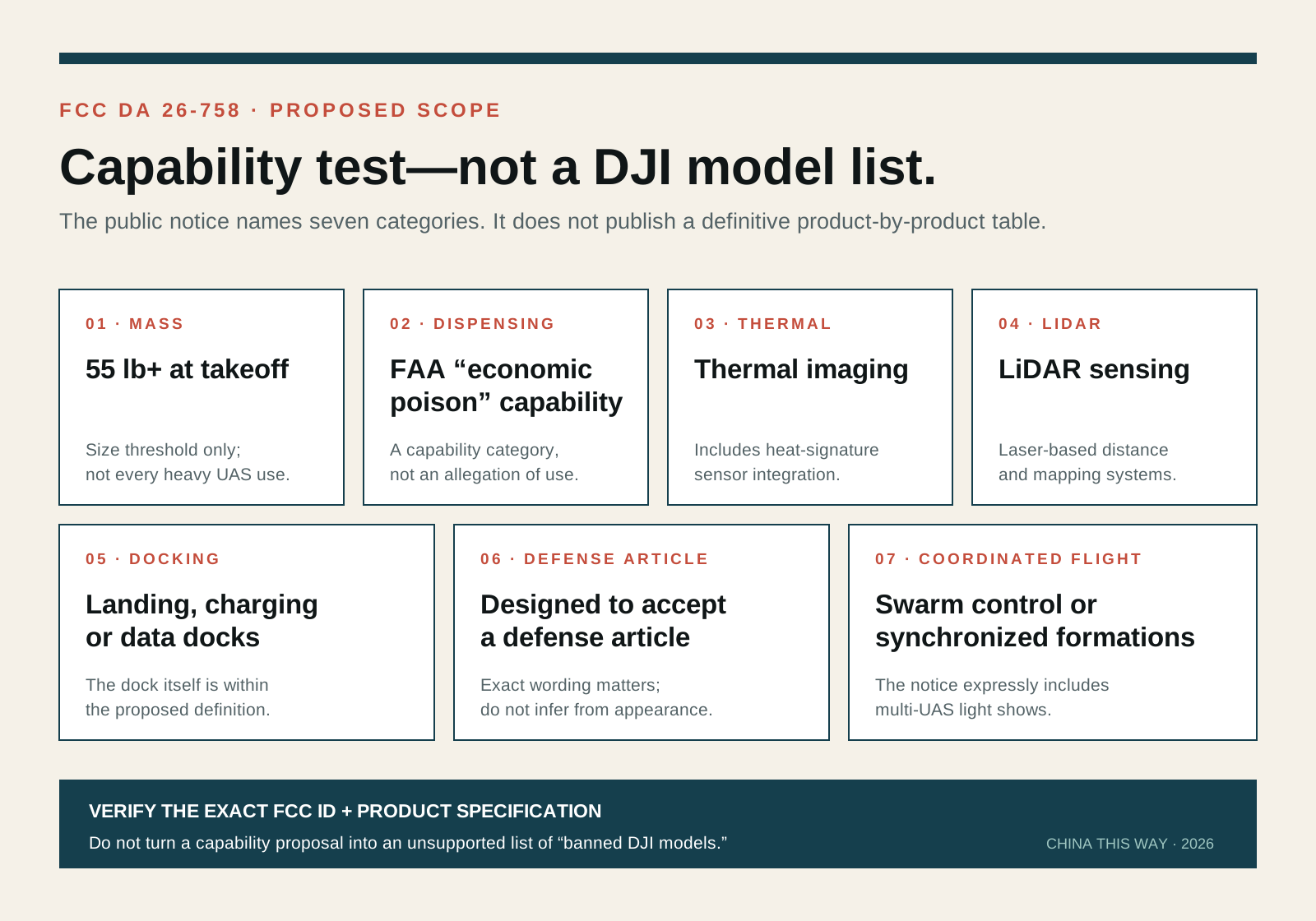
The current time-sensitive item is FCC Public Notice DA 26-758, published in the Federal Register on August 3, 2026. The FCC is considering whether to prohibit continued importation and marketing of previously authorized, foreign-produced UAS and critical components that are both on the Covered List and meet its proposed definition of “military-grade.”
Comments are due September 2, 2026 in PS Docket No. 26-189. This is a request for comments, not a final prohibition.
The proposed capability categories are:
- UAS weighing 55 pounds or more at takeoff;
- UAS capable of dispensing an FAA-defined “economic poison”;
- UAS containing or integrating thermal-imaging sensors;
- UAS containing or integrating LiDAR sensors;
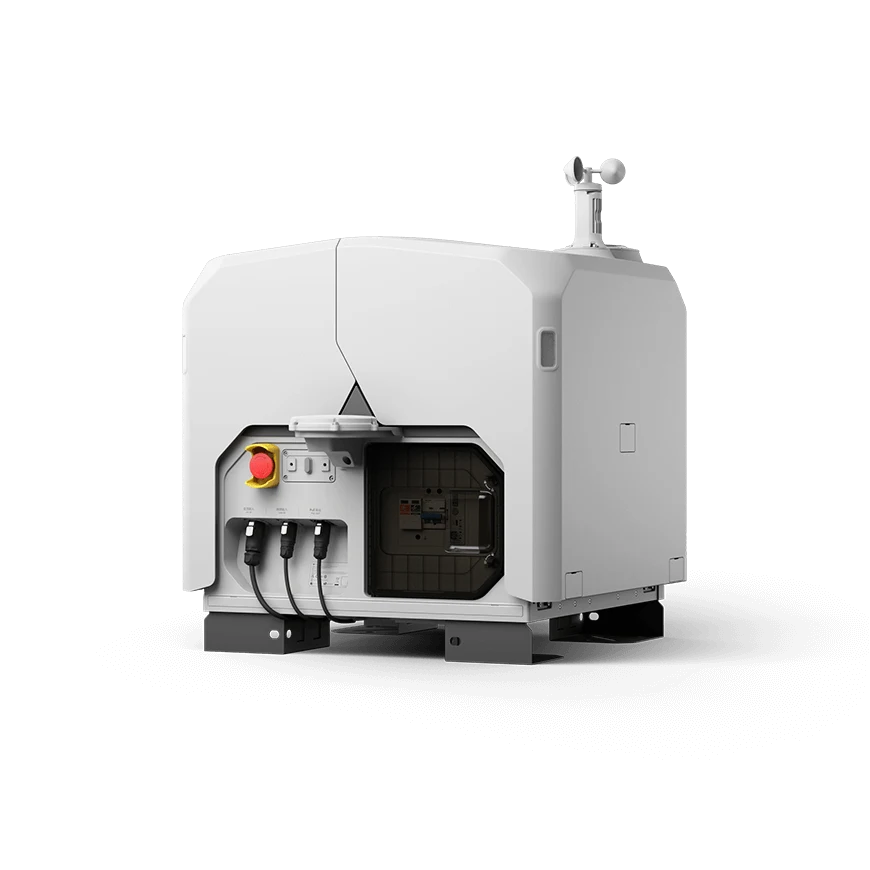
- UAS docking stations that support landing, takeoff, charging, battery replacement, data or payload transfer;
- UAS specially designed to incorporate a defense article;
- ground control systems or UAS designed for coordinated swarms or synchronized formations, including multi-UAS light shows.
The FCC notice does not provide a final DJI model-by-model list. A page that labels every thermal camera drone or every current DJI enterprise product “banned” is getting ahead of the proceeding. The correct check is capability, FCC authorization and Covered List status—not brand recognition alone.
If the FCC adopts the proposal as written, the notice proposes a 180-day wind-down after publication of the final decision in the Federal Register. Even then, it says continued use and operation of devices already in users’ hands would remain authorized; the proposed change is aimed at importation and marketing.
Consumer drone, enterprise system and dock are not the same case
A compact camera drone, a thermal-inspection platform, an agricultural sprayer and an autonomous dock may all carry the DJI name while falling into different regulatory questions.
For a consumer buyer, the useful questions are:
- What is the exact model and US FCC ID?
- Was that model authorized before the Covered List addition?
- Is the seller offering US inventory and US warranty/support, or a gray-market import?
- Does a later FCC order target that model or capability?
- Are FAA registration and Remote ID obligations satisfied for the intended operation?
For an enterprise buyer, add the sensor and workflow questions. Thermal imaging, LiDAR, docking and coordinated multi-UAS control appear directly in the pending proposal. An equipment purchase, spare-parts plan or multi-year deployment should not rely on a generic consumer FAQ.
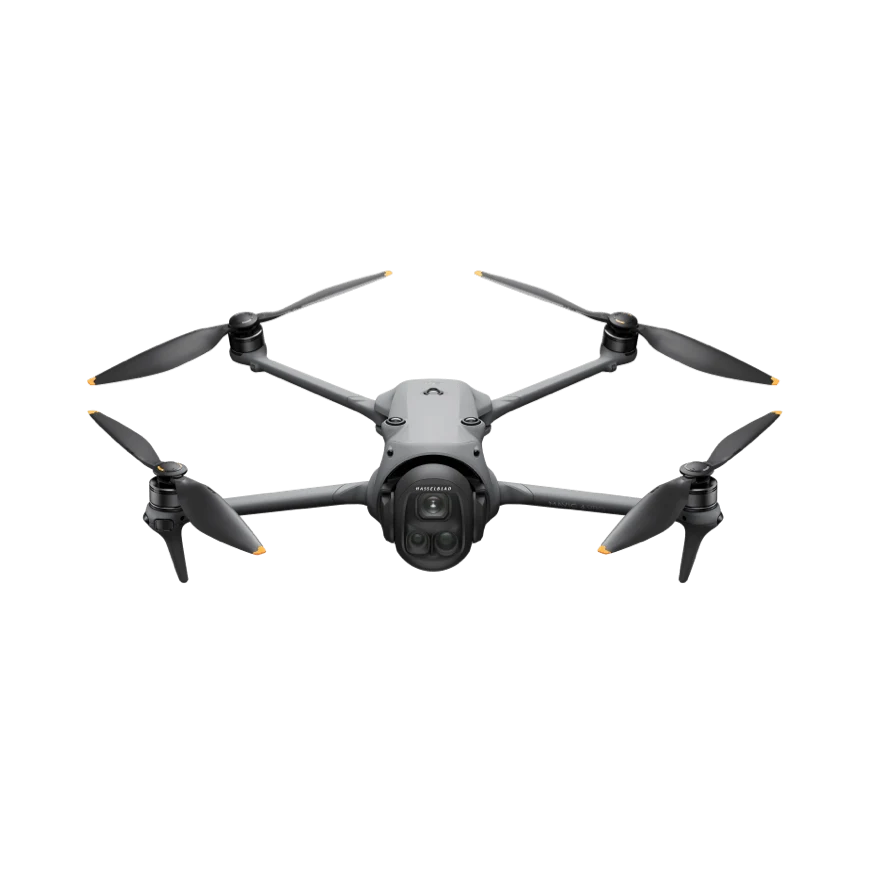
The product images on this page illustrate that range; they do not certify the US authorization or future availability of the pictured models.
What current owners should do
There is no reason to ground an existing DJI drone solely because a headline says “ban.” There is also no reason to ignore a changing support and market-access environment.
Use this short check:
- Record the exact model, FCC ID and serial number. The FCC ID is a better regulatory key than “DJI drone.”
- Keep the aircraft and controller firmware current. The FCC’s January waiver permits relevant software and firmware updates at least through January 1, 2027.
- Separate FCC status from FAA operation. Confirm registration, Remote ID, airspace authorization and operating-category obligations through the FAA.
- Do not assume a marketplace listing proves authorization. Verify the FCC ID in the official equipment-authorization database and use an authorized US seller when support matters.
- For commercial fleets, document replacement and support risk. Batteries, sensors, docks, controllers and app compatibility can matter even if continued flight remains lawful.
This is an editorial status guide, not legal advice. Operators with contracts, public-safety work, critical-infrastructure access, government procurement or planned imports need advice specific to their program.
Can DJI still release firmware and app updates?
Under FCC DA 26-69, previously authorized covered UAS may continue to receive software and firmware updates that mitigate harm to US consumers at least until January 1, 2027. The notice specifically includes updates that preserve function, patch vulnerabilities and maintain operating-system compatibility.
That is a time-bounded waiver, not a permanent promise. The FCC said it would reevaluate the issue before the date. Owners should therefore distinguish three things:
- an update being legally permitted;
- DJI continuing to publish an update for a specific model;
- a phone, app store or operating system continuing to support the required app.
One does not guarantee the other two.
Is this about DJI specifically or all foreign drones?
Both layers exist.
The December 2025 Covered List action applies to foreign-produced UAS as a category, subject to exceptions. Separately, DJI has challenged how the action applies to its communications and video-surveillance equipment. In June 2026 the FCC opened a further comment opportunity on evidence DJI submitted in that reconsideration proceeding, with comments due August 28.
The pending military-grade proposal also uses a category-and-capability test rather than simply printing a DJI product blacklist. DJI is central to the public discussion because of its products and market presence, but the official text is broader than one brand.
That is why this page avoids two shortcuts: “DJI is untouched” and “every DJI drone is banned.” Neither describes the current record.
Questions readers ask next
Can I fly my DJI drone today?
The cited FCC actions do not create a blanket prohibition on continued operation of a previously purchased DJI drone. Your actual flight must still comply with FAA and local rules, airspace restrictions, registration, Remote ID and any rules tied to commercial or public-agency use.
Is it legal to buy a DJI drone in the United States?
There is no single answer for every model and seller. Previously authorized models occupy a different status from new models seeking authorization, and a pending proposal could restrict future importation and marketing of certain higher-capability equipment. Check the exact US FCC ID and seller channel before purchasing.
Will my existing DJI drone stop working?
The FCC’s current actions do not remotely disable owned drones. Service can still be affected by ordinary product support, app compatibility, batteries, account access and future firmware decisions. Those practical risks are not the same thing as an FCC flight ban.
Are DJI Mini drones included in the military-grade proposal?
The proposal is capability-based. It does not publish a final product list, and this page will not infer one from a model name. Check the seven listed capabilities and the exact equipment authorization. Small size alone does not answer every sensor or system question.
Does “Covered List” mean an existing product is illegal?
No. Covered List status affects equipment authorization and related import/marketing rules, but the FCC has repeatedly separated those issues from continued use of previously authorized devices. Exact dates, exceptions and later orders still matter.
Sources and scope
This page was checked on August 28, 2026 against the FCC’s December 2025 foreign-UAS fact sheet; the January 2026 firmware-update waiver; the current Federal Register text for DA 26-758; the FCC notice concerning DJI’s reconsideration evidence; the FCC equipment-authorization database; the Osmo 360 II equipment test record; and FAA owner/operator guidance. DJI’s August 27 IFA announcement, official September 3 video, China store and US-region store route establish current product/availability facts only; they are not used as authority for US law.
The page does not predict how the FCC will decide PS Docket No. 26-189, publish an unsupported model blacklist, or advise an individual operator on legal compliance. It will be rechecked after the September 2 comment deadline and whenever the FCC publishes a final action.