
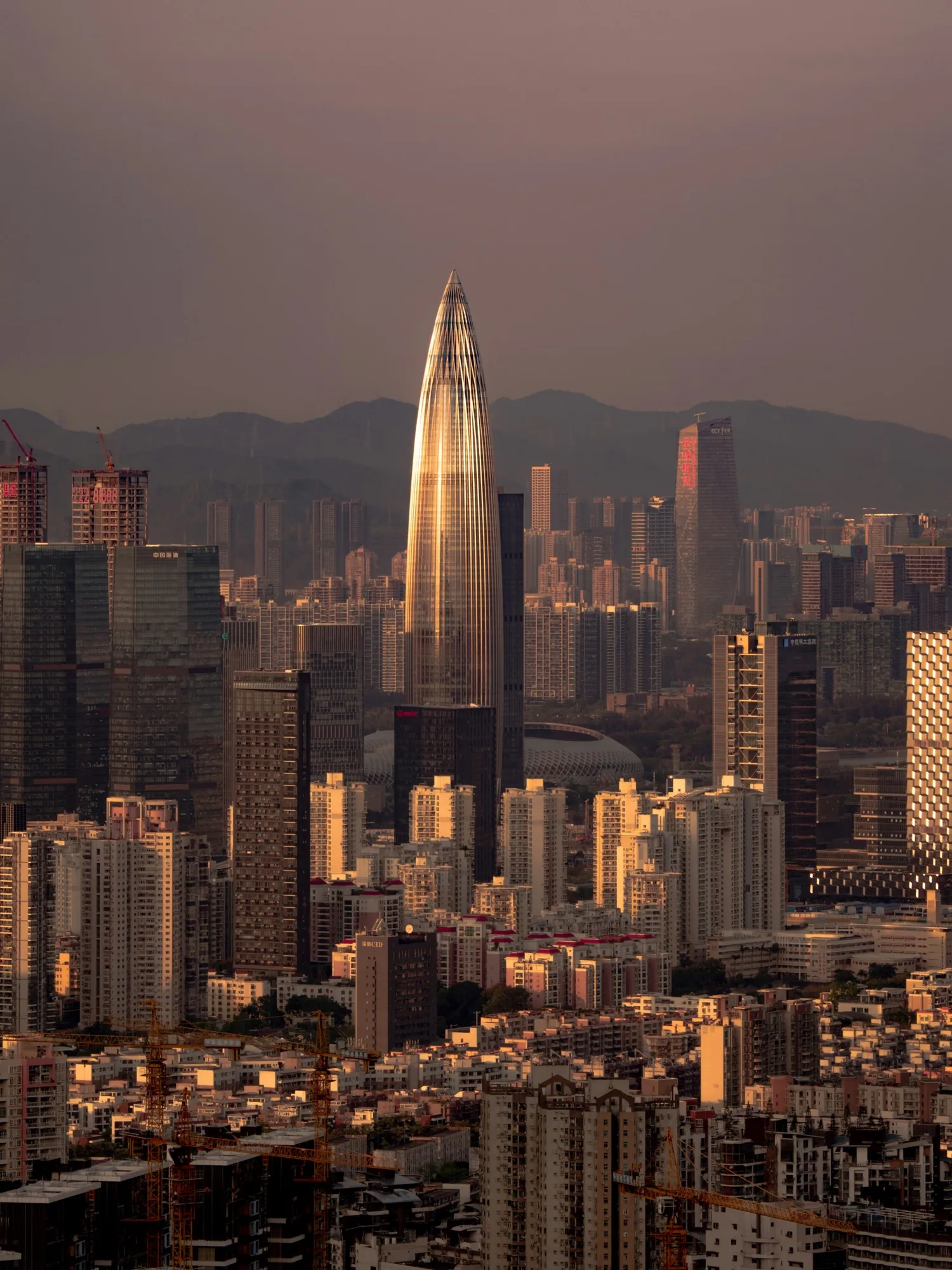
Shenzhen is easy to photograph as a wall of towers. That view is real, but it hides the city’s more useful reading order: component, market, prototype, company, product. The physical links between those stages help explain why a phone accessory, drone or electric car can feel like a better guide to Shenzhen than a list of landmarks.
This page is a source-checked route through that idea, not a report of a journey we completed. It uses four documented layers—the Special Economic Zone, Huaqiangbei, the city’s design institutions and companies headquartered here—to show what a future field route should connect.
Start with the rule change, not the skyline
Shenzhen’s current form did not begin with a consumer brand. In 1980 it became one of China’s first Special Economic Zones. The original regulations created a designated space for economic cooperation, technical exchange and different operating rules. A World Bank study of the zone later treated Shenzhen as a policy incubator for changes including urban land markets.
That history matters because “manufacturing city” can sound like a description of factory buildings. Shenzhen was also a place where rules, capital, land, labour and access to Hong Kong were reorganised. Products came out of that environment; they did not create it by themselves.
The SEZ label also does not explain everything that followed. National policy, local implementation, migration, private enterprise, universities, state firms and regional supply chains all matter. A product route should therefore use 1980 as a starting condition, not as a one-line cause.
The market layer: Huaqiangbei
Huaqiangbei is often described in English as an electronics market. On the ground it is a district with multiple specialised buildings and a pedestrian street, not one giant shop. Shenzhen’s municipal material calls it a technology-and-fashion cultural block; a separate city-hosted account describes market buildings organised around components, devices and services.
That distinction changes how to look at it. A finished earbud on one floor and a connector sold in quantity on another belong to different parts of the same commercial ecology. Retail display, wholesale sourcing, repair and product experimentation can occupy neighbouring buildings without being the same business.
It is also why Huaqiangbei cannot stand in for every Shenzhen factory. The street is an exchange and sourcing interface. Production may happen elsewhere in the Pearl River Delta or beyond. A careful route follows the object outward instead of pretending that the counter is the factory.
The design layer: a city builds institutions around making
Shenzhen’s government profile lists a design academy, a creative design hall, major museums and cultural districts alongside its technology institutions. UNESCO designated Shenzhen a City of Design in 2008. These facts do not prove that every object made here is well designed. They show that the city publicly treats design as an institution and a professional field, not merely as decoration added after manufacturing.
For a reader, the useful question is specific: where in the product process is a decision being made? Shape, interface, packaging, repairability, component choice and software can be decided by different teams. “Designed in Shenzhen” and “assembled in Shenzhen” are separate claims and need separate evidence.
The company layer: headquarters make some relationships visible
DJI says its Shenzhen headquarters gives it access to suppliers, materials and a technical talent pool. That is a company explanation, not an independent verdict on its success. It is still useful because it states how the company understands the city’s advantage.
BYD provides a different route. Its cars make batteries, power electronics, software, vehicle design and charging infrastructure visible as one connected product system. The object is larger than a drone, but the editorial question is similar: which parts are integrated by the company, which come from suppliers and which depend on the city around it?
Neither company represents all Shenzhen businesses. Together with Huaqiangbei, however, they reveal three scales of making: the component counter, the product company and the city’s institutional story about design.
A route worth walking later
A credible field version of this story would not race between famous headquarters for photographs. It would begin inside one market building, identify a specific component, follow how sellers describe quantity and customisation, then compare that account with a finished object and a documented company decision. Transit time and street distance would remain part of the evidence.
Until that reporting exists, the honest conclusion is narrower. Shenzhen can be read through products because product decisions are unusually visible across its markets, public institutions and corporate geography. The skyline shows the result of fast urban growth. The objects provide a way to ask how that growth is organised.
Sources and scope
- Shenzhen Government: Urban Civilization Profile — current public design institutions and cultural blocks.
- World Bank: Shenzhen SEZ as a policy reform incubator — historical policy and land-market context.
- Shenzhen Government: Huaqiangbei Technology Fashion Pedestrian Street — the district’s official location and planning frame.
- DJI: About the company — DJI’s own account of its Shenzhen headquarters and supplier access.
This article does not claim a field visit, a complete supply-chain map or that hardware defines every part of Shenzhen. Company descriptions are identified as company claims. Market availability and individual businesses change faster than this city-level explanation.