
Many people in China drink hot or warm water because several habits now reinforce one another: water is often boiled before drinking, kettles and thermoses make it easy to keep, families pass the routine on, and offering warm water has become an ordinary gesture of care. That does not mean every Chinese person rejects cold water, that the custom has one ancient cause, or that hotter water is medically better.
The most useful distinction is the one English explainers often lose: boiled water and hot water are not the same claim. Boiling describes a process. Hot, warm or cool describes the temperature when someone drinks it. Water can be boiled, stored in a thermos and drunk later after it has cooled.
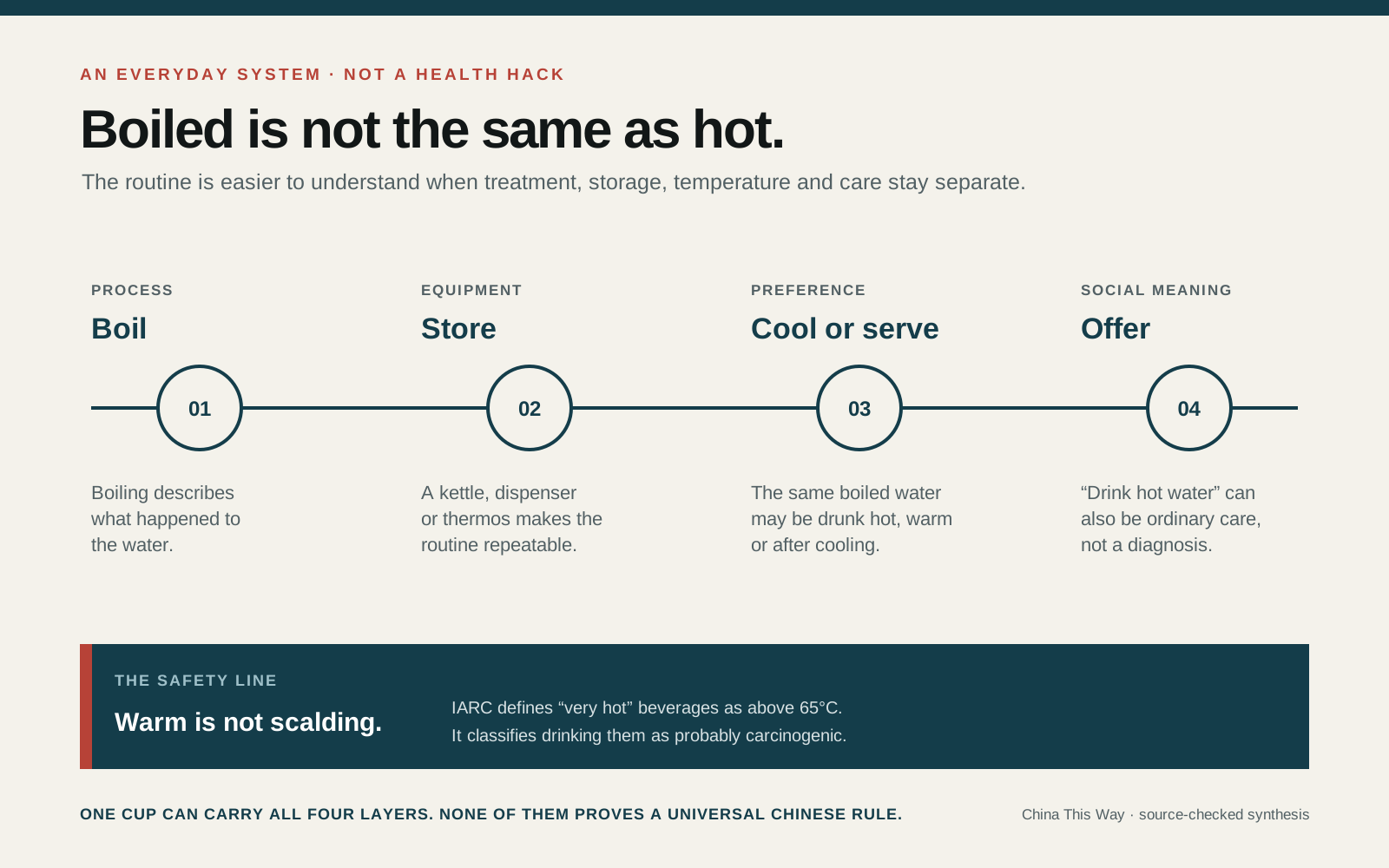
Open the full-size boiled-water and hot-water system map.
Why do Chinese people drink hot water?
There is no single-cause answer. Four layers overlap.
- Boiling became a repeatable water practice. In homes where tap water was not treated as ready to drink, boiling provided an understandable last step before consumption.
- Modern equipment made the practice ambient. Electric kettles, insulated flasks, office dispensers and public hot-water machines mean a cup does not require starting a stove each time.
- Preference follows repetition. A temperature learned at home can feel normal long after the original practical reason changes.
- The offer carries social meaning. A parent, colleague or host may reach for warm water because it is the default way they know to look after someone.
These layers can exist in the same cup, but they should not be collapsed into “traditional Chinese medicine says cold water is bad.” Some people do explain their preference through ideas about bodily balance. Others give habit, taste, comfort, water safety or no theory at all.
First separate kāishuǐ, rèshuǐ and wēnshuǐ
Three everyday words make the system clearer:
| Chinese | Pinyin | Plain-English meaning | What to notice |
|---|---|---|---|
| 开水 | kāishuǐ | boiled water | names the fact that water was brought to a boil; it may no longer be piping hot |
| 热水 | rèshuǐ | hot water | can cover a practical range of hot or warm water in ordinary requests |
| 温水 | wēnshuǐ | warm or lukewarm water | the clearer request when you want water comfortable to drink now |
This is why “Chinese people boil water” and “Chinese people drink it scalding hot” are not interchangeable. The first can describe treatment and routine. The second is a serving-temperature claim and needs separate evidence.
The modern history is more important than an origin myth
China has a long history of heating water for tea, food and other uses. That fact alone does not explain how plain boiled water became an everyday mass routine.
A historical study of Shanghai’s cholera years locates a meaningful transformation in the 1920s and 1930s, when public-health institutions and public perceptions of drinking water developed together. The study does not establish one nationwide birthday for the habit. It does show why “Chinese people have simply done this for thousands of years” is too neat.
Modern water infrastructure, disease prevention, fuel cost, access to shared hot-water services, household teaching and later appliances all matter. The balance changed by place and period. In some earlier urban neighborhoods, buying boiled water from a specialist hot-water shop could be more practical than repeatedly using scarce household fuel. Later, a thermos or electric kettle shifted that work into the home, school, train, dormitory and office.
The result is not a frozen ancient custom. It is a modern daily system built from older practices, public-health experience and convenient objects.
What current research can—and cannot—show
A peer-reviewed study published in 2023 analyzed a national survey of 57,029 rural Chinese households. It reported that approximately 90% of drinking water was boiled and that electricity, mainly electric kettles, supplied 69% of the energy used for boiling. This is strong evidence that boiling remained widespread in the surveyed rural context. It is not a measurement of the preferred serving temperature for every Chinese resident.
A separate Shanghai study interviewed 64 adults in 2015 about household water practices. Around 45% described boiling tap water as their only method; 62.5% used boiling either alone or with another method. Interviewees connected the routine to habit, learned ideas about safety, taste, equipment, cost and trust in alternatives.
That study is especially useful because it records a system rather than a slogan. It is also deliberately limited: 64 interviews from one city, recruited partly through personal networks, cannot stand in for a national poll. The authors themselves did not present the sample as perfectly representative.
Together, the two studies support a careful conclusion: boiling is a substantial, durable practice in different Chinese contexts. They do not support “all Chinese people always drink hot water.”
Why hot water instead of cold water?
For someone raised with warm water, ice water can feel as conspicuous as warm water feels to an American diner expecting ice. Neither reaction requires a grand philosophy. Defaults become taste.
Other factors can reinforce the preference:
- a thermos or dispenser has warm water ready before a cold option is considered;
- tea and infusions already begin with heated water;
- an air-conditioned office or winter journey makes warmth pleasant;
- family members repeatedly associate cold water with discomfort;
- a host interprets warm water as more considerate;
- boiled water may still be warm when it is served.
There is variation inside households as well as between generations, seasons and cities. The Shanghai interviews included people who chose bottled or filtered cold water in summer and boiled water in winter. A refrigerator full of chilled drinks, a bubble-tea order with ice and a thermos on the same desk are not contradictions. They belong to different moments.
Is it traditional Chinese medicine?
Traditional ideas about temperature and bodily balance are part of how some people explain the habit. They are not the only explanation, and the historical evidence does not justify reducing the entire modern system to TCM.
Boiling for water treatment answers one question. Serving temperature answers another. A relative saying “drink more hot water” answers a third: what care sounds like in that relationship. Online posts often merge all three because one sentence is more shareable than a history of infrastructure and household practice.
When a health claim matters, ask what exactly is being claimed and what evidence supports it. “Warm water feels soothing to me” is a personal report. “This temperature treats an illness” is a medical claim and requires medical evidence.
Does drinking hot water have special health benefits?
This page does not claim that warm water cures a cold, improves circulation, detoxes the body or treats digestive disease. Hydration matters; the claim that one culturally familiar serving temperature is a universal therapy is different.
There is, however, a clear safety boundary. The World Health Organization’s International Agency for Research on Cancer defines “very hot” beverages as those consumed above 65°C (149°F) and classifies drinking very hot beverages as probably carcinogenic to humans. The concern is temperature, not whether the cup contains Chinese tea, plain water, coffee or maté.
In plain language: warm is not scalding. Let a drink cool enough to consume comfortably. Do not imitate a viral routine by treating pain as proof that it is working.
Why did hot water become a Chinamaxxing symbol?
Hot water is perfect short-video shorthand. The action is visible, cheap and repeatable: fill a cup, add goji berries, hold up a thermos. A long explanation of cholera history, public dispensers, household trust and seasonal preference cannot compete in the first three seconds.
That visibility helped hot water become one of the recurring objects in 2025–26 “Becoming Chinese” posts. The trend documents curiosity and participation. It does not convert the creator’s routine into a survey of China or prove a medical benefit.
Use the meme as a question generator. Our broader Chinamaxxing explainer maps the phrase, the mixed reactions and the other habits bundled into it.
How to ask for hot or warm water in China
If you want water that is ready to drink rather than freshly boiling, ask for warm water:
请给我一杯温水。
Qǐng gěi wǒ yì bēi wēnshuǐ.
Please give me a cup of warm water.
For hot water, replace wēnshuǐ with rèshuǐ. At a hotel, restaurant or train station, the available water may come from a kettle, dispenser or boiler rather than a cold drinking fountain.
Treat a public hot-water outlet as actually hot. Read the labels, keep the cup steady, and do not assume the first water dispensed is at drinking temperature. “Available for drinking” and “comfortable to sip immediately” are separate questions.
Questions readers ask next
Do all Chinese people drink hot water?
No. The practice is common, but preferences vary by person, household, age, season, place and situation. Research that documents widespread boiling should not be misquoted as proof of one universal serving temperature.
Do Chinese people drink cold water?
Yes. Bottled drinks, iced tea, coffee, soda and cold water are ordinary parts of contemporary life. A person may still prefer warm plain water at home or when they feel unwell.
Is boiled tap water always safe in China?
Do not turn a cultural explainer into a local water-safety instruction. Boiling can reduce microbial risk, but it does not remove every possible contaminant, and building plumbing or local advisories matter. Follow current instructions from the accommodation or local authority for the exact place you are in.
Why do Chinese families say “drink more hot water” when someone is sick?
Often it is a familiar, low-effort expression of concern: rest, hydrate and let me offer the thing our household associates with comfort. The phrase can feel caring, automatic or frustrating depending on the relationship. It is not a diagnosis.
Is hot water served free in Chinese restaurants?
Many restaurants can provide hot or warm water, but service and charges are not universal. Ask rather than treating one restaurant custom as a national rule.
Sources and scope
- Environmental Science & Technology: Drinking Water in Rural China — 57,029-household survey, boiling prevalence, water-source context and energy used to boil; rural evidence rather than a national serving-temperature poll.
- Environment and Urbanization: household water practices in Shanghai — 64 interviews about boiling, filtering, buying water, equipment, habit and trust; useful qualitative detail with explicit sampling limits.
- Hong Kong University of Science and Technology: cholera and Shanghai drinking habits — historical study of changing institutions, perceptions and drinking practices in the 1920s–30s.
- IARC: very hot beverages and oesophageal cancer — official 65°C threshold and Group 2A classification.
- Associated Press: “Becoming Chinese” and Chinamaxxing — current documentation of hot water within the 2026 social-media trend; not medical evidence.
- Shanghai government: hot water and thermos vocabulary — a current public-facing example of the everyday language and equipment.
This page was checked on 26 August 2026. It explains a cultural and material system, not a medical treatment or a rule for every person in China. Historical studies establish change in particular places and periods; contemporary studies have their own geographic and sampling limits.