
Chinese tea is not one taste and “tea ceremony” is not the entrance exam. A useful beginner’s map starts with six processing families: green, white, yellow, oolong, black and dark tea. The same tea plant can travel in very different directions after picking. Heat, withering, rolling, oxidation, fermentation, roasting, aging, cultivar and place then shape what reaches the cup.
This is why two boxes labeled “Chinese tea” can taste like fresh greens and toasted nuts, flowers and stone fruit, malt and cocoa, or damp wood and dried fruit. It is also why a color chart alone cannot predict every cup.
The six types at a glance
| Family | Chinese term | Processing direction | Beginner flavor language | Examples to recognize |
|---|---|---|---|---|
| Green | 绿茶 lücha | heated early to limit oxidation | fresh, vegetal, nutty, chestnut-like, marine | Longjing, Biluochun, Huangshan Maofeng, Enshi Yulu |
| White | 白茶 baicha | withered and dried with relatively light handling | soft, hay-like, floral, melon, honeyed with age | Baihao Yinzhen, Bai Mudan, Shoumei |
| Yellow | 黄茶 huangcha | related to green tea with a controlled mellowing stage | rounder, softer vegetal or sweet grain | Junshan Yinzhen, Mengding Huangya |
| Oolong | 乌龙茶 wulongcha / 青茶 qingcha | partially oxidized, often shaped and roasted | floral, creamy, fruity, mineral, roasted | Tieguanyin, Wuyi rock tea, Phoenix Dancong |
| Black / red | 红茶 hongcha | more fully oxidized | malt, fruit, cocoa, honey, spice | Dianhong, Keemun, Lapsang Souchong |
| Dark | 黑茶 heicha | post-fermented through microbial aging or controlled piling | earthy, woody, dried fruit, sweet grain | Liu Bao, Anhua heicha; Pu’er needs its own distinctions |
The English naming trap appears immediately: Chinese hongcha literally means red tea, referring to the liquor, while English usually calls the category black tea, referring to the dry leaf. Chinese heicha is therefore translated as dark tea or post-fermented tea to keep the families separate.

Green tea: freshness is made, not merely preserved
Green tea is heated relatively early so enzymes driving oxidation are largely deactivated. That broad decision preserves green color and fresh aromatic directions, but the heating method matters. Pan-firing can suggest toasted grain or chestnut. Steaming can emphasize vivid green or marine notes. Shape may come from rolling, pressing or repeated hand work.
Longjing from the Hangzhou area is flattened and often described through chestnut, bean or fresh vegetal notes. Biluochun is tightly curled and aromatic. Enshi Yulu is a steamed Chinese green tea—useful evidence that “steamed equals Japanese” is too simple.
Begin with cooler water than a rolling boil and a shorter infusion. If the cup is aggressively bitter, change the brew before deciding you dislike green tea: use less leaf, cooler water or less time.
White tea: simple-looking processing, not a simple product
White tea is often summarized as withered and dried, with less rolling or shaping than many other families. That does not mean the maker does nothing. Weather, airflow, leaf grade, thickness and drying control matter precisely because fewer forceful steps can hide mistakes.
Baihao Yinzhen uses downy buds; Bai Mudan includes buds and leaves; Shoumei commonly uses more mature material. These are not a quality ladder that every drinker must climb. A fuller-leaf Shoumei may be the more satisfying daily cup for someone who wants deeper fruit or honeyed notes.
Some white tea is sold with an age claim. Ask about storage and provenance rather than assuming older is automatically better. A printed year cannot prove good humidity control.
Yellow tea: the small family that corrects the color myth
Yellow tea can begin near green-tea processing and then use a controlled wrapping or resting stage often described as menhuang, allowing the leaf and liquor to mellow and yellow. It is produced in much smaller volumes than green or black tea and is frequently confused with them in retail listings.
Examples include Junshan Yinzhen and Mengding Huangya. The category is valuable for beginners even when it is not the first tea to buy: it shows that the six families are processing traditions, not a paint chart. Yellow does not simply mean “old green tea.”
Oolong: a whole landscape between green and black
Oolong is not one midpoint flavor. Partial oxidation is combined with bruising, resting, shaping and roasting in region-specific systems. A green, tightly rolled Tieguanyin can be intensely floral. A Wuyi rock tea can be roasted, mineral and structured. A Phoenix Dancong can produce striking fruit or flower aromatics.
For a first comparison, try one lighter floral oolong and one roasted Wuyi-style oolong. Brew them in the same cup or gaiwan with roughly comparable strength. The contrast teaches more than memorizing a list of famous mountains.
Oolong also rewards repeated short infusions. The first pour is not the only result; aroma, body and aftertaste can move over several rounds.
Black tea in English, red tea in Chinese
The category called black tea in English is hongcha, red tea, in Chinese. It is more fully oxidized than green or oolong tea and can offer malt, honey, dried fruit, cocoa or spice without any added flavoring.
Dianhong comes from Yunnan and often shows golden buds and a rich, sweet profile. Keemun is associated with Anhui and can be elegant, fruity or wine-like. Lapsang Souchong is often known abroad for smoke, but not every black tea from its wider region tastes like a campfire.
Black tea is a forgiving starting point because it tolerates a wider brewing range. Still, boiling water and a long steep can flatten fragrant examples into dryness.
Dark tea: post-fermentation is the key distinction
Dark tea, heicha, develops through post-fermentation involving microbes after the initial tea-making stages. The family includes regional traditions such as Liu Bao and Anhua dark tea. Pu’er is related but needs precise language: raw sheng and ripe shou Pu’er follow different production and aging routes, and not every compressed cake is the same thing.
Earthy can be pleasant. Musty basement, visible mold or a fishy defect is not a cultural test a beginner must pass. Storage, cleanliness and seller transparency matter. Buy small samples before buying a cake because price, age and elaborate wrapping do not guarantee enjoyment.
What about jasmine tea and flower tea?
Jasmine tea is usually a reprocessed or scented tea, not a seventh base family. Tea leaves—often green tea, but not always—absorb aroma through contact with jasmine blossoms over repeated scenting rounds. Osmanthus and other flowers can be used in different traditions.
The same principle helps with modern fruit tea and milk tea. They can be genuinely contemporary parts of Chinese tea consumption without replacing the base-family map. A Longjing milk-tea drink, bottled oolong and a carefully brewed rock tea solve different social and sensory jobs.
UNESCO’s description is especially useful here. It recognizes tea not only as processing knowledge but as drinking and sharing in homes, workplaces, tea houses, restaurants and temples. Chinese tea culture is living infrastructure, not one frozen costume scene.
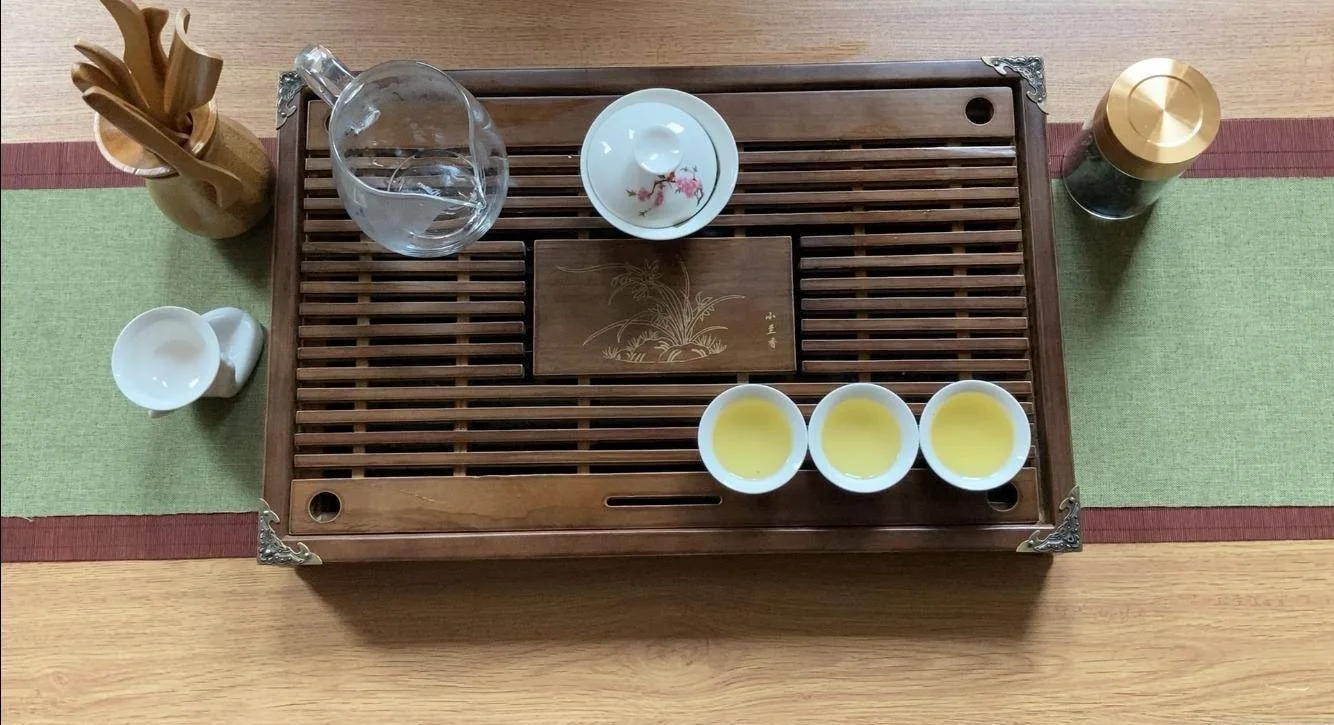
Gaiwan, teapot or mug?
A gaiwan is a lidded bowl that makes leaf expansion and repeated short infusions easy to observe. A small clay teapot can retain heat and seasoning but is not automatically superior. A porcelain mug or basket infuser is often the clearest beginner tool because it is easy to clean and repeat.
Choose the vessel by the question:
- use a mug or basket infuser for a stable daily cup;
- use a porcelain gaiwan to compare aroma and changing infusions;
- use a small teapot for a tea you already understand;
- use glass when seeing leaf movement adds pleasure, not because glass makes a tea more authentic.
Read why the gaiwan has three parts and how a Chengdu teahouse organizes time to see object and social setting as two different pieces of tea culture.
A six-cup beginner tasting without wasting tea
Do not buy six expensive tins. Ask a reputable specialist for 10–20 gram samples representing clear, non-flavored examples of several families. Four contrasting teas teach more than six weakly identified ones.
Start with:
- a pan-fired Chinese green tea;
- a white tea with both buds and leaves;
- a light floral oolong;
- a roasted oolong;
- a Yunnan or Anhui black tea;
- a clean, traceable dark tea only if the flavor direction interests you.
Use the seller’s starting instructions, then change one variable at a time. Record leaf amount, water temperature, time and the words you actually perceive. “Good” and “bad” are allowed; so are spinach, peach skin, toast, orchid, rain on stone or nothing in particular. Tasting language should clarify your preference, not perform expertise.
Questions readers ask next
Is all tea made from the same plant?
The six traditional families are based on tea from Camellia sinensis, but plant variety, cultivar and growing conditions differ. Herbal infusions such as chrysanthemum or barley drinks are not the same botanical product even when English casually calls them tea.
Which Chinese tea is best for beginners?
There is no universal winner. A forgiving black tea, floral oolong or gentle white tea often provides an easy first cup. Someone who already enjoys Japanese green tea may learn more from a Chinese green tea comparison.
Is Pu’er a type of black tea?
Not in the ordinary English six-family map. Pu’er is usually discussed with dark or post-fermented tea, while raw and ripe Pu’er need separate processing explanations. Chinese hongcha is the family English calls black tea.
Is Chinese tea ceremony the same as Japanese tea ceremony?
No. China contains multiple regional and contemporary tea practices, including informal everyday brewing and more structured gongfu service. Treating one staged sequence as “the Chinese ceremony” erases that variation.
Which tea is healthiest?
This guide does not rank medical outcomes. Preparation, dose, caffeine sensitivity, medicines and the evidence for a specific claim matter. Choose tea as a beverage first and ask a qualified clinician about health or drug-interaction questions.
How the domestic platform sample changed this guide
On 26 August 2026, we checked five publicly indexed Dianping venue pages spanning Hangzhou, Chongqing, Shanghai and newer tea-drink formats. The sample placed Longjing, Biluochun, Tieguanyin, Pu’er and jasmine tea beside gaiwan service, snacks, fruit tea, milk tea and tea desserts. It did not show a clean split between “ancient ceremony” and “modern youth drink.” The useful finding was coexistence: base teas, social rooms and contemporary combinations circulate at the same time.
That is why this guide explains the six processing families without presenting them as a museum display. The sample was used for discovery, not ranking. We do not republish ratings, prices, opening hours, review quotations or claims that five venues represent Chinese tea consumption.
Sources and scope
- UNESCO: Traditional tea processing techniques and associated social practices in China — the six categories, more than 2,000 products and tea’s social settings.
- China Ministry of Agriculture and Rural Affairs: six tea categories — Chinese names, processing descriptions and representative examples.
Checked 26 August 2026. This is a beginner’s process-and-flavor map, not a complete regional encyclopedia, medical guide, seller ranking or claim that every producer uses identical terminology.