
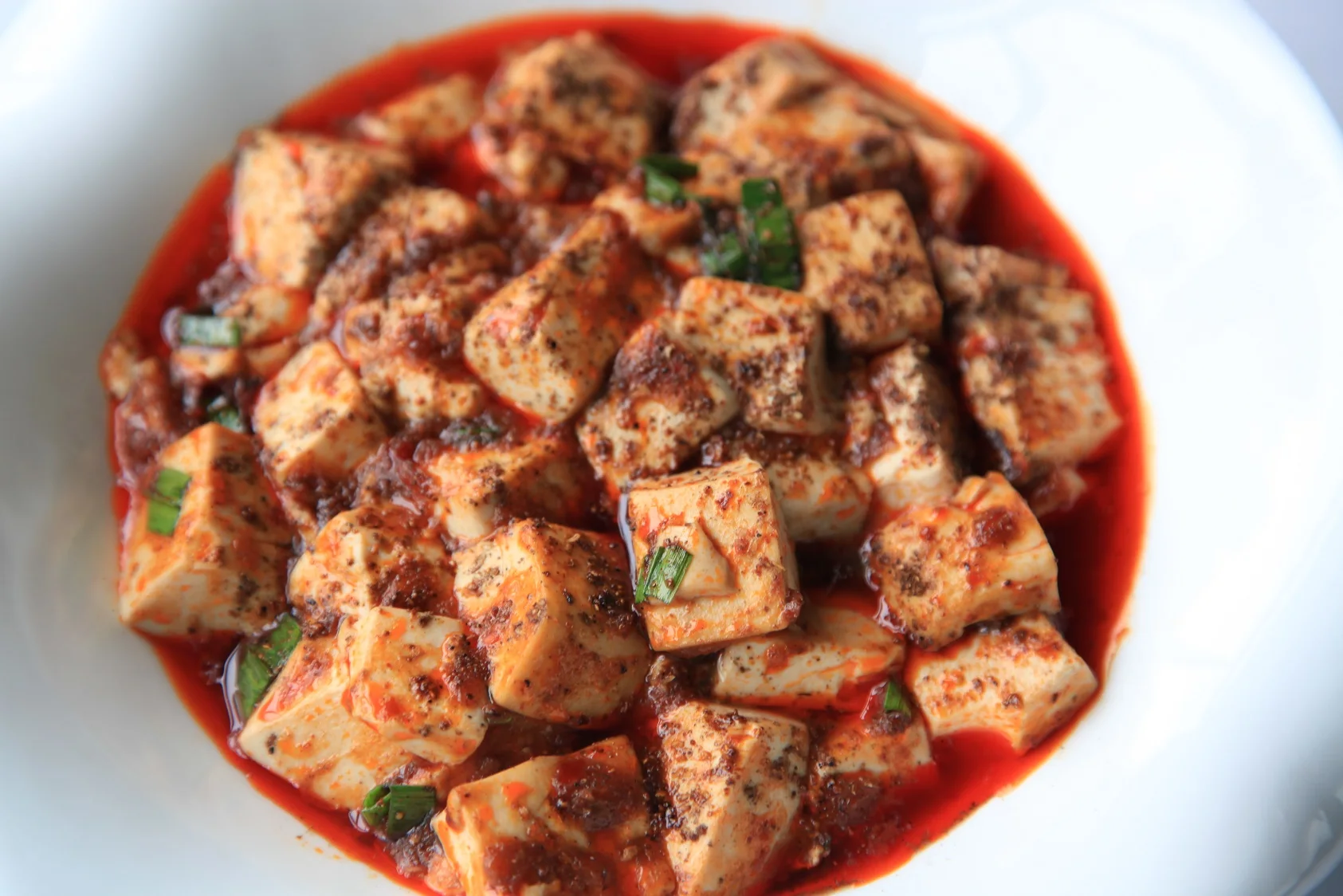

Ask for Sichuan food outside China and the answer is often a sensation: mala, the pairing of numbing Sichuan pepper and chilli heat. It is a real and important flavour. It is also an unreliable summary of an entire cuisine.
UNESCO’s Chengdu profile emphasises diversity, describing Sichuan cooking as an art of combining sweet, sour, bitter, spicy and salty. Chengdu’s monitoring report uses a larger vocabulary of flavour patterns. The useful idea is not a fixed count to memorise. It is that seasoning works as a constructed profile: ingredients and techniques are combined to produce a recognisable relationship among aroma, heat, salt, sweetness, acidity and texture.
Mala has two different engines
The ma in mala refers to the tingling, numbing sensation associated with Sichuan pepper. The la refers to chilli heat. They are not interchangeable. A dish can lean fragrant and numbing, sharply hot, or balanced between the two.
Oil carries aroma; whole or ground spices release it differently; fresh, dried and fermented chillies do different work. Garlic, ginger, scallion and fermented broad-bean paste can build depth beneath the immediate heat. Cooking sequence matters because blooming an ingredient in oil is not the same as adding it at the end.
This is why a request for “less spicy” can alter more than a number on a heat scale. It may change balance, but it need not remove all character. A more precise request asks whether the kitchen can reduce chilli while keeping aroma, or recommends a dish whose intended profile is not dominated by heat.
Fish-fragrant does not require fish
The name yuxiang, usually translated as fish-fragrant, confuses people who expect seafood. It identifies a flavour pattern historically associated with seasonings used for fish, not a promise that the finished dish contains fish.
A yuxiang preparation typically works with a sweet-sour-savoury balance and aromatic ingredients. Exact formulas vary by kitchen and dish. The point is categorical: Chinese dish names often describe technique, aroma, association or form rather than a literal ingredient list.
That distinction is practical for diners with allergies or dietary restrictions. A poetic or inherited name cannot substitute for asking what is actually in the dish. The same caution applies in reverse: a meatless name does not guarantee a vegetarian stock or sauce.
“Strange flavour” is deliberately coherent
Guaiwei is often rendered as strange flavour. The translation suggests randomness. In practice, the name points to a combination in which several tastes are present without one erasing the rest. Sesame, sweetness, acidity, salt, chilli and numbing pepper may all contribute.
The pattern makes a broader point about Sichuan cooking. Complexity does not mean piling every strong condiment into a bowl. It means controlling proportions and sequence so the eater can register a designed whole. A cold dish and a hot stir-fry may use related seasonings yet feel different because temperature and texture change how the balance arrives.
Garlic, fermented and home-style profiles widen the map
Garlic-forward cold dishes, salty-savoury braises, sweet-sour preparations and jiaxiang or home-style dishes occupy parts of the cuisine that an international “spicy Sichuan” category tends to hide. Some are vivid; others are gentle. Vegetables, tofu, poultry, pork, freshwater fish and preserved ingredients each provide different bases for the seasoning.
The cuisine also changes across Sichuan. Chengdu is an important centre, not a container for every regional practice. Restaurant menus reflect price, audience, ingredient supply, chef background and contemporary fashion. A banquet restaurant, a neighbourhood noodle shop and a hotpot chain are not three versions of the same menu.
Read a meal across contrasts
A useful first order is not five dishes at maximum heat. Choose contrasting functions: one cold dish, one vegetable, one main dish with a named flavour pattern and a plain staple. Add a soup or mild preparation if the group wants relief between stronger tastes.
Then compare what each dish is doing. Is heat immediate or delayed? Is Sichuan pepper aromatic, numbing or barely present? Does sweetness arrive as a distinct note or mainly round out salt and acidity? Does a crisp, dry dish alternate with something soft and sauced?
This approach turns the meal from an endurance test into an exercise in recognition. It also gives a better basis for asking questions at the next restaurant.
Avoid two opposite mistakes
The first mistake is saying Sichuan food is simply hot. The second is correcting that stereotype with another rigid formula, as if every classic pattern has one authorised recipe and every restaurant represents it equally. Cuisine is both a system of conventions and a field of variation.
Mala deserves attention because it shows how two sensations can be engineered together. Its real lesson is not that every dish should taste like mala. It is that Sichuan cooks name and work with relationships among flavours—and that learning those relationships opens a much larger cuisine.
Sources and scope
- UNESCO Creative Cities Network: Chengdu — Chengdu’s gastronomy designation and emphasis on flavour diversity.
- Chengdu Creative City Monitoring Report — the city’s account of Sichuan cuisine, flavour patterns and culinary institutions.
This article maps concepts rather than certifying recipes. Dish names, ingredients and heat levels vary; ask the kitchen directly about allergies, dietary requirements and preparation.