
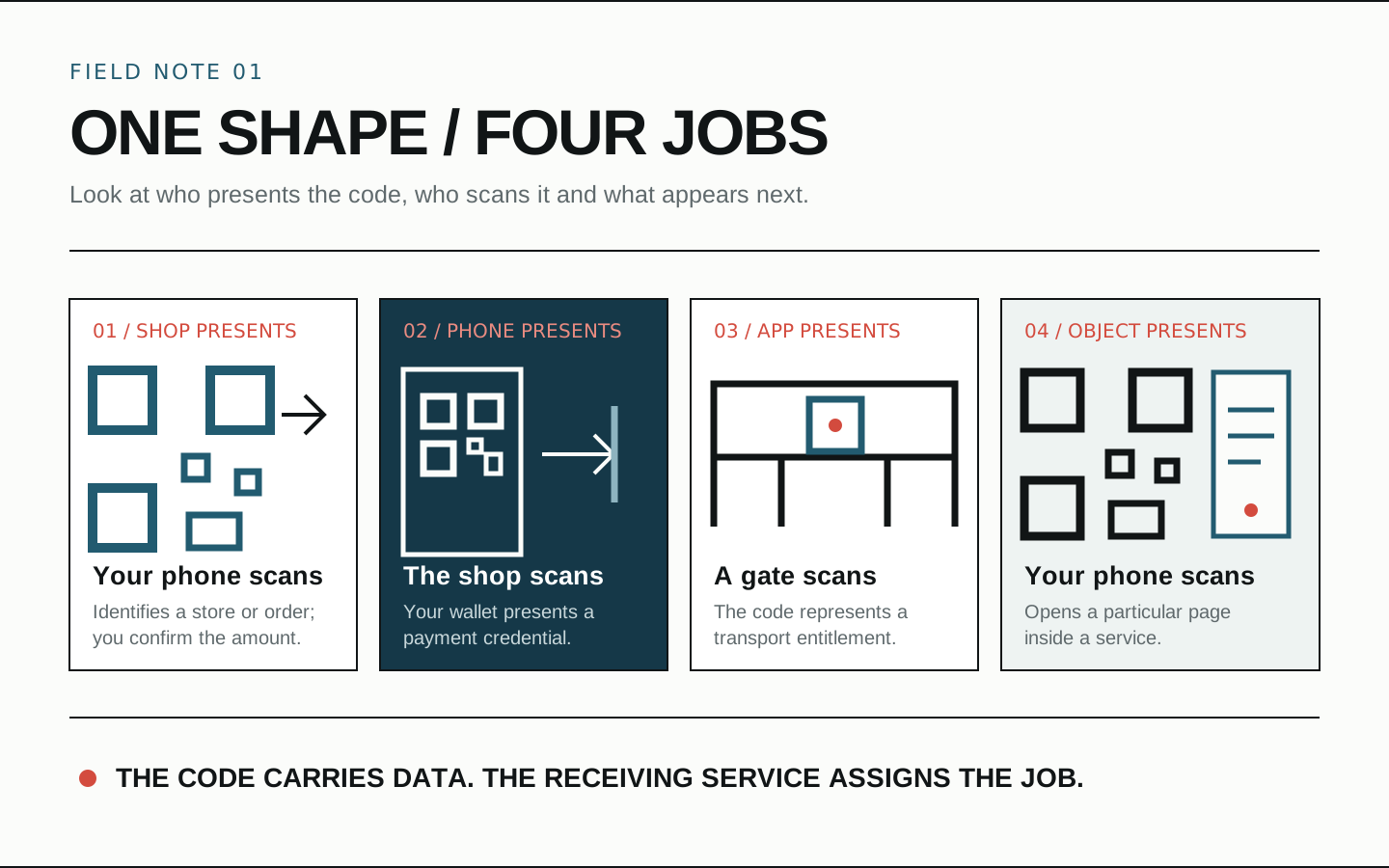
A Weixin Mini Program is a third-party service that runs inside Weixin. A user can enter through search, a shared message, another service or a Mini Program code. The service can open to a specified page without asking the user to find and install a separate app from an app store.
That convenience is real, but “no separate app” does not mean “nothing is downloaded” or “no account is involved.” Weixin remains the host. The service can still request permissions, load code and data, require identity steps or be unavailable to a particular account or region.
The host and the service are different products
Tencent’s 2025 Weixin brand report lists Mini Programs alongside Channels and Official Accounts. It describes them as services developed by third parties on Weixin’s Open Platform.
This creates two layers of responsibility. Weixin provides discovery, runtime, account context and platform rules. The Mini Program operator provides the actual restaurant menu, booking flow, shop, transport service or other task.
When something fails, identifying the layer matters. A Weixin login problem is different from a venue’s unavailable Mini Program. A payment failure inside a Mini Program may belong to the merchant, wallet, card issuer or transaction rules rather than to the page that opened successfully.
Entry replaces installation
A conventional mobile app usually begins at an app store: find the correct listing, inspect the developer, download a package, grant permissions and place an icon on the phone. A Mini Program begins with an entry point inside Weixin.
The entry can be temporary. A person scans a code on a table, opens the relevant page, completes a task and leaves without wanting a permanent home-screen icon. That makes the format suitable for services tied to a place or moment.
The cost is dependence on Weixin. If the user cannot access the host app, the service entry is gone. A website link may work in an ordinary browser; a Mini Program code is designed for its platform context.
A code can deep-link to the useful page
Weixin’s developer documentation says a Mini Program code can be generated to open a specified page. This is more useful than merely opening the service’s home screen. A physical object can point to the page associated with that object, order or venue.
The code itself is only a hand-off. It does not prove what the destination will ask for next. The page may still need a location choice, phone number, login, consent, payment or staff confirmation.
This is why the label beside a code matters. A Mini Program entry code and a payment collection code can sit on the same counter while performing unrelated jobs.
Mini Programs turn Weixin into an operating environment
Messaging apps usually organise communication. Mini Programs add task execution. Search, chat and a physical code can all become routes into the same service.
Tencent’s public results describe continued activity in mini games, mini shops and other content-related Mini Programs. Those are company-reported categories, not an independent adoption measure. They establish that Tencent treats Mini Programs as a continuing part of the platform rather than an abandoned experiment.
The more important editorial point is structural. A user does not move from conversation to an outside app in the usual way. The task can remain inside the same host environment.
Convenience can hide the operator
When every service opens inside one app, visual continuity can make separate businesses feel like one system. Before sharing information or paying, check:
- the Mini Program name and verified operator information;
- what permission is being requested and why;
- whether the amount and merchant match the physical setting;
- whether the service has an ordinary web or staff-assisted fallback;
- whether a translation layer is changing legally important text.
The host platform can provide identity and security controls. It cannot make every third-party service equally reliable.
What changes for an overseas user
A Mini Program may open on an overseas-registered Weixin account yet restrict a later step. Phone-number formats, identity verification, location access, payment eligibility and language support can each vary.
Opening the page is therefore a weak success signal. A complete task needs its own confirmation: an order number, booking record, gate opening or payment receipt. If the flow stops, ask which requirement failed rather than repeatedly scanning the entry code.
No general source can promise that every Mini Program supports every overseas account. The useful fallback is contextual: staff assistance, a browser page, a physical ticket, cash or another payment route where offered.
Sources and scope
- Weixin Open Docs: Get Mini Program Code — generating an entry that opens a specified page.
- Tencent: Overview of Brand Protection on Weixin 2025 — current feature map and third-party-service definition.
- Tencent 2025 Annual Results Presentation — company-reported current Mini Program categories and activity direction.
This page explains platform architecture. It does not measure national adoption, endorse a third-party service or promise account, identity or payment compatibility for an overseas user.