
China’s 240-hour visa-free transit is not a ten-day tourist visa. It is a route-based policy: an eligible ordinary-passport holder must continue from mainland China to a third country or region, and the ticket, entry port, permitted stay area, timing and purpose must all match. A separate 30-day entry waiver applies to selected ordinary passports and does not use the same transit test. Choosing the wrong policy can invalidate an otherwise plausible itinerary.
As of 20 August 2026, the National Immigration Administration says the 240-hour policy covers ordinary-passport nationals of 57 countries, 65 open ports in 24 provincial-level areas, and stays inside designated areas for no more than 240 hours. The United States, Canada, the United Kingdom and many European countries are on that transit list. That sentence is only a starting point: passport, route, port, permitted area, ticket and purpose still have to match.
U.S. ordinary-passport holders should begin with the dedicated travel-to-China requirements route, which separates the normal visa path from qualifying 240-hour transit. This page keeps the wider passport and route logic visible.
First, choose the correct policy
| Your trip shape | Policy to check | The question that decides the route |
|---|---|---|
| Country or region A → mainland China → a different country or region C | 240-hour visa-free transit | Is the passport eligible, and do the entry port, onward ticket and permitted stay area all match? |
| Mainland China is the destination, then you return to where you came from | A separate visa-free entry rule or a visa | Is that exact ordinary passport covered on the travel date and for this purpose? |
| You remain inside the port-controlled area for no more than 24 hours | 24-hour direct transit | Will you leave the restricted port area, and does the carrier accept the routing? |
| Work, study, journalism or another activity requiring prior approval | The relevant visa or permit | Which authority owns the approval before travel? |
Do not combine the conditions from two rows. A passport that appears in both policies does not turn a return trip into transit, and “10 days” does not mean ten days anywhere in China.
The 240-hour transit check
Write the route as three places, not as flight numbers:
place A → mainland China → place CThen check all six conditions against the current National Immigration Administration page:
- Passport: you will use an ordinary passport from a currently eligible country.
- Onward movement: place C is a third country or region, not simply the place from which you entered mainland China.
- Ticket: you hold an onward passenger ticket with a confirmed date and itinerary.
- Port: you enter through one of the currently listed open ports.
- Area and time: every mainland stop stays inside the permitted area and within the allowed period.
- Purpose: tourism, business, visits and family visits are listed; work, study and news reporting still require the appropriate approval and visa.
An itinerary can pass five checks and fail the sixth. Do not purchase a non-refundable domestic connection until you have verified that the connection remains inside the policy’s permitted route.
Three route examples
These examples show the logic; they are not admission decisions.
| Example | What it proves | What it does not prove |
|---|---|---|
| New York → Beijing → Tokyo on a U.S. ordinary passport | The route has a different place before and after mainland China, and the U.S. appears on the current transit list | That the exact flights, airport, connection, stay area and documents are accepted |
| New York → Beijing → New York | The trip returns to its origin | It does not satisfy the stated “third country or region” shape for 240-hour transit |
| London → Shanghai → London for 12 days on a UK ordinary passport | It is a destination trip, not a third-place transit route | It may instead fit the separate UK 30-day visa-waiver notice in force through 31 December 2026; verify that notice and the exact purpose before booking |
Hong Kong and Macao have separate immigration systems. When either appears before or after the mainland leg, verify the mainland transit rule and the separate entry requirements for that region instead of treating the whole route as one domestic trip.
Why the 30-day entry waiver is a different answer
China currently has separate visa-free entry arrangements for selected ordinary passports. They allow specified purposes such as tourism, business, family or friend visits, exchange and transit for up to 30 days, but the eligible-country list and policy end dates can change.
For example, the Chinese Embassy in the United Kingdom states that UK and Canadian ordinary-passport holders may enter without a visa for specified purposes for up to 30 days from 17 February through 31 December 2026. That rule does not extend to a U.S. passport merely because the U.S. appears on the 240-hour transit list.
Check the embassy or Chinese Visa Application Service Center page for the passport you will actually use. Residence in an eligible country is not a substitute for holding that country’s eligible passport.
Before you commit money
- Save the current official policy page and its update date.
- Write down the passport, purpose, entry port, every mainland stop and the onward country or region.
- Ask the carrier to confirm its boarding-document check for the exact itinerary.
- Carry the original passport, onward booking and first accommodation details offline.
- Recheck shortly before departure. If a condition is unclear, contact the relevant Chinese embassy, visa center or the National Immigration Administration’s 12367 service line.
Border inspection remains an official decision. A matching checklist helps you ask the right question; it does not guarantee admission.
Questions readers ask next
Can U.S. citizens use China’s 240-hour visa-free transit?
Yes, an ordinary U.S. passport is on the National Immigration Administration’s current 57-country transit list. That does not make every U.S. itinerary eligible. The immediate trip must continue from mainland China to a different country or region, and the confirmed ticket, listed port, permitted area, time and purpose conditions must all match. A simple U.S. → mainland China → U.S. return does not have the required third-place route shape.
Is 240-hour visa-free transit the same as a ten-day tourist visa?
No. It is a transit arrangement tied to an eligible passport, an onward third-country-or-region route, listed ports, permitted areas and a defined purpose. It is not a visa and not a blanket ten-day permission for any itinerary.
Does a return flight qualify for the 240-hour policy?
The official condition is transit to a third country or region. A simple A → mainland China → A return does not have that shape. Check whether a separate visa-free entry policy applies to your passport or obtain the appropriate visa.
Can I rely on an airline website or an old screenshot?
Use the airline to confirm its boarding check, but use the authority that owns the entry rule for eligibility. Save a current official page rather than a cropped or undated screenshot.
Sources and scope
- National Immigration Administration: transit visa-free policy, updated 20 August 2026 — current country count, ports, permitted areas and core conditions; Chinese-language primary source.
- National Immigration Administration: August 2026 policy update — English notice adding Kyrgyzstan and Vietnam and raising the eligible total to 57 countries.
- Chinese Visa Application Service Center: August 2026 update — operational cross-check of the current change and core transit conditions.
- Chinese Embassy in the United States: visa-exemption routes — U.S.-market official route to the NIA policy and the separate 24-hour transit condition.
- Chinese Embassy in the United Kingdom: 2026 UK and Canada visa waiver — passport, purpose, duration and policy window for the separate 30-day route.
Checked 31 August 2026. This page is information, not legal advice or an admission guarantee. Recheck the official rule for the passport and travel date immediately before departure.
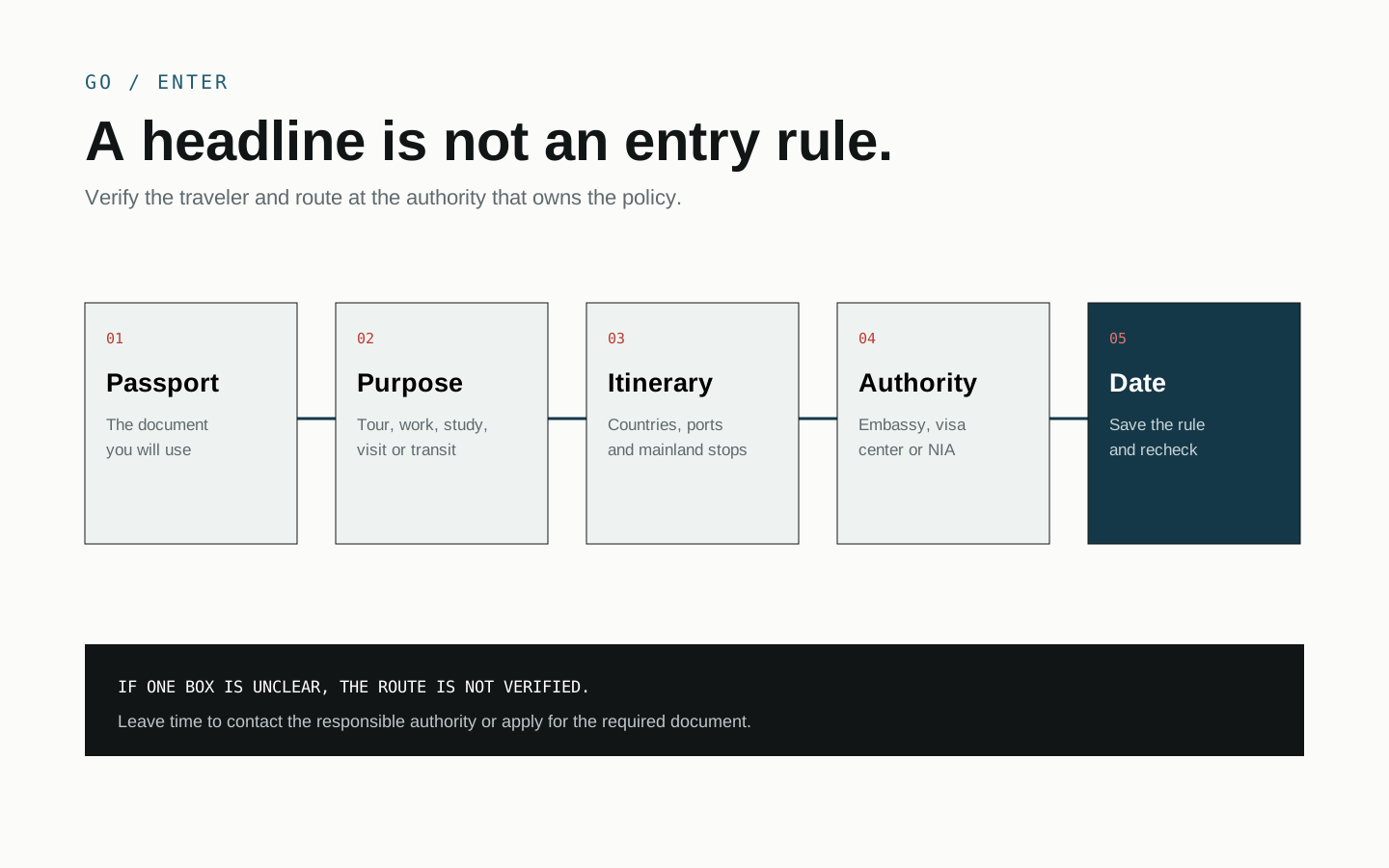
The decision rule
If you cannot name the exact passport, policy, route, port, permitted area, purpose and validity date, treat the trip as unverified.