
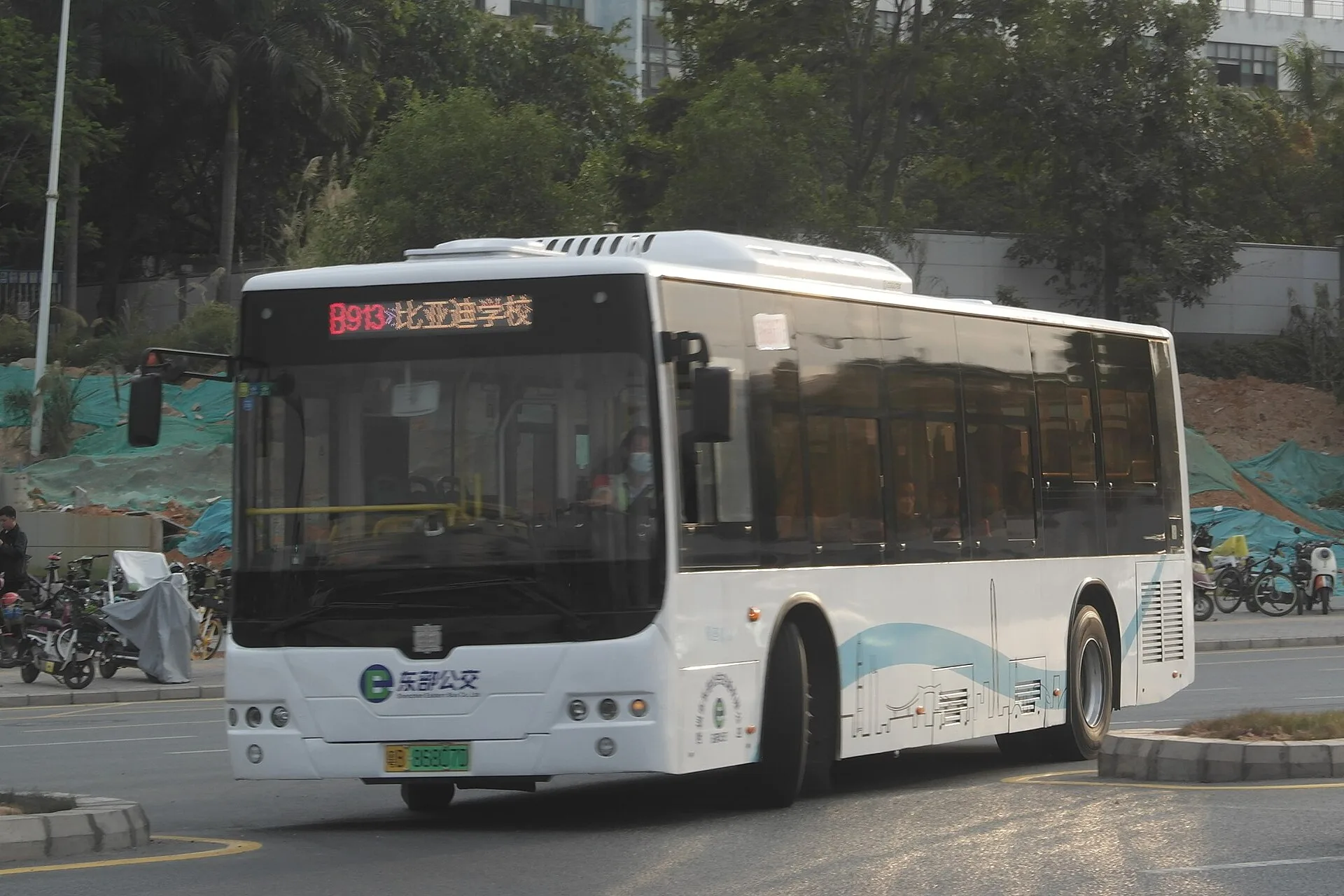

Shenzhen completed the transition of its public bus fleet to electric vehicles in 2017. The visible result was thousands of buses without tailpipes. The harder achievement happened behind them: financing more expensive vehicles, building charging capacity, reshaping schedules, assigning technical risk and training an organisation to operate a new system.
The World Bank’s case study of Shenzhen Bus Group is useful because it does not treat electrification as a shopping decision. It separates the enabling policy, business model, infrastructure, operations and costs. That is the right way to read the transition.
Vehicle cost was only the first barrier
Early electric buses cost substantially more upfront than diesel buses. National and local subsidies helped close the purchase-price gap, but a subsidy alone does not give a bus operator enough cash, guarantee battery life or build a charger.
Leasing changed who carried the initial capital burden. Rather than buying every vehicle outright, operators could obtain buses through financing arrangements and spread cost over time. Manufacturers and finance companies entered the relationship, which made contract design part of transport policy.
That arrangement also moved technical risk. Battery warranties and maintenance commitments gave manufacturers responsibility for performance that an operator could not easily price in the early market. The lesson is not that leasing is always cheaper. It is that a transition can stall when the institution expected to run the vehicles must also absorb unfamiliar capital and technology risk alone.
Charging had to fit the timetable
A diesel bus refuels quickly and carries a concentrated store of energy. An electric bus needs charging time, electrical capacity and a place to stand. If every bus charges whenever it returns, a depot can create a costly power peak and vehicles may be unavailable for service.
Shenzhen operators coordinated charging with duty cycles. Buses could charge fully overnight when electricity prices were lower and top up at terminals or during off-peak periods. Route length, daily mileage, battery range and layover time had to be considered together.
This made the charger-to-bus ratio more informative than a raw charger count. Location mattered too. A charger in the wrong depot or at the wrong end of a route could not support the same schedule. Charging infrastructure became part of service planning, not a property project beside it.
The grid connection is public-transport equipment
Large depots require transformers, distribution equipment, safety systems and coordination with the electricity utility. A city cannot order buses first and assume sufficient power will appear at every parking site.
Charging facilities can also serve other vehicles, improving utilisation outside bus peaks. That creates possible revenue and spreads fixed infrastructure cost, although shared access must not interfere with scheduled public service.
The wider energy system affects environmental results. Electric buses remove tailpipe exhaust and reduce local engine noise. Their total emissions depend on electricity generation, vehicle production, battery manufacturing and lifetime mileage. It is accurate to describe local air-quality and operational changes without claiming that every electric kilometre is emission free.
Maintenance work changed rather than disappeared
Electric drivetrains have fewer moving parts than diesel engines, but the fleet still needs tyres, suspension, braking, body work, climate control and safety inspection. High-voltage components, batteries, chargers and software introduce different skills.
Drivers also affect energy use through acceleration, braking and climate-control choices. Dispatchers need visibility into state of charge and charger availability. A bus that is mechanically sound but insufficiently charged is not available for service.
The World Bank case emphasises organisational adaptation and data, not only hardware. That is important because a pilot can be supported by a small expert team. A citywide fleet needs repeatable procedures across depots, shifts and thousands of workers.
Scale made learning possible—and mistakes expensive
Large procurement can reduce unit costs, support supplier investment and generate operating data. It can also lock in technology or contracts before their long-term performance is fully known. Shenzhen’s policy support and industrial ecosystem helped it move quickly, but those conditions do not transfer automatically to another city.
Climate, electricity prices, labour costs, route length, depot ownership and the local bus industry change the economics. A dense city with short routes and controlled depots faces a different problem from a dispersed network with long intercity runs.
That is why “copy Shenzhen” is weaker advice than “copy the questions Shenzhen had to answer.” Who finances the price gap? Who owns the battery risk? Where will buses charge? Can the grid serve the depot? How does charging fit the timetable? Who is trained to maintain the system?
The bus is the endpoint of several policies
Shenzhen’s transition is sometimes presented as proof that a mandate can electrify transport. A mandate supplied direction, but implementation depended on contracts, subsidies, infrastructure and operations aligning over years.
The electric bus is therefore a system indicator. Seeing one confirms that a vehicle was delivered. Seeing a fleet run daily suggests that finance, power, maintenance and scheduling have become sufficiently coordinated. That less visible coordination is what other cities actually need to study.
Sources and scope
- World Bank: Electrification of Public Transport—Shenzhen Bus Group — detailed case study of policy, finance, charging, operations and costs.
- World Resources Institute: How Shenzhen built its electric bus fleet — independent synthesis of subsidies, leasing, charging and warranties.
This article explains the completed transition and its operating model; it does not provide a current fleet count or claim that Shenzhen’s financial conditions can be copied unchanged elsewhere.