
High-speed rail makes two cities feel closer when the complete trip becomes usable—not simply when the train reaches a high top speed. Frequency, station location, security, waiting time, ticket flexibility and the connection at each end can matter as much as minutes saved on the track.
China’s network changed practical distance because it combined fast trains with substantial capacity across many city pairs. A World Bank study documents how that system developed through 2017. Current ticket and boarding rules come from China Railway, because the network has continued to change since the report was published.
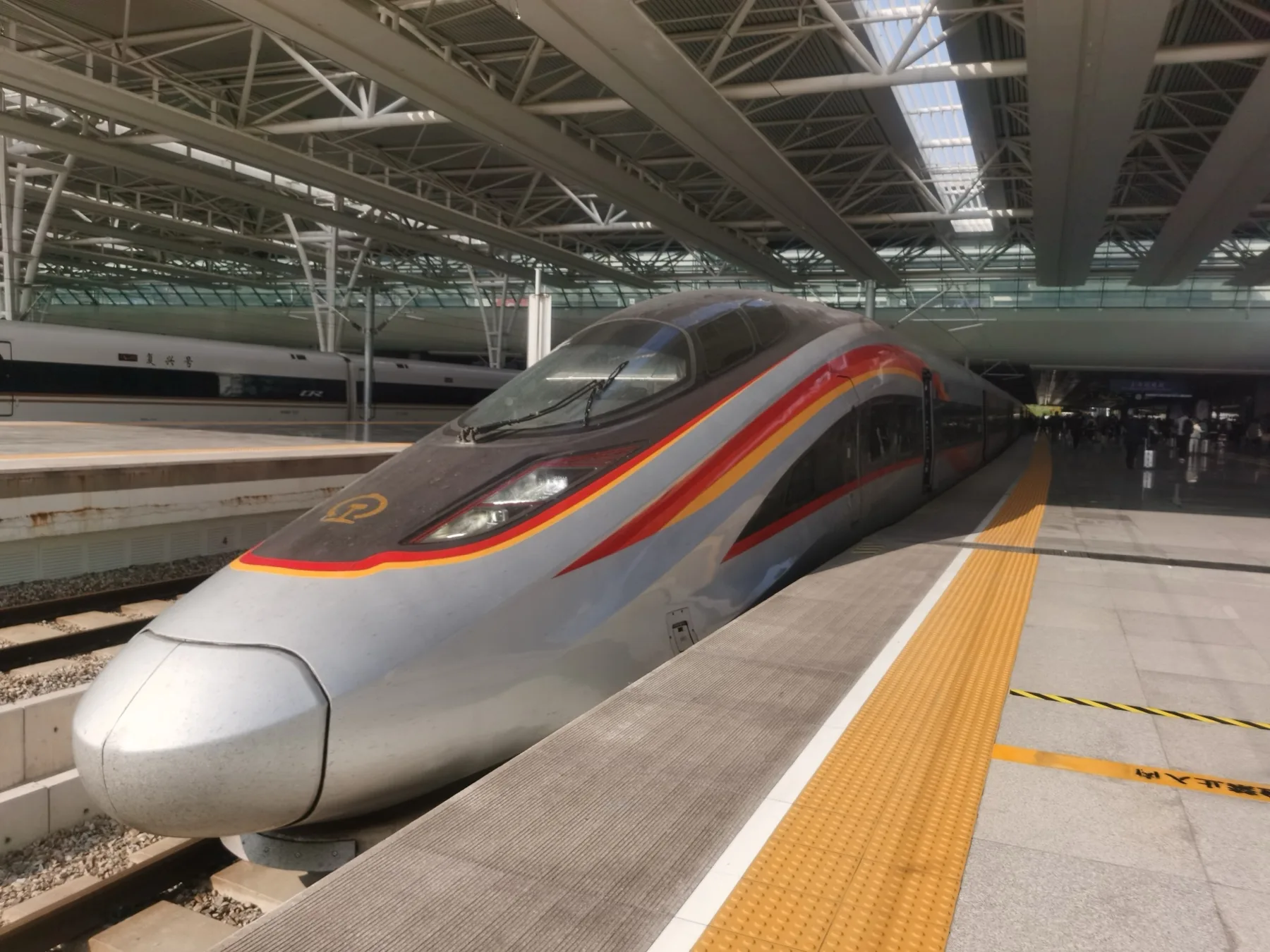
Distance on a map is not distance in a day
Geographic distance does not change when a railway opens. The amount of a day consumed by movement does.
A useful city pair has a manageable chain:
origin → station access → security → waiting → train → exit → destinationThe rail segment can be fast while the complete trip remains awkward. A distant station, poor local connection or infrequent timetable adds friction at the edges. Conversely, a centrally connected station and regular service can make a longer route easier than a shorter one with transfers.
This is why top-speed comparisons are incomplete. They describe the middle of the chain.
Frequency turns a train into a flexible option
The World Bank’s report notes that high-speed services expanded both speed and capacity. On strong corridors, multiple departures reduce the penalty of a missed or inconvenient train.
Frequency changes planning. With one departure per day, the timetable controls the trip. With many departures, a traveller can choose around a meeting, hotel check-in or connection. The route begins to behave more like an intercity service than a single scheduled event.
That flexibility is uneven. Peak periods, holidays, popular departures and smaller stations can still sell out or offer few useful trains. A network-level description should not be turned into a guarantee for one date.
Stations redraw the urban map
Large high-speed stations often sit in new or expanded urban areas. Their metro, bus and taxi connections influence which district becomes convenient for visitors and businesses.
Shanghai Hongqiao shows the integration idea clearly: high-speed rail, metro and an airport occupy one large transport area. The connection can reduce transfer distance between modes, but the scale of the complex creates its own walking and wayfinding time.
Other cities have multiple stations with similar names. Choosing “the city” is not enough. The exact station can be on a different side of the urban area and served by a different set of trains.
Real-name ticketing links the journey to identity
China Railway operates real-name ticketing. Its English FAQ says the passenger’s valid identity document is used to purchase the ticket and to check in. For foreign-passport users, the document is part of the travel credential.
This changes the station experience compared with a transferable paper ticket. A booking error in the passport name or number is not merely a spelling problem. It can break the link between passenger, booking and gate.
The e-ticket also changes what counts as the ticket. China Railway says an itinerary sheet or reimbursement receipt cannot be used for boarding. The identity document and electronic record perform that job.
Security and gate closure belong in the time calculation
Rail passengers and baggage undergo security checks. China Railway advises travellers to allow time for station walking, queues, identity verification and gates that close before departure.
These are not unusual exceptions to the system; they are part of the normal chain. A three-hour train is not a three-hour door-to-door journey. The correct comparison with flying or driving includes the access and control stages of each mode.
For an overseas visitor, uncertainty adds buffer time. The first use of a passport at a gate, a station-name mistake or a manual check can take longer than a familiar route.
What the network changes socially
When a city pair fits inside a day, the possible reason for travel changes. A meeting, family visit, concert or weekend no longer requires the same overnight commitment. Firms and institutions can coordinate across cities more often.
The World Bank report discusses economic and service effects of the network, but a single rail line does not cause every regional change. Housing, industry, local transit, ticket prices and who can afford frequent travel all shape the outcome.
The strongest claim is therefore practical: high-speed rail changes the set of city pairs that people and organisations can treat as regularly reachable. It does not erase geography or distribute access equally.
Read a timetable in four layers
Before deciding that two cities are “close by rail,” check:
- Exact stations at both ends, not city names alone.
- Useful departures for the date, including the last return.
- Complete access time, security and walking inside the station.
- Ticket rules for identity, change and refund.
This produces a real travel window instead of an impressive speed statistic.
Sources and scope
- World Bank: China’s High-Speed Rail Development — network development, capacity, service design and economic context through 2017.
- 12306 China Railway English FAQ — current identity, e-ticket, security, boarding, change and refund rules.
- Guide to Working and Living in China 2025 — current official guidance for foreign travellers using rail.
Historical network figures in the World Bank study are used as dated context, not as 2026 totals. This article does not claim field testing, recommend a particular train or promise availability on one route.