
Tiangong Ultra won the large-size 100-metre final at the 2026 World Humanoid Robot Games in 8.64 seconds on 26 August. The final lowered a record that had already moved from 9.39 seconds at the opening to 8.86 seconds in the semifinal. The five-day Beijing event is now closed.
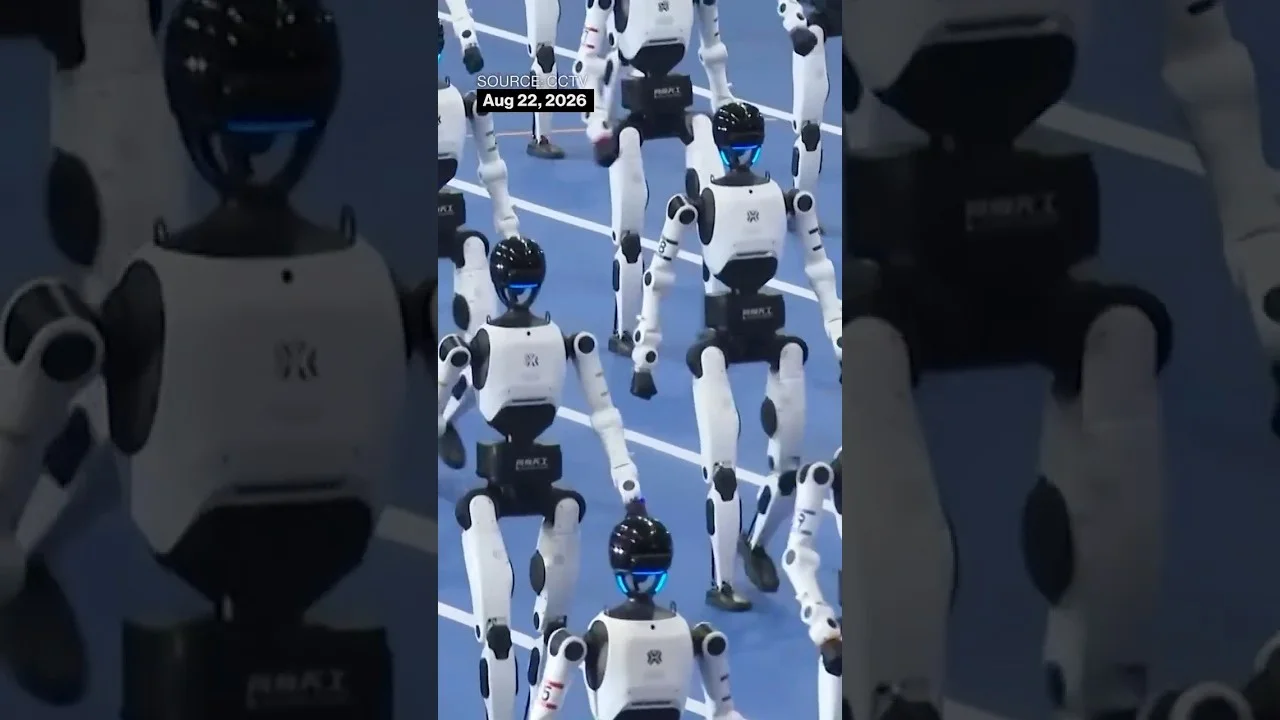
Chinese humanoid robots are dancing, fighting and running across U.S. feeds because three different things are happening at once: choreographed shows, rule-bound sports and commercial product demonstrations. The machines are real. The claim attached to each clip may still be too large.
The useful question is not simply “real or fake?” It is: what task was measured, how autonomous was it, how often did it work, and can anyone use the same capability outside the event?
Beijing’s second World Humanoid Robot Games ran from 22 to 26 August 2026. The official event page listed 666 teams, 2,056 robots, 51 events and 1,301 competition sessions. That scale makes the games more than one viral clip. It does not make every entry a finished general-purpose worker.
Who won the 2026 robot 100-metre final?
Tiangong Ultra, developed by Beijing-based X-Humanoid, won the large-size final in 8.64 seconds on 26 August 2026. That is the final result—not the 8.86-second semifinal time still appearing in reports published a day earlier.
The event-week progression matters because it shows how quickly a live result page can become stale:

- 22 August, opening programme: 9.39 seconds, followed by reported 9.34- and 9.32-second runs;
- 25 August, semifinal: 8.86 seconds;
- 26 August, large-size final: 8.64 seconds and the gold medal.
The 8.86-second run remains revealing. After crossing the line, the robot hit a padded barrier, fell and emitted sparks. The failure after the finish is part of the evidence, not footage to crop away.
On 23 August, the Tiangong team also won the large-robot 400-metre final in 38.15 seconds, ahead of 39.45 and 39.66-second finishes.
Those numbers are faster than the familiar human men’s world records. They are robot-event results, not new human track-and-field records. The machines compete in their own categories, with robot-specific bodies, rules and course conditions. The useful conclusions are narrower:
- high-speed locomotion and control have improved sharply;
- the machine completed a defined track task under public event conditions;
- the time does not measure human-style anatomy, sporting eligibility or general intelligence;
- it says nothing by itself about safe work around people, hand dexterity, battery endurance or month-after-month reliability.
The 100-metre final was the last event of the Games. This page does not claim to reproduce all 51 event tables; it answers the current high-interest result and keeps the task-level evidence boundaries visible.
Why are Chinese robots dancing?
Dance makes whole-body coordination visible in seconds. Beijing’s published 2026 rules separate street dance, cheerleading and dancesport, then score motion control, coordination and choreography. For the named Games dance events, the organizer says robots must perform fully autonomously without remote human intervention. Pair dances also require one robot to locate and coordinate with the other.
That does not mean every dancing-robot video is autonomous. A Spring Festival Gala routine, a trade-show booth and a scored Games event can look similar while proving different things:
| What you are watching | What it can show | What to verify before calling it autonomous |
|---|---|---|
| Choreographed television performance | balance, joint range, timing and repeatable motion | whether movement was pre-programmed, motion-captured or adjusted live |
| Trade-show dance | a visible product demonstration in a public setting | cuts, operator control, retries and whether the capability ships |
| 2026 Games dance event | performance under published event and judging rules | the exact category, run, score and organizer’s autonomy requirement |
So the plain answer is: Chinese robots dance because dancing is both an audience-friendly spectacle and a demanding coordination test. It demonstrates motion control. It does not by itself demonstrate conversation, household judgment or general intelligence.
Are Chinese fighting robots autonomous?
There is no one answer for every clip. Shenzhen’s 2026 Ultimate Robot Knock-out Legend (URKL) used EngineAI’s full-size T800 as standard hardware, while teams differentiated themselves through software and parameter tuning. The organizer said real-time visual feedback supported an autonomous loop for tracking, decisions and counterstrikes. That is a company and event claim, not an independent audit of every exchange.
Robot combat can test a different bundle from dance: opponent tracking, dynamic balance, impact tolerance, counter-movement and recovery after a fall. It still does not prove that a robot can safely improvise around people or transfer the same control system into a factory. When a viral caption says only “Chinese robot fight,” look for the league, model, rulebook, autonomy statement and full bout.
What the 2026 Robot Games actually test
The programme mixes sports with work-shaped scenarios. Competitive events include running, football, martial arts and dance. Scenario events move toward housekeeping, firefighting and retail assistance.
Those categories expose different engineering problems:
| Event type | What it can reveal | What it does not prove by itself |
|---|---|---|
| Sprint or track event | balance, power, gait control and recovery under a defined course | safe navigation through an ordinary crowded workplace |
| Football or martial arts | perception and control while other bodies move nearby | broad reasoning or reliable handling of unfamiliar objects |
| Dance | timing, coordinated motion and repeatable choreography | independent task planning |
| Folding, sorting or retail task | perception, hand control and a complete work sequence | commercial speed, low failure rates or economical operation over months |
| Firefighting scenario | movement and manipulation under a task rule | readiness for an uncontrolled emergency |
The distinction matters because a fast run is easy to understand and easy to share. A robot quietly completing the same manipulation task fifty times is less spectacular and often more relevant to deployment.
Autonomy is not one switch
The June event preview says the 100-metre race was upgraded to fully autonomous robots and that scenario rules encourage autonomous positioning, recognition and operation. It also says some scenario tasks would move into model homes, hotels and factories rather than remain inside purpose-built competition arenas.
That is a stronger test design than an untimed stage routine. It still leaves questions a result clip cannot answer:
- Was the robot teleoperated, pre-programmed or choosing actions from live sensor input?
- Did a human choose the route, object or start state?
- How many restarts or failed attempts occurred?
- Was the hardware standard, or modified for one event?
- How long could it repeat the task before charging, maintenance or recalibration?
A published rule narrows the conditions. Full run footage shows more than a highlight. Repeated performance outside the venue supplies a different grade of evidence again.
A five-level evidence ladder
Use five levels when a Chinese humanoid robot video reaches your feed.
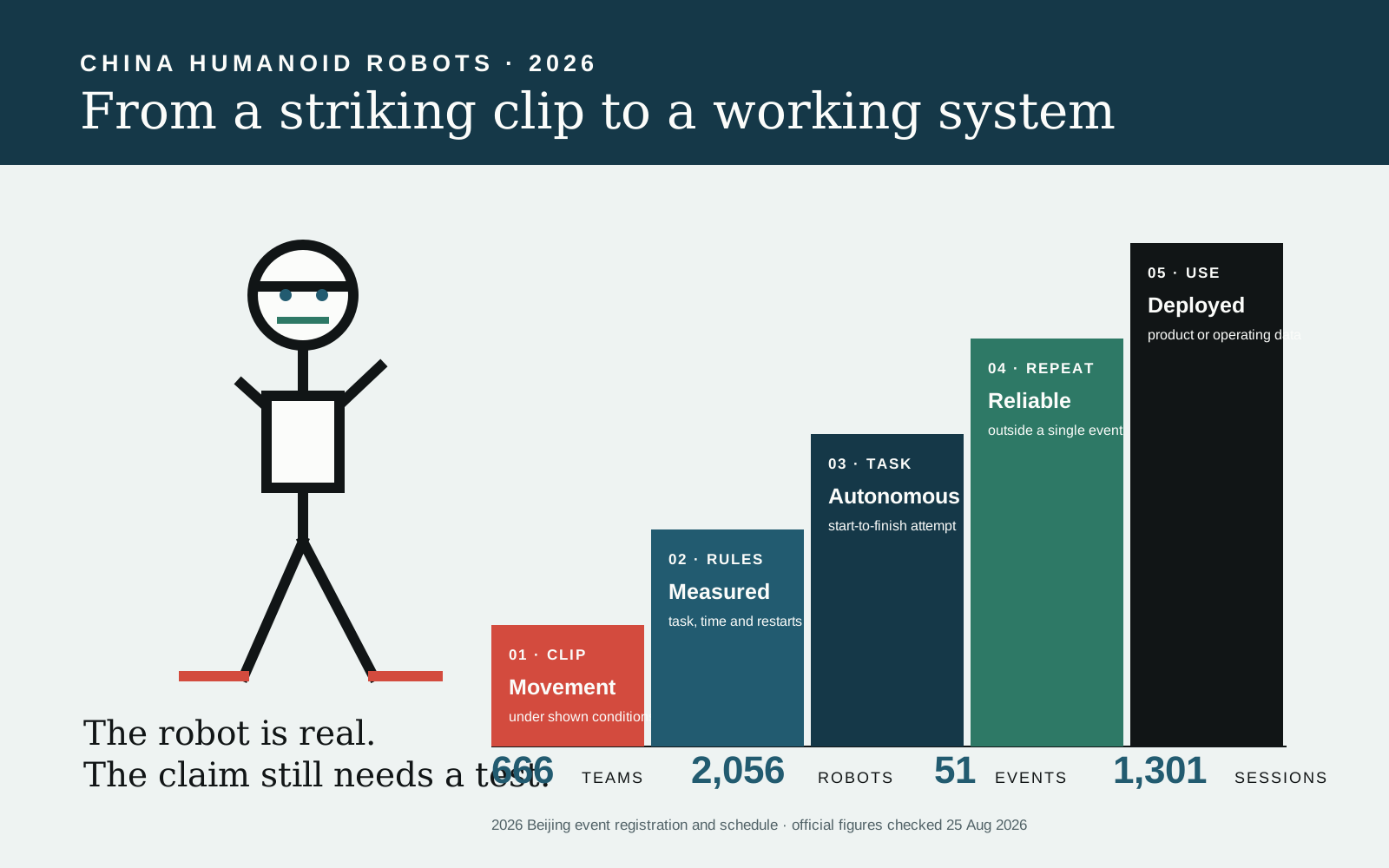
- Staged movement: the machine performed the visible action under the shown conditions.
- Measured event: rules define the course, time, allowed intervention and result.
- Autonomous task: the robot senses and completes a start-to-finish task without live human control.
- Repeatable operation: it performs reliably across repeated trials and realistic variation.
- Deployed product: buyers or operators can use it, with published limits, support and operating data.
Higher levels do not make the lower ones worthless. A dance can demonstrate joint control; a fall can reveal the recovery problem. The mistake is turning one visible ability into a claim about all five levels.
A retail listing answers a different question
At least one prominent model has a public retail route. Unitree’s official G1 product page lists a starting price of US$13,500, excluding tax and shipping. The same page says the standard G1 does not support secondary development, directs custom work to the EDU edition, and warns that the global humanoid industry remains at an early stage. Some sample functions shown on the page are still being developed and tested.
That makes the G1 more than a concept render: there is a named model, specification table, price and order channel. It does not mean every motion in every Unitree video ships as a supported household skill.
The search phrase “China humanoid robot price” still has no honest single answer. Research platforms, industrial systems, retail units and prototypes have different configurations and sales routes. For current R1, G1, H2 and Go2 prices—and the separate question of Unitree’s Shanghai listing—use our Unitree stock code and robot price guide.
XPENG IRON is on a different commercial clock
XPENG’s 26 August newsroom announcement puts IRON on a planned 2026 production and 2027 delivery clock rather than a current retail one. Those are dated company plans, not completed deliveries, and the manufacturer has not announced a public retail price.
The viral human-like gait, shifting official specifications and “person inside” question each need a different evidence check. Our dedicated XPENG IRON price, release-date and reality guide reconciles those claims without turning a financing valuation into a product price.
Why sport and work tests belong in the same event
Humanoid robots inherit spaces designed around human bodies: stairs, doorways, shelves, tools and factory stations. Sport stresses locomotion and balance. Scenario tasks stress perception, hands and sequencing. Putting both on one programme makes the gaps visible.
The connection is not that a football robot will soon become a hotel worker. It is that both tasks expose components a useful humanoid system needs: keeping balance while moving, locating an object, applying force without losing control and recovering when the planned motion fails.
This is also why falls are evidence. A polished manufacturer reel shows the capability the company chose to publish. An open competition can reveal collisions, delays, operator resets and awkward recovery. Failure does not make the field fake; hiding the test conditions makes the claim weak.
A better way to read the next viral robot clip
Before sharing a superlative, look for six details:
- the exact model and maker;
- the date and location;
- the task rule or full sequence;
- whether autonomy or teleoperation is stated;
- cuts, restarts, falls and human intervention;
- a product page, repeated deployment or operating result outside the video.
If those details are missing, the safe caption is narrow: “this robot performed this visible action in this clip.” That is still interesting. It is simply not proof of a general worker, a household assistant or an industry-wide lead.
Questions readers ask next
Are China’s humanoid robots real or fake?
The machines, products and competitions documented here are real. The broader claims attached to a short clip may still be unsupported. Check autonomy, rules, edits, retries and repeatability before treating a demonstration as a deployed capability.
How much does a Chinese humanoid robot cost?
Unitree currently lists the standard G1 from US$13,500 before tax and shipping. That is one model and configuration, not an industry price. XPENG has not confirmed a public IRON retail price in the source reviewed here.
What are the World Humanoid Robot Games?
They are a Beijing competition combining sports and scenario-based tasks for humanoid robots. The 2026 edition lists 51 events, including running, football, dance, household, firefighting and retail-related tests.
Did a Chinese robot really beat Usain Bolt’s 100-metre record?
Tiangong Ultra recorded 8.64 seconds in the robot-event final on 26 August, improving on its 8.86-second semifinal and falling numerically below Usain Bolt’s 9.58-second men’s world record. It did not replace Bolt’s athletics record: this was a robot competition with different bodies, categories and rules. “Ran a faster robot-event time” is accurate; “became the human 100-metre world-record holder” is not.
What was the final 100-metre result at the 2026 World Humanoid Robot Games?
Tiangong Ultra won the large-size final in 8.64 seconds on 26 August 2026. The widely reported 8.86-second figure came from the preceding semifinal and is no longer the latest event mark.
Why do Chinese robots dance?
Dance tests visible coordination, balance, timing and control across many joints. Beijing’s named 2026 Games dance events also publish judging and autonomy rules. A gala or trade-show routine may use different control conditions, so do not transfer the Games’ autonomy label to every clip.
Are Chinese robot fights real?
Yes, organized robot bouts and martial-arts events exist. Shenzhen’s URKL used standard T800 hardware with team-specific software tuning. “Real fight” describes the physical bout; autonomy, sensing, retries and commercial readiness still need separate evidence.
Who won the 2026 humanoid robot 400 metres?
As of this update, the Tiangong team won the large-robot 400-metre final on 23 August in 38.15 seconds. Zhuifeng Zaizai finished second in 39.45 and Jinghong Dynamics third in 39.66, according to China Media Group’s published result.
Do the robots compete autonomously?
It depends on the event rule. The official 2026 preview specifically describes the 100-metre race as fully autonomous and says scenario rules encourage autonomous positioning, recognition and operation. Do not apply that label automatically to every performance or clip.
Sources and scope
- Beijing Municipal Government: 2026 event scale and schedule — registered teams, robots, events and competition sessions.
- Beijing Municipal Government: the second Games close — post-event confirmation that Tiangong Ultra completed the 100-metre final in 8.64 seconds and that the 1,301 scheduled contests had concluded.
- Beijing Municipal Government: scenario and autonomy changes — event design announced before the competition; not a final results report.
- Global Times: Tiangong Ultra’s 8.64-second final — same-day report of the 26 August large-size final, gold medal and event close; checked against the preceding event chronology and scheduled closing date.
- Associated Press: Tiangong Ultra’s 8.86-second semifinal — current 25 August result and visible post-finish crash; independent event reporting, not an engineering audit.
- Xinhua: 100-metre opening result — the earlier 9.39-second result published on 22 August, retained to show the event chronology.
- China Media Group via CNR: 400-metre final — large-robot final podium and times published on 23 August.
- Beijing Municipal Government: robot-dance categories and scoring — published street-dance, cheerleading and dancesport coordination and autonomy requirements.
- Shenzhen Nanshan Government: URKL combat-league report — named T800 hardware, competition format and organizer-stated autonomous control loop; not an independent technical audit.
- Unitree: G1 official product page — manufacturer price, configuration and limitations; not an independent performance test.
- XPENG investor relations: robotics financing and IRON plan — company financing, specifications and forward-looking production schedule.
- Associated Press: 2026 World Robot Conference reporting — independent observation of demonstrations and the industry’s move toward applications.
- Bloomberg: scenes from the 2026 Beijing games — current event footage; useful for visible motion and failures, not an autonomy audit.
Rechecked on 28 August 2026 after Beijing’s government portal published its post-event account confirming the 8.64-second final and the close of all 1,301 scheduled contests. This page still does not reproduce a complete medal table. Product plans and prices can change. Robot-event times are kept separate from human athletics records. Organizer and company specifications are labelled as statements; this article does not claim hands-on testing.