
An electric car does not enter Europe when it leaves a Chinese port. It enters through a stack of systems: vehicle approval, charging interoperability, language and software, sales and repair, financing, parts, and sometimes a new factory. The physical object is only the visible centre.
BYD is a useful example because it links a recognisable Chinese product system—battery, power electronics, vehicle and software—to an expanding European operation. It is not a proxy for every Chinese carmaker, and this is not a recommendation to buy a model. The narrower question is what must change around a vehicle before ownership can work in another market.
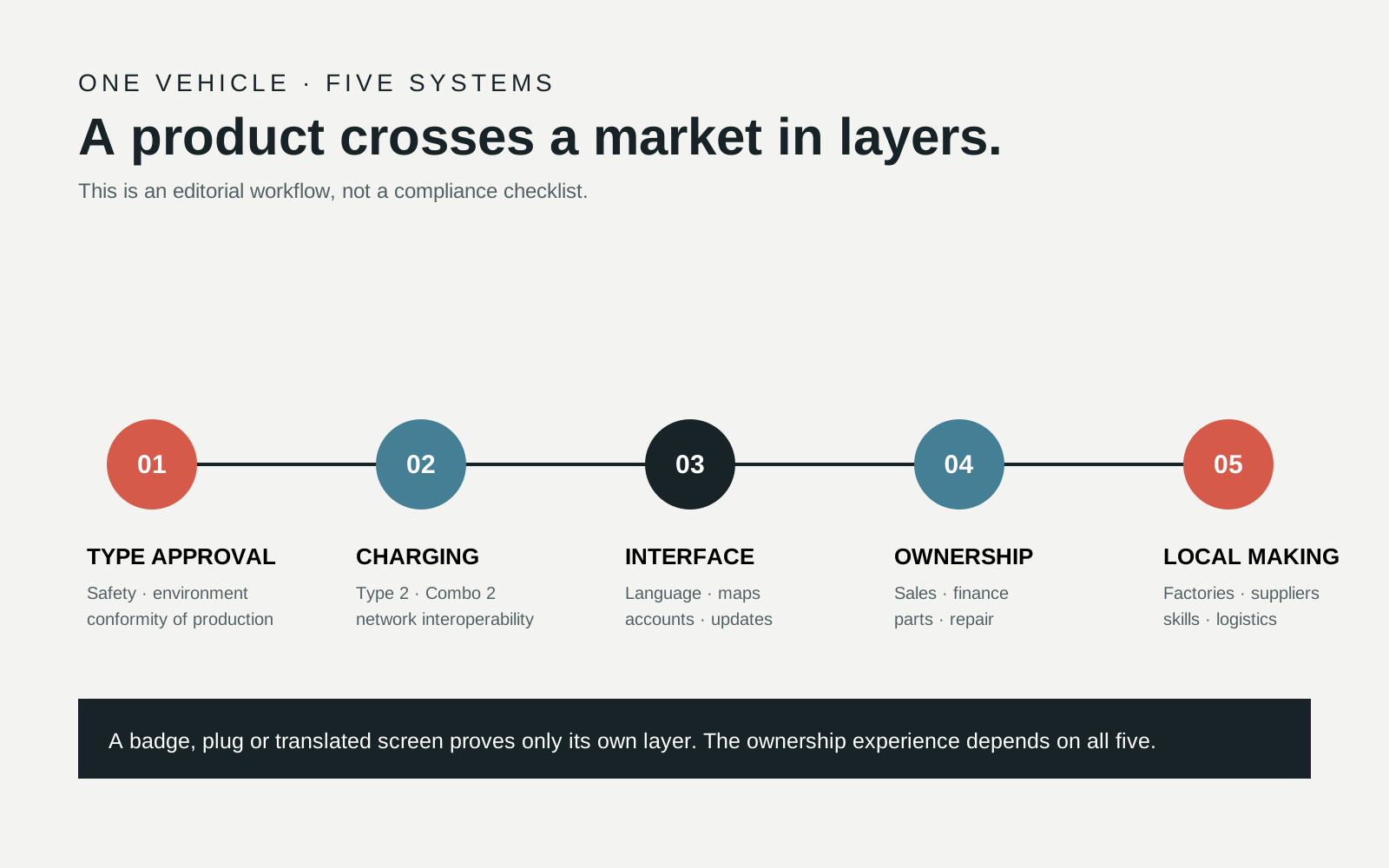
First, the vehicle becomes an approved type
The European Commission describes type approval as the process in which a national authority certifies that a vehicle model meets applicable EU safety, environmental and conformity-of-production requirements before it can be placed on the market. Pre-production vehicles and documentation are assessed; vehicles corresponding to the approved type then receive certificates of conformity.
This is more than changing a label. Lighting, braking, crash performance, electromagnetic behaviour, software-related systems and many other regulated details can affect a market version. The exact set depends on category, equipment and the law in force. Seeing the same model name in two countries does not prove that every component, feature or software behaviour is identical.
Approval also does not rank one car above another. It establishes compliance with a defined regulatory route. Independent safety assessment, reliability evidence and owner experience answer different questions.
The charging port connects to a public system
European charging rules make interoperability visible. Current European Commission guidance says that, from 8 January 2026, relevant AC charging points installed or renovated must provide at least Type 2 connectors or sockets for interoperability; high-power DC infrastructure uses the European Combo 2 route under the applicable specifications.
A car built for Europe therefore meets a physical and communications environment different from some domestic-market versions. But connector shape is only the first question. Charging power curves, route planning, payment at public chargers, account requirements, roaming between networks, cold-weather behaviour and preconditioning all shape the real trip.
An image of a compatible plug cannot prove that every charger will start, bill correctly or deliver the advertised peak. Those outcomes belong to the combination of vehicle, charger, software, temperature, battery state and operator.
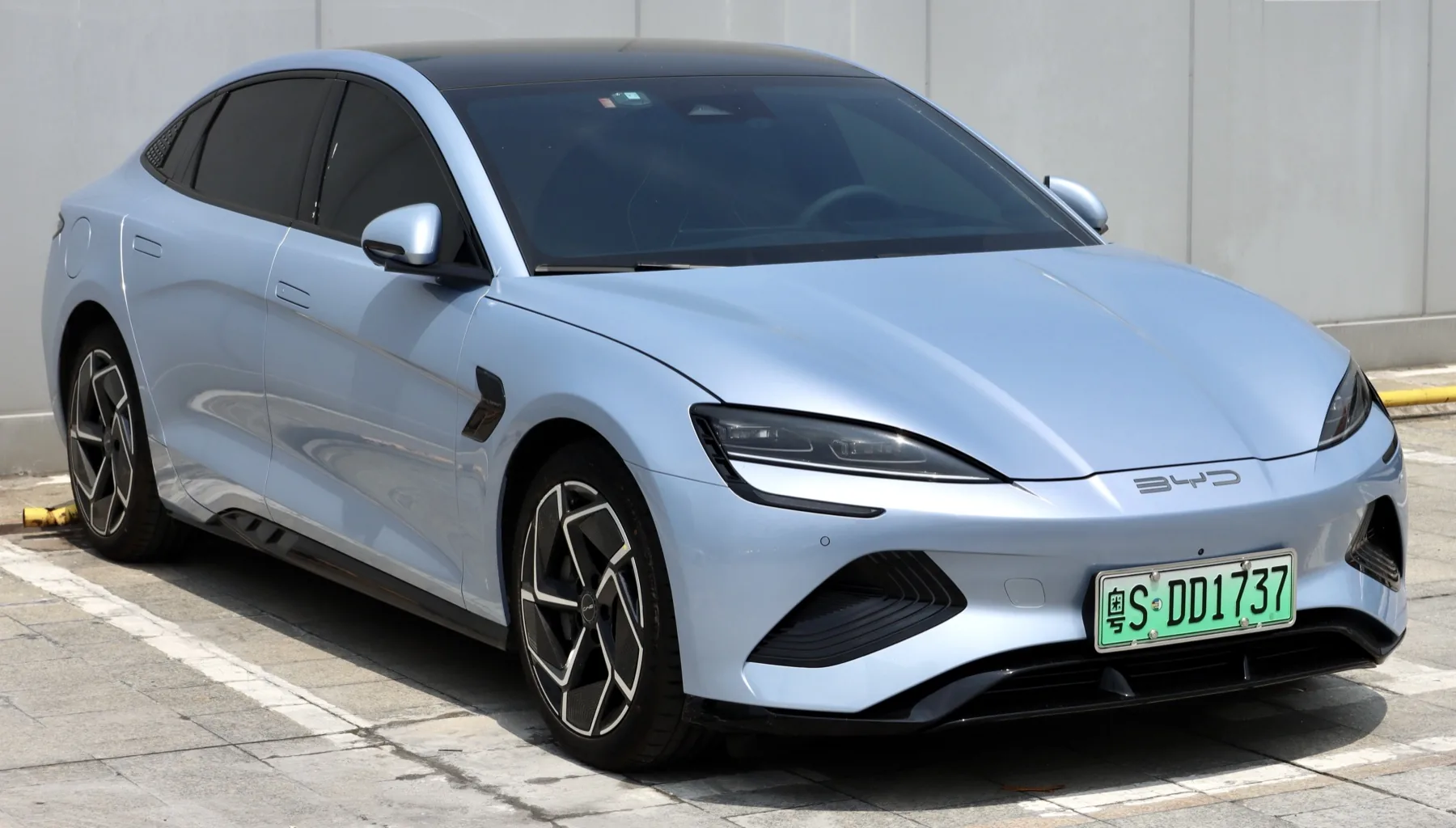
Translation reaches deeper than menu words
A modern EV has several interfaces: instrument display, centre screen, phone app, charging planner, voice system, update service and customer-support path. Translation has to cover commands, warnings, consent, recovery and legal information—not only feature names.
Maps and connected services can also depend on local providers. An app may have a different store listing, account region or feature set. Emergency calling, driver-assistance warnings and privacy settings have market-specific implications. Software updates can change behaviour after delivery, so a launch review is not a permanent description.
The test for localisation is not whether the home screen looks fluent. It is whether an owner can understand a warning, find a limitation, recover an account and reach support when the car is not behaving as expected.
Service is part of the product
An unfamiliar brand can win attention with equipment and price, but ownership continues after the comparison table. Dealers or direct-sales sites have to explain the car. Workshops need training and diagnostic access. Parts need routes and inventory. Collision repair, battery inspection, warranties, roadside assistance, financing and resale all turn a vehicle into a local ownership system.
This is why a manufacturer statement about opening stores or service points should be read as an implementation claim, not proof of even coverage. A network can be dense in one country and thin in another. The meaningful unit is the buyer’s actual region and exact model.
Local production changes the direction of the story
BYD has publicly described European local-production plans as part of its strategy. A European factory would not make the vehicle “non-Chinese,” nor would it mean every part becomes local. It changes where assembly, logistics, employment, supplier coordination and regulatory responsibility happen.
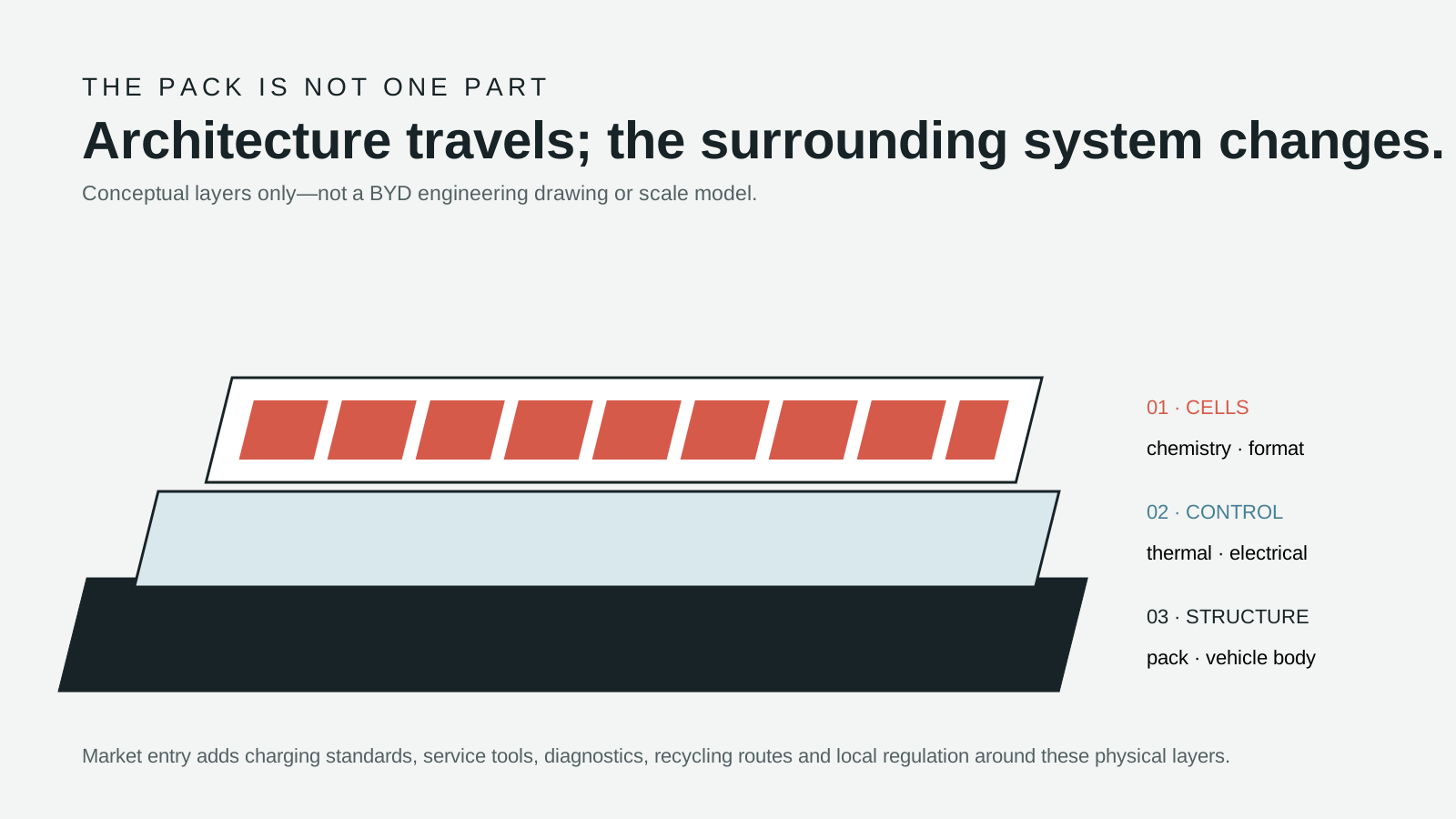
The IEA’s battery reporting provides the larger context: battery supply chains remain geographically concentrated, while manufacturers and governments are building more local capacity. For one vehicle, the useful questions are precise: where was this unit assembled, where were its cells made, who supports it here, and which claims are model- and date-specific?
How to compare one European-market vehicle properly
Use the exact country, trim, model year and software version. Confirm the homologated charging specification rather than importing a domestic-market spec sheet. Check warranty and roadside terms for the country. Locate the nearest qualified service centre and ask how common repairs and battery diagnostics are handled. Treat announced factories and future network targets as future plans until operating.
Then separate three verdicts: the car’s engineering, the local ownership system and the value at a particular price. A strong answer in one layer does not settle the other two.
Questions readers ask next
Is a European-market car identical to a same-named Chinese-market model?
Not necessarily. Approval, charging hardware, software, language, connected services and equipment can create market-specific versions. Compare the exact country, trim, model year and software version.
Does a compatible charging connector guarantee an easy charging trip?
No. Charger operation, payment, route planning, battery temperature, power curve and network support also matter. Connector shape establishes only one layer of interoperability.
Sources and scope
- European Commission: vehicle type approval FAQ — what EU approval establishes before market entry.
- European Commission: AFIR questions and answers — current connector-interoperability requirements.
- BYD Europe: European headquarters and R&D base in Hungary — manufacturer-stated localisation, certification, design and after-sales plans; treated as company claims.
- IEA: Electric vehicle batteries, Global EV Outlook 2026 — current supply-chain and chemistry context.
This explainer does not provide legal compliance, purchase, charging-network or investment advice. EU rules and manufacturer offers can change; verify the exact country and model at the time of a decision.
See the engineering before the export layer
Continue with what BYD’s Blade Battery changes inside an electric car. Then compare the ownership stack with BYD’s current passenger-car availability in the United States, where a global model page still does not form a retail launch.