

There is no honest single answer to “How much does a trip to China cost?” A seven-day Shanghai stop, a Beijing–Xi’an rail trip and a 240-hour transit stay are different products. The useful answer is a dated calculation built from the route you will actually take.
Use this formula:
international flight + entry document + paid nights × current room quote + travel days × daily food and local transport plan + exact intercity, attraction and connectivity quotes + a contingency
The calculator on this page starts empty. That is intentional. It will not turn an old exchange rate, one creator’s holiday or a nationwide domestic-tourism statistic into your budget.
A direct 7-day answer—without hiding the assumptions
For one traveler, the worked example in the calculator totals about US$1,719 for a seven-day, six-night Shanghai-only trip. It includes a US$784 connecting-flight snapshot, the current US$140 visa fee when that route applies, six hotel nights entered at CNY475, CNY210 a day for food, CNY40 a day for local movement, CNY200 for attractions, CNY100 for connectivity and a 10% contingency. It includes no intercity train and no insurance.
That is arithmetic, not a promise of what your trip will cost. Only the flight snapshot, visa fee and displayed exchange-rate reference are externally dated anchors. The room, food, local movement, attractions and connectivity entries are deliberately visible editorial planning assumptions. Press “Load the transparent 7-day example,” then replace them.
The result is useful because it answers “what can make a one-week total land near US$1,700?” without turning that one basket into a China-wide average. A nonstop flight, two-city route, private room upgrade, shared room, visa-free transit itinerary or different meal plan changes the total immediately.
Current U.S. airfare anchors
Google Flights’ public route pages showed these lowest recently found round-trip economy fares when checked on 25 August 2026:
| Route | Connecting fare shown | Nonstop fare shown | What to do with it |
|---|---|---|---|
| San Francisco–Shanghai | US$743 | US$1,297 | Use only after matching your dates, bags, stops and fare rules. |
| Los Angeles–Shanghai | US$784 | US$1,187 | This connecting fare is the worked example’s flight input. |
| New York–Shanghai | US$942 | No comparable live amount stated in the route summary | Search your exact airports and dates; do not borrow a West Coast fare. |
These are search snapshots, not inventory held for this site. Google says displayed suggestions depend on availability and can change. The spread also demonstrates why “a flight from America” is not one budget line.
The 24 August 2026 official central parity was CNY6.7841 per US$1. The worked example uses it only to make the arithmetic visible. A card network, bank, cash exchange or foreign-transaction fee produces a different effective rate; the calculator should ultimately contain the rate that will apply to your payment.
Price anchors you can verify today
These are not suggested daily budgets. They are current official prices that show the scale and unit of several common costs.
| Item | Verified amount | What the number actually covers |
|---|---|---|
| Regular Chinese visa service for a U.S. citizen | US$140 | The official reduced fee schedule for applications submitted in the United States, extended through 31 December 2026. Express service adds US$25; other nationalities and services differ. |
| Beijing subway | CNY3 starting fare | Up to 6 km on the distance-based network. The official schedule rises with distance; the Capital Airport Express is CNY25. |
| Shanghai Metro | CNY3 starting fare | Up to 6 km, then CNY1 for each additional 10 km. A one-day pass is CNY18 and a three-day pass is CNY45. |
| Palace Museum admission | CNY60 peak / CNY40 off-peak | Main admission: 1 April–31 October or 1 November–31 March. Named gallery tickets are CNY10 each; reservations and identity-document rules apply. |
| Intercity train | Quote the exact train | Search the official 12306 timetable for route, date and seat class. “China high-speed rail costs X” hides the variables that determine the ticket. |
The table was checked on 25 August 2026. A current quote can still change before payment, and a published fare does not guarantee a seat or reservation.
Build the number in the right order
1. Start outside China
Record an airline price for your exact U.S. departure airport, dates, baggage and fare conditions. A low calendar headline is not the total if it excludes the bag or change terms you need.
Then determine the entry route. An ordinary U.S. tourist journey normally needs the appropriate visa before travel. A qualifying 240-hour transit itinerary is route-based and has separate conditions; it is not a blanket visa waiver for every U.S. visitor. Use the U.S.-passport entry guide before entering zero for the visa line.
2. Price the room, not “China hotels”
Search the city and neighborhood you intend to use. Record the tax-inclusive price for the same room, occupancy, cancellation rule and payment timing. Confirm that the property can process a foreign-passport guest and note whether breakfast or a deposit changes the total.
A room next to a metro interchange can cost more and reduce transport time. That is a trade, not an error in the budget.
3. Build food from actual meals
Do not multiply one viral cheap meal by 21 and call it a seven-day food budget. Write a meal pattern: hotel breakfast or local breakfast, quick lunch or seated lunch, shared dinner or individual order, drinks, and one or two destination meals.
Domestic discovery platforms such as Dianping are useful for finding current branches, menus and user-uploaded context. Treat every visible price as a venue-and-date lead: verify the branch, portion, service format and live menu before using it. We do not republish a Dianping rating or one shop price as a citywide average.
4. Separate city movement from intercity travel
Metro rides can be inexpensive relative to a U.S. visitor’s international flight, but airport links, taxis and long station transfers still belong in the plan. Enter a daily city amount based on the route, not a national average.
For rail, search China Railway 12306 using the actual date, stations and seat class. Beijing South and Beijing West are not interchangeable labels; neither are Shanghai, Shanghai Hongqiao and Shanghai South. Add the local transfer at both ends.
5. Add booked attractions and connectivity
Use each attraction’s official booking channel where one exists. Keep the admission amount attached to the visit date, ticket type and identity document. A free public space and a reservation-only museum are different planning tasks even if both appear on the same itinerary.
For mobile service, compare home-carrier roaming, a travel eSIM and a mainland SIM by the coverage and phone-number functions you need. Put the full-trip price into the calculator, not an advertised daily rate without its cap or activation terms.
6. Add a visible contingency
A contingency is not an excuse for poor research. It covers exchange-rate movement, a missed cheap train, an extra taxi, changed plans or a meal that costs more than expected. Keep it visible so the base plan remains auditable.
Why we do not publish a “typical China daily cost”
National tourism spending is often reported as total expenditure divided by domestic trips. That denominator is not a traveler-day, does not describe an international visitor and does not preserve city, accommodation or transport class. Converting it to dollars would create a precise-looking answer to a different question.
Creator budgets can still be valuable. They document one route at one time. Before borrowing one, match at least the year, season, city sequence, group size, room sharing, transport class and excluded sponsored items.
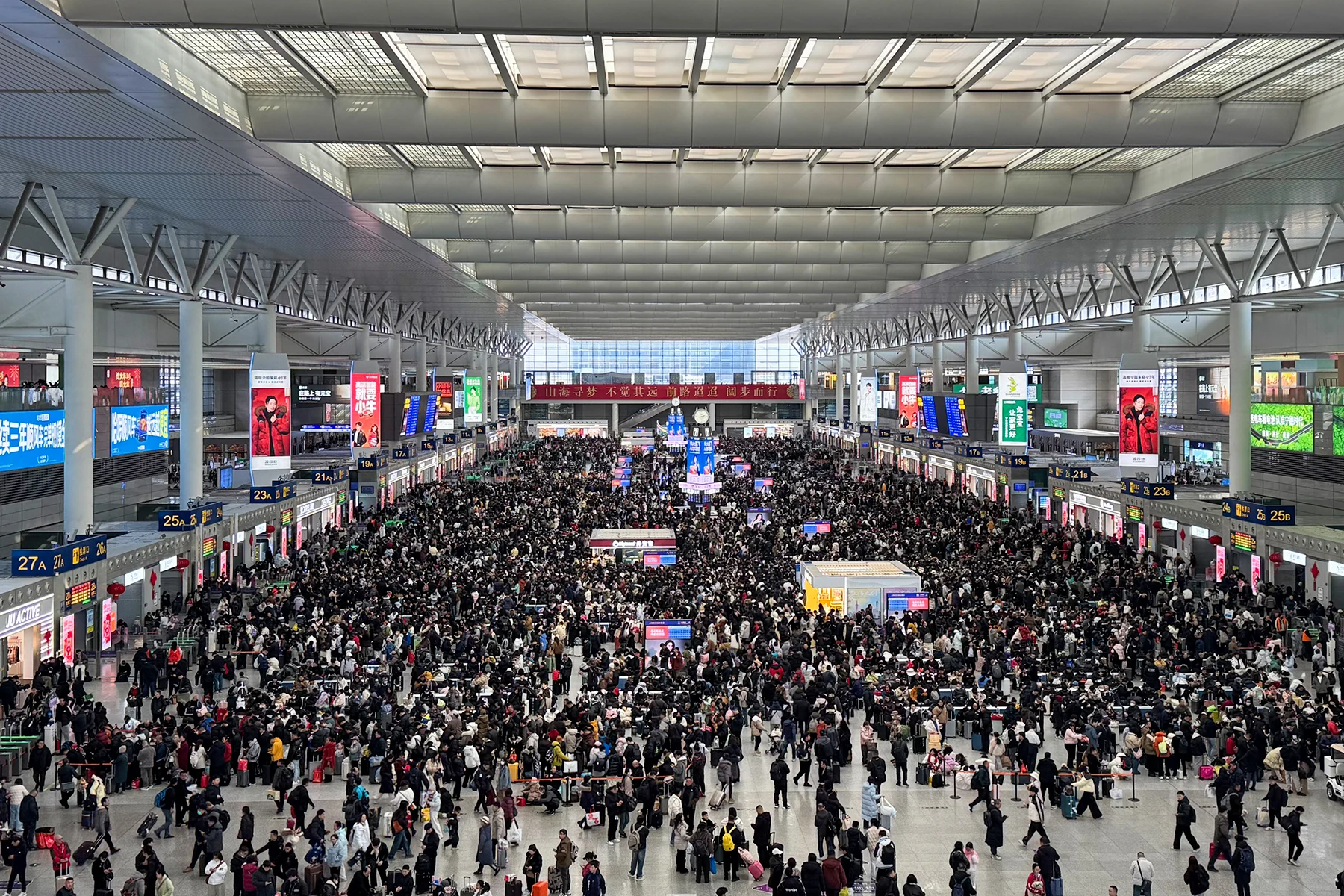
The station photograph on this page shows Shanghai Hongqiao during the 2026 Spring Festival travel rush. It is intentionally labeled as peak Chunyun demand, not ordinary daily crowding. Timing can change ticket availability and the set of prices you can actually book.
Questions readers ask next
How much does it cost to travel to China?
Calculate it from current quotes for your origin, dates, route and comfort level. The minimum defensible total is the international flight, correct entry-document cost, tax-inclusive accommodation, food, city transport, exact intercity tickets, booked attractions, connectivity and contingency. A nationwide dollar average cannot preserve those choices.
How much is a 7-day trip to China from the United States?
The transparent one-city example on this page totals about US$1,719, but it is a worked basket rather than a market average. It uses one dated connecting-flight snapshot, the US$140 visa fee, six CNY475 room-night assumptions, visible daily allowances and a 10% buffer. Load it in the calculator and replace the U.S. airport, actual hotel quote, meals, transport, entry route and payment rate. A second city or nonstop flight can move the total substantially.
Is China expensive for American tourists?
Some locally priced items, including many urban metro fares, may look low to a visitor earning and saving in U.S. dollars. International flights, private rooms, premium restaurants, domestic flights and peak-date rail can dominate the same trip. “Cheap” or “expensive” without the basket is not a budget.
How much cash should I carry in China?
Do not make cash your only payment rail, and do not assume every foreign card or mobile-wallet transaction will work. Carry a modest independent fallback suited to your own risk tolerance, store it securely and prepare more than one payment method. The appropriate amount depends on the trip and cannot be inferred from the total calculator result.
How much is a Chinese visa for a U.S. citizen?
The current official notice lists US$140 for regular service for a U.S. citizen when the visa route applies, with the reduced schedule extended through 31 December 2026. Express service and other applicant categories differ. Verify the live notice and your application route before paying.
Sources and scope
- Official China visa fee schedule for applications in the United States — service fee, applicant scope, express surcharge and current extension date.
- Google Flights: Los Angeles–Shanghai, San Francisco–Shanghai and New York–Shanghai — dated public search snapshots; prices are not held and must be requoted.
- State Administration of Foreign Exchange: RMB central parity — official date-and-unit reference; not the consumer rate charged by a bank, card or exchange counter.
- Beijing Municipal Government: subway fare schedule — distance brackets and Capital Airport Express fare.
- Shanghai Municipal Government: Metro ticket guide — distance fare and current one-day and three-day pass prices.
- Palace Museum: ticket information — seasonal admission, gallery add-ons, reservation and document rules.
- China Railway 12306 — official train search and booking route; use a live route/date/seat query rather than an article’s generic average.
- Dianping Beijing — venue and menu discovery only; dynamic listings are not used here as a stable citywide price source.
Checked 25 August 2026. The calculator runs locally in the browser and saves or sends none of the amounts entered. It is a planning tool, not a live booking engine, immigration decision or guarantee of price or availability.
The one rule that keeps the budget honest
Every price needs five labels: city, date, unit, scenario and source. If one is missing, keep the number out of the total until you can verify it.