
WATCH · SHORT DRAMA FIELD NOTES
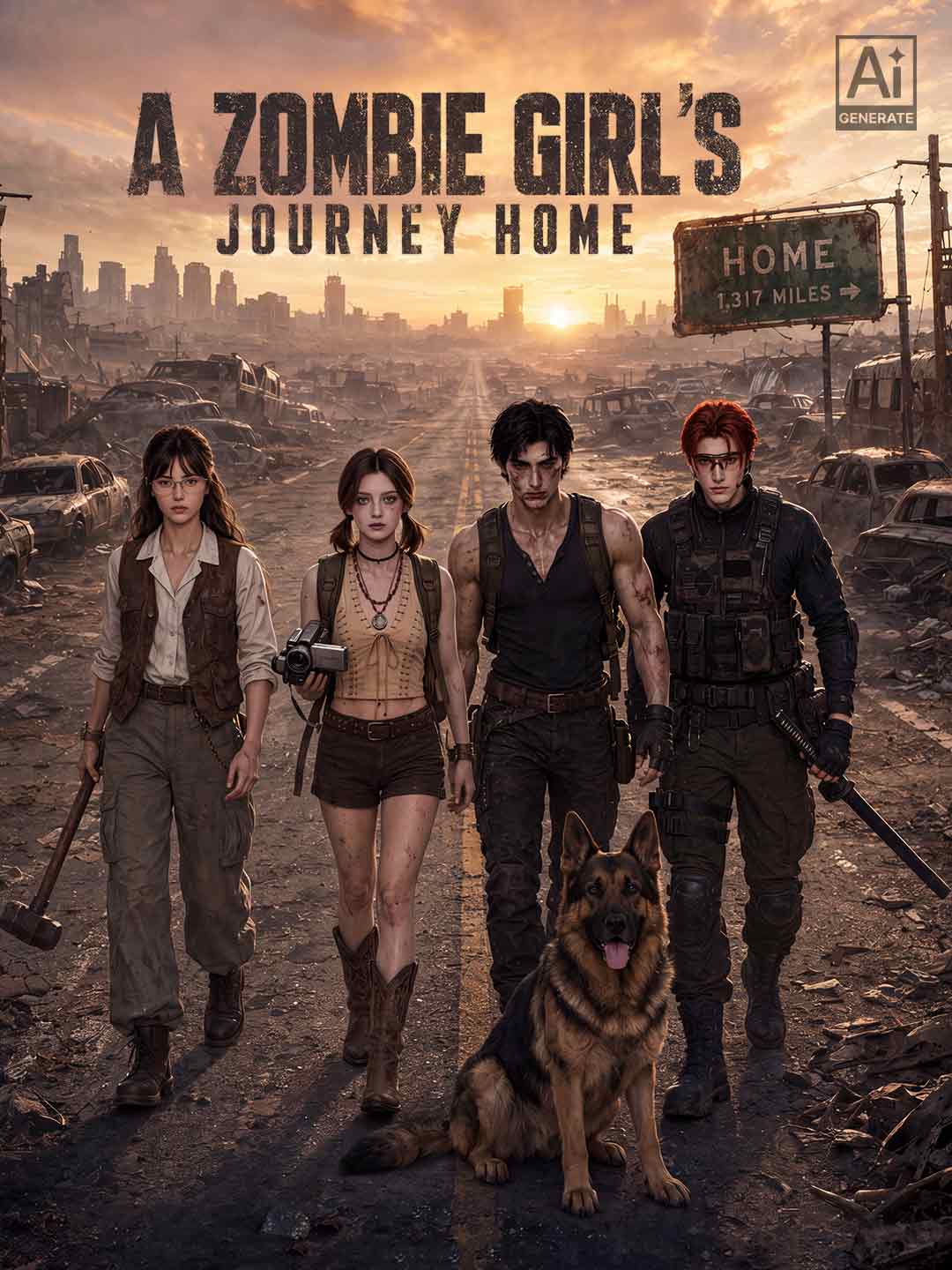
ReelShort · 40 episodes · video sampledA Zombie Girl's Journey Home
Viewers who want fast genre comedy and a found-family hook. The public sample cannot verify the complete app ending
Corrected September 16, 2026: heat and total scores cannot be reproduced from preserved normalization records. Unwatched endings are unassessed, not zero. Original counters keep their capture dates. Former scores survive only as correction history.
30-SECOND DECISION
The hook, before the repetition sets in.
Anya deliberately accepts a zombie infection because avoiding people sounds easier than surviving them. She keeps her mind, gains no useful combat power and is pushed onto the road with a hunter, a zombie fighter and a scientist.
THE EDITORIAL READ
What the premise is really asking us to watch.
The smart part is not that Anya becomes a zombie; it is that becoming one fails to solve the problem she chose it for. She still needs other people, and the travelling group keeps forcing her into negotiations she wanted to avoid. That gives the found-family direction a working engine instead of treating it as an end-of-season label.
Each leg of the journey can pair an external survival problem with the interaction Anya would rather avoid. A barricade, supply run or new survivor is not merely an action beat; it forces her to disclose what she is, ask for help or decide whom to trust. The ensemble matters because the hunter, fighter and scientist can disagree about her for different reasons. That gives the series somewhere to go after the opening joke: Anya's route home becomes a test of whether distance is really safer than belonging.
CHARACTERS UNDER PRESSURE
Anya
A socially anxious survivor who remains conscious after infectionShe chooses monstrosity to escape people, then has to lead and communicate with the most socially demanding group imaginable.
The hunter
A human survivor trained to treat zombies as targetsTravelling with a conscious infected girl turns a simple kill rule into a repeated judgment about whether Anya is person, danger or ally.
The zombie fighter
The group's physically powerful infected companionThis figure prevents Anya from being the sole exception and makes the group confront different degrees of humanity inside the same monster category.
The scientist
An unpredictable source of knowledge and riskScientific interest can help explain Anya's condition while also threatening to reduce her to a useful specimen.
EVIDENCE NOTEBOOK
Specific moments, with the evidence level left visible.
“Viewed video” means we inspected the moving image. A synopsis or episode record can establish plot and structure, but it cannot prove acting, editing or scene quality.
A camera before a weapon
The opening introduces Anya filming the outbreak with a small camcorder. Her first practical tool is a way to watch at a distance, which visually establishes her withdrawal before the dialogue has to explain it.
The camera makes her anxiety part of the staging rather than a label in the synopsis: she is safest when the world is behind a lens.Open this source ↗Infection as a failed escape plan
When a zombie reaches her apartment, Anya does not frame infection as sacrifice or heroism. She treats becoming a monster as the easier option, then discovers that consciousness and fear remain intact.
The joke has a consequence: changing species does not remove the need to choose, communicate or depend on other people.Open this source ↗Scale outside, panic inside
Wide ruined-city shots establish smoke, empty roads and distant fires, but the edit repeatedly returns to Anya's face and hands. The spectacle is used to tighten her private panic rather than replace it.
That contrast is the title's useful tonal promise: apocalypse scale is present, while the point of view remains awkward, intimate and comic.Open this source ↗The road-group promise
ReelShort names a hunter, a powerful zombie fighter and an unpredictable scientist as the people Anya must travel with, giving three different survival logics to the group around her.
A varied group can keep the premise moving after the infection gag; every companion asks Anya to negotiate a different kind of threat and trust.Open this source ↗ADVERTISEMENT PAID PLACEMENT
HOW IT IS BUILT
Craft, only as far as the checked material allows.
The viewed opening alternates vertical close-ups with large, effects-heavy city images. The strongest choice is the camcorder: it gives Anya a prop that expresses distance and lets the frame move between observer and participant. The ruined-city inserts are less distinctive on their own, but they make her small gestures and frightened reactions feel deliberately out of scale with the disaster.
WHERE IT MAY WEAR THIN
The repetition test.
The premise will flatten if every episode repeats the same pattern—Anya freezes, someone mistakes her for a mindless zombie, and the group rescues her. The public opening proves the joke and the visual tone, but it does not yet prove that later obstacles change the relationships instead of resetting them.
THE EPISODE EVIDENCE SPINE
Five judgments. Each one has to point back to the material.
A dash means not assessed, not zero. An unwatched ending cannot receive a score, and missing aspects do not produce a new average. Read each reason alongside its evidence.
The deliberate-infection premise creates a clear comic problem and durable road-story engine.
Anya’s social anxiety changes how the group functions instead of serving as one disposable gag.
The sampled presentation keeps apocalypse scale readable while reserving space for reaction comedy.
The opening moves quickly from infection joke to an unstable travelling group without a long setup.
Not assessed: the complete ending was not independently watched. A publisher synopsis cannot establish the quality of the payoff.
GOOD FIT
Watch it if
- An apocalypse lead whose defining problem is social contact, not combat
- A travelling ensemble gives the initial joke room to become a relationship story
Best for: Viewers who want fast genre comedy and a found-family hook.
SKIP SIGNALS
Leave it if
- The public sample cannot verify the complete app ending
- The tonal jump between danger and comedy may feel too light
Not for: Anyone looking for sober horror or a fully verified ending review.
SPOILER BOUNDARY
What the checked material can support about the payoff.
The available public material frames the journey home as a found-family story rather than a cure quest. Anya’s unwanted companions become the first group to make room for her as she is; a complete ending was not independently viewable in the checked public sample.
AUDIENCE REACTION
No reliable crowd score yet
No compliant two-source title-level comment sample was recoverable for this backfill.
OFFICIAL START
Continue on ReelShort
Opening the publisher is a separate action. Counts, access and episode locks can change after our check.
View the official title on ReelShort ↗